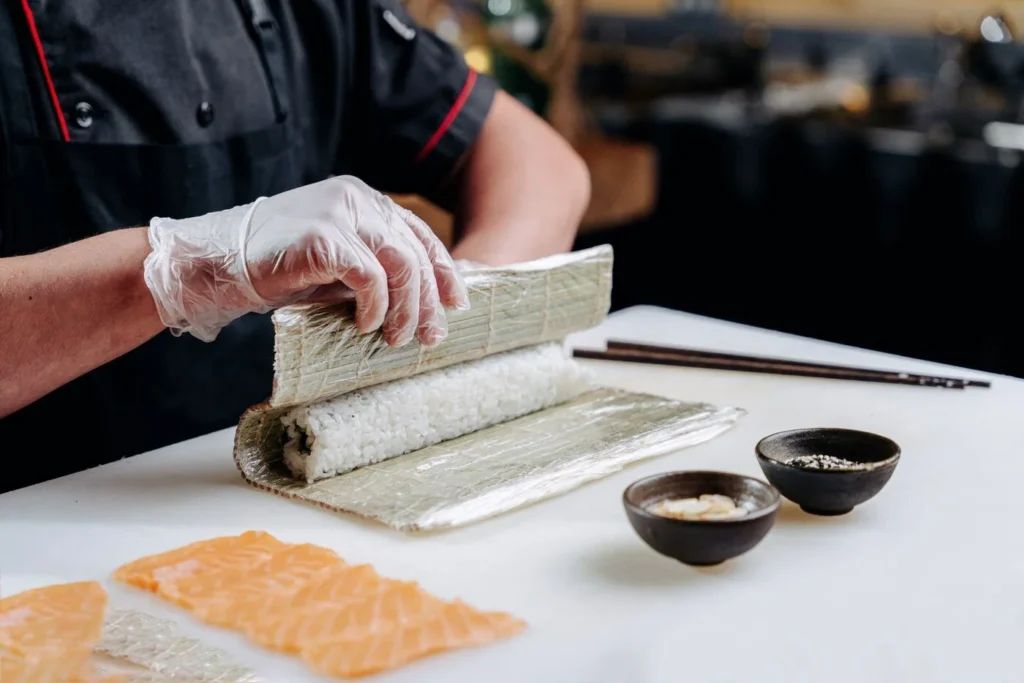
The best sushi making kit for most people is a simple bamboo set: two rolling mats, a rice paddle and a rice spreader, ideally with a wide bowl for cooling the rice. Skip kits padded out with plastic moulds, novelty rollers and cheap knives. The mat and the paddle are the parts you will still be using in five years, so judge a kit on those.
Sushi kit types compared
| Kit type | What you get | Good for | Watch out for |
|---|---|---|---|
| Basic bamboo kit | Two mats, a rice paddle, a spreader and chopsticks | Most beginners, maki and inside out rolls | Thin, uneven strips and loose string |
| Bamboo kit with a hangiri | Adds a wide wooden tub for cooling and seasoning rice | Anyone making sushi often | Wood needs careful drying or it can crack |
| Roller or tube kit | A plastic tube that presses rice and filling into a roll | Children and parties | Dense, uneven rolls and more plastic |
| Mould and press kit | Plastic moulds for nigiri, onigiri and square rolls | Neat shapes with no practice | You outgrow it quickly |
| Ingredient kit | Rice, nori, vinegar, wasabi and soy sachets, sometimes a mat | Trying sushi once, or a gift | Small amounts, so check the dates |
Is a sushi making kit worth buying?
For a first attempt, yes. A kit gets you a mat, a paddle and a spreader in one order, usually for less than buying them one by one. Beyond that the value drops fast. The pieces you keep using are the rolling mat, the rice paddle and a long, thin, sharp knife, and if you already own a sharp knife and a wide bowl, a single bamboo mat may be all you need.
What to look for in a sushi kit
- A full size mat. Around 24cm square fits a whole sheet of nori with room to grip. Smaller mats only suit thin rolls.
- Flat, even bamboo strips with tight string. Loose or warped strips give lumpy rolls.
- Two mats. One wrapped in cling film for inside out rolls, one bare for classic maki, and one can dry while you use the other.
- A ridged rice paddle. The texture stops rice sticking, so you fold rather than mash.
- A wide, shallow bowl or hangiri rather than a deep mixing bowl, so the rice cools quickly and evenly.
- No knife. Knives in sushi kits are rarely sharp enough. A long, thin kitchen knife you already own will do a better job.
Silicone mats are easier to clean and do not hold onto rice, but they grip less, so tight rolls take a little more practice. Bamboo is cheaper and the traditional choice.
What the kit will not give you
The two things that decide whether sushi works are the rice and the knife, and kits rarely help with either. You also need:
- Short grain sushi rice, not long grain or basmati. See the best sushi rice to buy.
- Rice vinegar, caster sugar and salt to season it. See which rice vinegar to buy.
- Nori sheets, kept sealed so they stay crisp. See our nori guide.
- Fillings, soy sauce, pickled ginger and wasabi.
How to make your first roll with a kit
- Cook and season the rice, then let it cool to body temperature. Our guide to cooking sushi rice covers the ratios.
- Lay the mat on a board with the strips running across, away from you. Put a sheet of nori on top, shiny side down.
- Wet your hands and spread a thin, even layer of rice over the nori, leaving a 2cm strip bare at the far edge.
- Lay your fillings in a neat line across the rice, about a third of the way up.
- Lift the near edge of the mat, roll it over the filling and tuck it in, then keep rolling, pressing gently along the length.
- Dab a little water on the bare strip of nori to seal the roll, then squeeze the mat around it once more.
- Wet a sharp knife and cut the roll in half, then each half into three or four pieces, wiping the blade between cuts.
For inside out rolls, cover the mat in cling film first, spread the rice over the nori, flip the sheet so the rice faces down, then add the filling and roll.
Easy fillings to start with
- Cucumber and avocado, cut into long thin batons.
- Smoked salmon with cream cheese.
- Cooked prawns or crab sticks with a little Kewpie mayo.
- Pickled radish, carrot and spring onion for a vegetable roll.
Only use raw fish if it is sold as suitable for eating raw. Cooked prawns, smoked salmon and vegetables are safer choices for a first go.
Looking after your kit
- Wash a bamboo mat by hand in warm water straight after use, scrubbing out any rice caught in the strips. Do not put it in the dishwasher.
- Stand the mat on its edge to dry fully before you put it away. Trapped damp is what makes mats go mouldy.
- Rinse a hangiri, wipe it dry and leave it to air dry away from heat. Never soak it for long or put it in the dishwasher.
- Replace a bamboo mat once the string frays or the strips split. They are cheap to buy on their own.
Kit or separate pieces?
| Sushi kit | Buying separately | |
|---|---|---|
| Best for | A first try, or a gift | Anyone who already owns a sharp knife and a wide bowl |
| What you get | Everything in one box, plus some extras you may not use | Only the pieces you need, often in better quality |
| What to buy | A bamboo kit with two mats and a paddle | One or two bamboo mats and a ridged rice paddle |
Our guide to Asian kitchen tools covers the rolling mat, rice paddle and knives in more detail.
Frequently asked questions
Do I need to cover the mat in cling film?
For inside out rolls, yes. It stops rice sticking to the bamboo and makes the mat far easier to clean. For classic rolls with the nori outside, use the mat bare.
Can I use normal rice?
No. Short grain sushi rice has the starch that makes it cling together. Long grain rice will fall apart.
What size sushi mat do I need?
A mat around 24cm square, which fits a full sheet of nori. Smaller mats are only for thin rolls.
Are silicone sushi mats any good?
Yes, they are easy to clean and rice does not stick to them, but they grip less than bamboo, so rolling tightly takes a little practice.
How do I clean a bamboo mat?
Rinse in warm water, scrub gently, then dry it standing on its edge. Trapped moisture between the strips is what makes mats go mouldy.
Is raw fish safe to use at home?
Only fish sold as suitable for eating raw, or previously frozen to the standard needed for raw use. If in doubt, use cooked prawns, smoked salmon or vegetables.
Seasoning sushi rice? Our sushi rice seasoning calculator gives the rice vinegar, sugar and salt for any amount of rice.