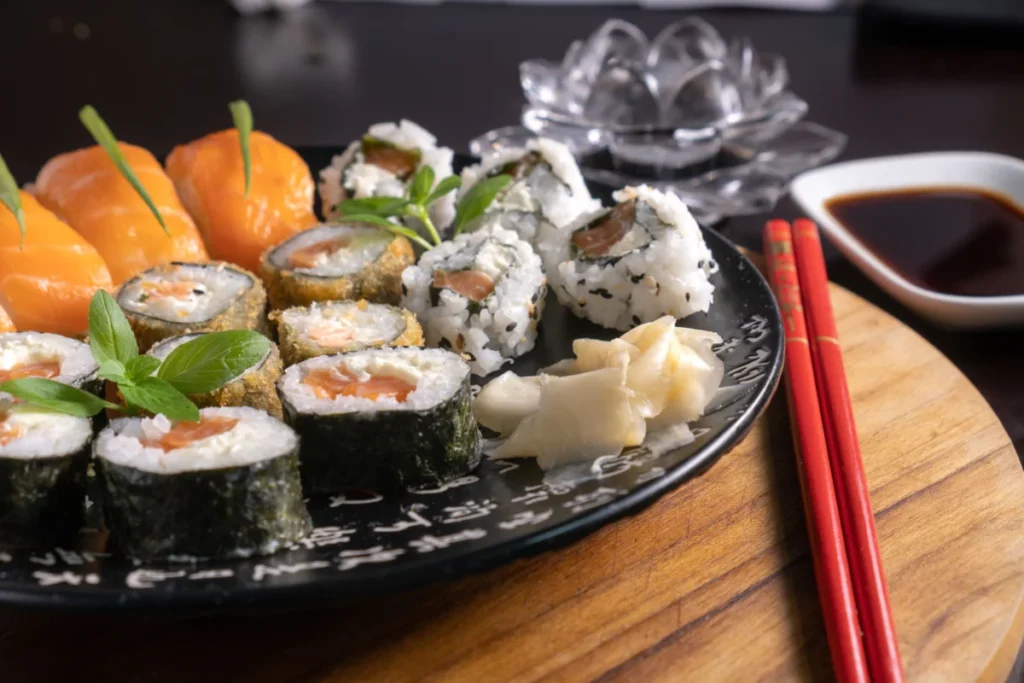
For sushi at home, buy a short-grain Japanese rice labelled “sushi rice” such as Yutaka, Nishiki, or Clearspring. Short-grain rice has more surface starch than long-grain, which gives sushi its sticky texture once it’s mixed with rice vinegar. Avoid basmati or jasmine rice for sushi, since both are long-grain and won’t hold together.
Not every white rice in the supermarket works for sushi. This guide covers what “sushi rice” actually means, which brands are easy to find in the UK, and how to season it once it’s cooked.
What “sushi rice” means
Sushi rice is short-grain japonica rice, milled and polished so it cooks up soft and sticky. On its own it’s just called short-grain or sushi rice; once it’s cooked and seasoned with rice vinegar, sugar, and salt, it becomes what sushi chefs call shari. Both the rice and the seasoning matter for the texture and taste.
What to check before you buy
- Grain type. Look for “short-grain” or “sushi rice” on the bag. Long-grain rice, including basmati and jasmine, will not give you the right texture.
- Origin and milling. Japanese and Korean short-grain rice is milled to a consistent size, which cooks more evenly. Some UK supermarket own-brand “sushi rice” is a lower grade, so check reviews if you’re trying a new one.
- Freshness. Rice loses moisture over time, which affects stickiness. Buy from a shop with good turnover, such as a Japanese or Korean grocer, rather than a bag that’s sat on a shelf for a long time.
- Bag size. A 1kg or 2kg bag suits occasional home sushi. Larger 5kg bags make sense if you cook Japanese food often, since unopened rice keeps well in a cool, dry place.
Comparing common brands
| Brand | Origin style | Good for |
|---|---|---|
| Yutaka | Widely stocked in UK supermarkets | Everyday sushi and rice bowls |
| Nishiki | US-grown Japanese-style rice | Consistent texture, good for beginners |
| Clearspring | Organic, smaller bags | Those wanting an organic option |
Shop this
FAQ
Can I use any short-grain rice for sushi?
Most short-grain white rice will work, though rice labelled specifically for sushi is milled to give the texture sushi chefs rely on.
Why is my sushi rice mushy or too dry?
This usually comes down to the water ratio or resting time. Rinse the rice until the water runs mostly clear, cook it with the amount of water the packet recommends, and let it rest, covered, for ten minutes after cooking before you season it.
Do I need special rice vinegar for sushi rice?
Yes. Plain rice vinegar mixed with a little sugar and salt is the traditional seasoning. Some brands sell a pre-mixed “sushi vinegar” that saves a step.
Related reading
- How to cook sushi rice for the full method.
- Best Rice Cooker for Sushi Rice if you want the right cooker.
- Best sushi making kit to pair with it.