Some links on this page are affiliate links. As an Amazon Associate, The Asian Larder earns from qualifying purchases, at no extra cost to you.
You can cook most Asian food at home with a wok, a wok spatula, a sharp knife and a spider skimmer. The other tools on this page each make one job easier, so buy them only when you cook that dish often. Below is what each tool does, what to check before you buy, and when something you already own will do the job.
The short list
| Tool | What it does | Buy it if |
|---|---|---|
| Wok spatula | Scoops and tosses food in a wok | You stir fry every week |
| Spider skimmer | Lifts noodles, dumplings and fried food out of liquid | You cook noodles or deep fry |
| Bamboo wok brush | Cleans a carbon steel wok without soap | You own a carbon steel wok |
| Rice paddle (shamoji) | Folds and serves rice without crushing it | You make sushi rice |
| Frying pan with a tight lid | Sears and then steams dumplings | You make gyoza or potstickers |
| Hot pot set | Keeps a broth simmering at the table | You host hot pot nights |
| Katsuobushi shaver | Shaves dried bonito into fresh flakes | You make dashi often |
| Japanese knife | Slices and chops with a thin, sharp blade | You cook from scratch most days |
| Mandoline slicer | Cuts thin, even slices and matchsticks | You make salads, pickles or stir fries often |
| Sushi rolling mat | Shapes and tightens sushi rolls | You make maki at home |
| Donabe | Clay pot for rice, hot pots and braises | You want a slow, even simmer at the table |
| Bento box | Packs a lunch in separate sections | You take lunch to work or school |
| Donburi bowls | Deep bowls for rice topped dishes | You serve rice bowls and noodle soups |
| Chopsticks | For eating, and longer pairs for cooking | You eat noodles and rice dishes often |
Wok spatula
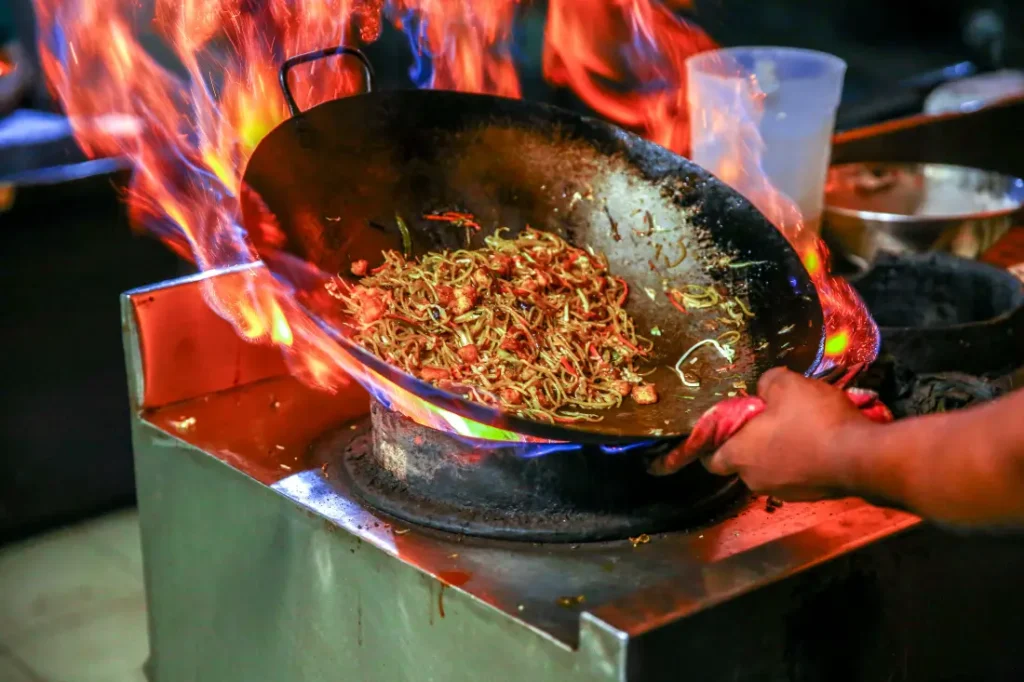
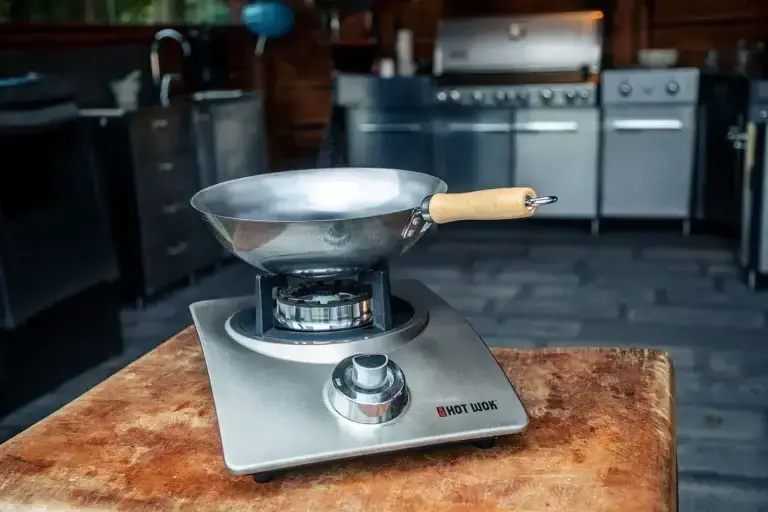
A wok spatula, called a chan in Cantonese, is a shovel shaped metal tool with a curved edge that follows the curve of a wok. The curve lets you scoop food from the bottom of the pan and toss it at high heat, which a flat kitchen spatula does badly.
What to check
- A long handle, so your hand stays clear of the heat.
- A wooden or heat resistant grip if the metal gets hot on a strong burner.
- A curved edge for a round bottomed wok. A flat edge leaves food behind.
A carbon steel wok can take a metal spatula, and light scratches do not harm the seasoning. A non stick wok needs a wooden or silicone tool instead. Stainless steel spatulas can go in the dishwasher. Wash and dry a carbon steel spatula by hand, the same way as the wok, or it will rust.
Spider skimmer
A spider skimmer is a wide, shallow wire basket on a long handle. It lifts noodles, dumplings and fried food out of hot water or oil and leaves the liquid behind, so you never need to tip a heavy pot into a colander.
What to check
- Mesh size. A fine mesh holds small wontons, a wider mesh drains noodles faster. A medium mesh is the best single choice.
- Handle. Bamboo stays cooler in the hand than an all metal handle.
- Width. A wider basket clears more of a big pot or wok in one scoop.
A slotted spoon copes with small amounts, but a skimmer is far quicker for a full pot of noodles. It is also the easiest way for each person to fish food out of a shared hot pot.
Bamboo wok brush
A wok brush is a stiff bundle of split bamboo used to scrub a carbon steel wok under hot water. It shifts stuck food without soap, which strips the seasoning over time.
- Bamboo is gentler on seasoning than stiff nylon bristles.
- Stiffer bristles move stuck food with less effort.
- Hang the brush up to dry. A brush left damp in a cupboard can go mouldy.
If food starts to stick more than usual, or patches of bare metal appear, the wok needs reseasoning. Our guide on how to season a wok covers the steps.
Rice paddle (shamoji)
A shamoji is a flat paddle used to fold seasoning through sushi rice and to serve rice without mashing the grains. A metal spoon cuts and squashes cooked rice, while the wide paddle lifts and folds it.
- Wood looks traditional but needs washing by hand.
- Resin (plastic) can go in the dishwasher and will not warp, and a ridged surface helps stop rice sticking.
- Dip any paddle in water between scoops so the rice does not cling.
Many rice cookers come with a plastic paddle in the box, so check before you buy one. For the rice itself, see how to cook sushi rice.
A frying pan with a tight lid for gyoza
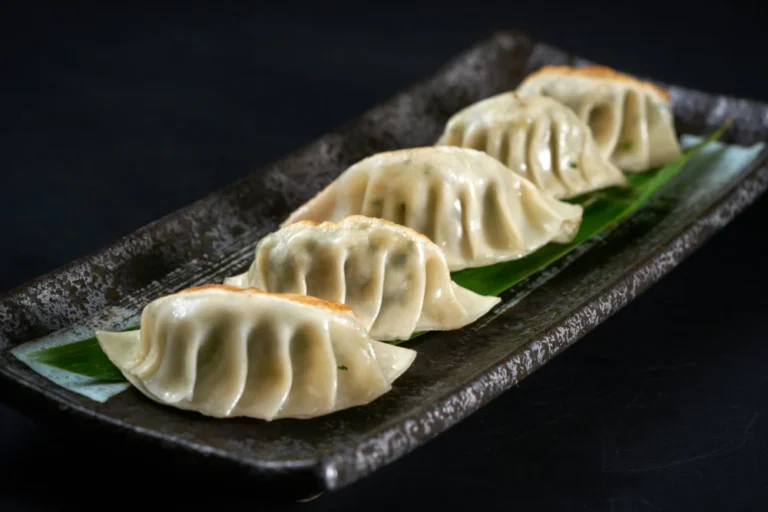
There is no need for a special gyoza pan. Gyoza are fried until the base is crisp, then steamed under a lid, so any flat non stick frying pan with a well fitting lid does the job.
- A tight lid traps the steam for the second stage.
- A flat, even base browns every dumpling at the same rate. The curved base of a wok browns them unevenly.
- A glass lid lets you watch the water cook off without lifting it.
- A 26 to 28cm pan holds 10 to 12 gyoza in one layer, enough for two people.
Our gyoza recipe walks through the fry, steam and fry again method.
Hot pot set
A home hot pot set is a pot with its own electric or induction base, so a broth can simmer in the middle of the table while everyone cooks their own food. A divided pot lets you run a spicy broth and a plain one side by side.
- Buy from a UK seller so the plug and voltage are right.
- Look for stepped heat settings rather than a single on and off switch, so the broth can sit at a gentle simmer.
- A pot that lifts off the base is far easier to wash.
A portable induction hob with a wide pan works just as well if you already own one.
Katsuobushi shaver
A katsuobushi shaver is a small wooden box with a plane blade set into the lid. You push a block of dried, smoked bonito across the blade and fresh flakes fall into a drawer below. Fresh flakes smell stronger than packet flakes, but the aroma fades within minutes.
- Pick a shaver with a replaceable blade. A dull blade tears the bonito rather than shaving it.
- Match the box size to the bonito block you plan to buy.
If you only make dashi a few times a year, packet bonito flakes are the more practical buy. Our guide to dashi explains both.
Japanese knife
A double-bevel gyuto or santoku in VG-10 or similar high-carbon stainless steel is the best all-round choice for a UK home kitchen. Look for a full tang, a comfortable handle, and a blade between 18cm and 21cm. Brands such as Tojiro, Global, Shun, and Yaxell sell well-made, widely stocked options that suit both Western and Asian cooking styles.
A Japanese knife holds a finer edge than most Western knives and cuts through vegetables, fish, and meat with less pressure. This guide covers what to check before you buy, three styles worth knowing, and where to shop.
What to check before you buy
- Steel type. VG-10 and AUS-8 stainless steel hold an edge well and resist rust, which suits a UK kitchen where knives get washed daily. Carbon steel sharpens easier but needs drying straight after use.
- Blade shape. A santoku has a flat edge and rounded tip, good for chopping and dicing. A gyuto is closer to a Western chef’s knife and handles a wider range of tasks.
- Weight and handle. Japanese knives are lighter than most Western ones. Hold one before you commit if you can, since the balance point matters more than the brand name.
- Full tang construction. The blade metal should run the length of the handle. This adds durability and balance.
Three styles worth knowing
| Style | Best for | Blade length |
|---|---|---|
| Santoku | Chopping vegetables, mincing garlic and ginger | 15 to 18cm |
| Gyuto | An all-purpose chef’s knife for meat, fish, and veg | 18 to 24cm |
| Nakiri | Straight-edged, made for vegetables | 16 to 18cm |
Looking after it
Hand wash and dry a Japanese knife straight after use. Store it on a magnetic strip or in a blade guard rather than a drawer, and use a whetstone or a fine honing rod every few weeks to keep the edge.
Mandoline slicer
A simple adjustable Japanese-style mandoline is the easiest way to get consistently thin, even slices for stir-fries and pickles. A mandoline slices vegetables far more evenly than a knife, which matters for quick-cooking stir-fries and even pickling.
What to check on the label
- An adjustable thickness dial, so you can go from thin cucumber slices to thicker daikon.
- A hand guard, since mandolines are sharp and the guard is what keeps fingers clear.
- Julienne blades included, if you want matchstick-cut vegetables without a separate tool.
Mandoline vs knife for slicing
| Type | Consistency | Best for |
|---|---|---|
| Mandoline | Very even, adjustable thickness | Pickles, salads, large batches |
| Knife | Depends on skill | Small quantities, more control over shape |
Adjustable vs fixed thickness
An adjustable dial that lets you set slicing thickness is more versatile than a mandoline with a single fixed blade, worth the small extra cost if you plan to use it for more than one type of dish. A julienne attachment adds further versatility for matchstick cuts without needing a separate tool.
Storage and blade safety
Look for a model that comes with a blade guard or storage case, since mandoline blades stay genuinely sharp and are easy to catch a finger on if left loose in a drawer.
Countertop vs handheld
A handheld mandoline is cheaper and easier to store, a countertop version with adjustable feet is more stable for larger quantities, worth the extra size and cost if you slice vegetables often.
Sushi rolling mat (makisu)
A traditional bamboo makisu around 24cm square is all most home cooks need, and it is the cheapest way into making sushi at home. A makisu is the flat bamboo mat used to shape and tighten a sushi roll, made of thin wooden slats bound together with cotton string.
- Size, 24cm square suits standard nori sheets, smaller mats exist for thin rolls only.
- Bamboo versus silicone, silicone wipes clean more easily and will not hold rice in the grooves.
- Whether it comes with a set, some sushi kits bundle a mat with a rice paddle and fan.
Bamboo vs silicone rolling mats
| Type | Cleaning | Best for |
|---|---|---|
| Bamboo | Needs washing and air-drying between uses | Traditional feel, cheap to replace |
| Silicone | Wipes clean, dishwasher safe | Easier hygiene, slightly more expensive |
Caring for a bamboo mat
Wash it by hand with warm water straight after use, rather than leaving rice to dry on it, and stand it upright or lay it flat to air dry fully before storing, since trapped moisture between the slats can encourage mould. A well-cared-for bamboo mat lasts for years despite its low price.
Set vs standalone
Buying a mat as part of a starter sushi kit, bundled with a rice paddle and sometimes chopsticks, often costs little more than the mat alone and is worth it for anyone just starting to make sushi at home.
Donabe (Japanese clay pot)
A simple glazed ceramic donabe is a good starting point, sturdy enough for rice, stews and hot pot without needing a specialist kiln-fired version. A donabe is a Japanese clay pot used for slow, even cooking, from rice to one-pot stews and hot pot at the table.
- Whether it is flame-safe on a gas or induction hob, since not every donabe suits every hob type.
- Size relative to your household, since donabe are usually sized for two to four servings.
- A glaze on the inside, which makes cleaning far easier than an unglazed pot.
Donabe vs regular pot
| Type | Heat retention | Best for |
|---|---|---|
| Donabe (clay) | Holds heat very evenly, slow to heat and cool | Rice, stews, hot pot at the table |
| Regular metal pot | Heats and cools quickly | Everyday quick cooking |
Glazed vs unglazed interior
A glazed interior is far easier to clean and less prone to staining or absorbing strong odours from food, while an unglazed donabe is more traditional but needs more careful seasoning and maintenance. For a first donabe, a glazed interior with an unglazed exterior is the easiest to live with day to day.
Checking hob compatibility before buying
Plain clay donabe are not compatible with induction hobs, since induction needs a magnetic base to generate heat. If you cook on induction, check specifically for a donabe made or fitted for induction use, rather than assuming any clay pot will work.
Bento box
A simple two-tier stackable bento box is the easiest all-rounder, keeping rice, protein and vegetables separate without extra containers. A bento box is a compartmentalised lunch box, originally Japanese, now a practical way to portion out a balanced meal.
- Whether compartments are fixed or removable, since removable dividers wash more easily.
- Microwave and dishwasher safe materials, if that matters for your routine.
- Leak-proof seals, especially if you plan to pack soups or sauces alongside solids.
Stackable vs single-tier bento boxes
| Type | Capacity | Best for |
|---|---|---|
| Single-tier | Smaller, one compartment set | Light lunches, simple packing |
| Stackable (two or more tiers) | Larger, separates food types | Full meals with rice, protein and sides kept apart |
Compartment count and layout
A basic two-compartment box suits a simple main and side, while boxes with three or more sections make it easier to keep sauces or wetter ingredients separate from rice or noodles. Fixed dividers built into the box tend to be more leak-resistant than a box with loose, removable inserts.
Checking it is genuinely leak-proof
Look for a box with a silicone seal around the lid rather than a simple clip closure, particularly if you plan to pack soups or sauces, since a poor seal is the most common complaint with cheaper bento boxes.
Donburi bowls
A simple ceramic donburi bowl set is worth having if you make rice bowls regularly, since a proper deep bowl holds a full portion better than a flat plate. A donburi bowl is a deep, wide Japanese bowl designed for rice bowl dishes like katsudon and gyudon, layered with rice, toppings and sauce.
- Depth, since a shallow bowl makes layered rice bowls awkward to eat.
- Microwave and dishwasher safe glaze, for everyday use.
- Set size, since donburi bowls are usually sold in pairs or sets of four.
Donburi bowl vs regular bowl
| Type | Depth | Best for |
|---|---|---|
| Donburi bowl | Deep, wide | Layered rice bowls like katsudon |
| Regular bowl | Shallower | Soups, small sides |
Ceramic vs melamine
Ceramic donburi bowls hold heat better and feel more authentic, but are heavier and can chip. Melamine versions are lighter, more resistant to chips and drops, and often cheaper, making them a practical choice for everyday family use, though they should not go in the microwave.
Matching bowl and set size
Sets are usually sold in pairs or fours, so check the set size matches your household before buying, since mismatched bowls from separate purchases rarely look as good together as a proper set.
Matching lids
Some donburi bowl sets include matching lids for storing leftovers, a useful extra if you plan to make rice bowls ahead of time rather than always eating straight away.
Chopsticks
Most chopsticks sold in the UK are the wrong ones for the job. The material and the tip decide whether food arrives at your mouth.
Which chopsticks should you buy?
For everyday eating at home, buy Japanese style wooden or bamboo chopsticks with a tapered, slightly textured tip. Wood grips food far better than metal or lacquer, and the pointed tip handles noodles and small pieces. Keep a longer pair for cooking.
The main types
- Japanese. Shorter, tapered to a point. Best for beginners and for fish.
- Chinese. Longer, thicker, blunt ended. Good for reaching across shared dishes.
- Korean. Flat, usually stainless steel, often with a matching spoon. Slippery until you are used to them.
- Cooking chopsticks. Around 30cm. For frying, plating and beating eggs.
What to look for
Grip is the thing beginners get wrong. Smooth lacquered or metal chopsticks look smart and drop food constantly. A slightly rough wooden tip solves most of the problem before technique does.
- A textured or matte tip, not high gloss lacquer
- Wood or bamboo over metal for everyday eating
- Around 23 to 24cm for adults, shorter for children
- Dishwasher safe only if the packaging says so, as heat splits wood
Caring for wooden chopsticks
- Wash by hand and dry standing up, tips down
- Avoid soaking, which raises the grain
- Re oil occasionally with a food safe mineral oil
- Replace them when the tips fray or the finish lifts
Where to buy
- Reusable chopstick sets. Look for a tapered tip and a square section near the top so they do not roll.
- Bamboo chopsticks. Light, cheap and grippier than lacquered wood.
Frequently asked questions
Which Asian kitchen tool should I buy first?
A wok spatula, if you already have a wok. It makes stir frying easier straight away and costs little.
Can I use metal tools in a non stick wok?
No. Use wooden or silicone tools in a non stick wok. Metal tools are fine in carbon steel and cast iron.
Do I need a gyoza pan to make gyoza?
No. Any flat frying pan with a lid that fits well will cook gyoza.
Is a bamboo wok brush better than a sponge?
For a seasoned carbon steel wok, yes. Hot water and a bamboo brush clean the wok without stripping the seasoning, while a soapy sponge wears it away over time.
Do I need a full Japanese knife set?
No. One good gyuto or santoku covers most home cooking. Add a paring knife later if you want one for small, precise jobs.
Are Japanese knives hard to sharpen?
They take a finer edge than Western knives, so a coarse steel can damage them. A whetstone or a pull-through sharpener rated for Japanese steel works well.
Can I put a Japanese knife in the dishwasher?
No. Heat and detergent dull the edge and can damage the handle. Hand wash and dry it straight away.
Is a mandoline safe to use?
Yes, with the hand guard used properly. Most injuries happen when the guard is skipped for a small last piece.
Are metal chopsticks harder to use?
Yes, noticeably. Steel is slippery and heavier. If you are learning, start with wood and move to metal later if you want to.
Shop this
- Wok spatula. The curved metal tool built for high heat tossing.
- Spider skimmer. For lifting noodles and fried food out of hot liquid.
- Bamboo wok brush. For cleaning a wok without stripping the seasoning.
- Rice paddle. For folding seasoning through sushi rice.
- Hot pot set. A tabletop pot and base for hot pot at home.
- Mandoline slicer. For evenly thin vegetable slices.
- Sushi rolling mat. The bamboo mat behind every home-rolled sushi roll.
- Donabe clay pot. For slow, even cooking Japanese-style.
- Bento box. A compartmentalised lunch box for portioned meals.