Some links on this page are affiliate links. As an Amazon Associate, The Asian Larder earns from qualifying purchases, at no extra cost to you.
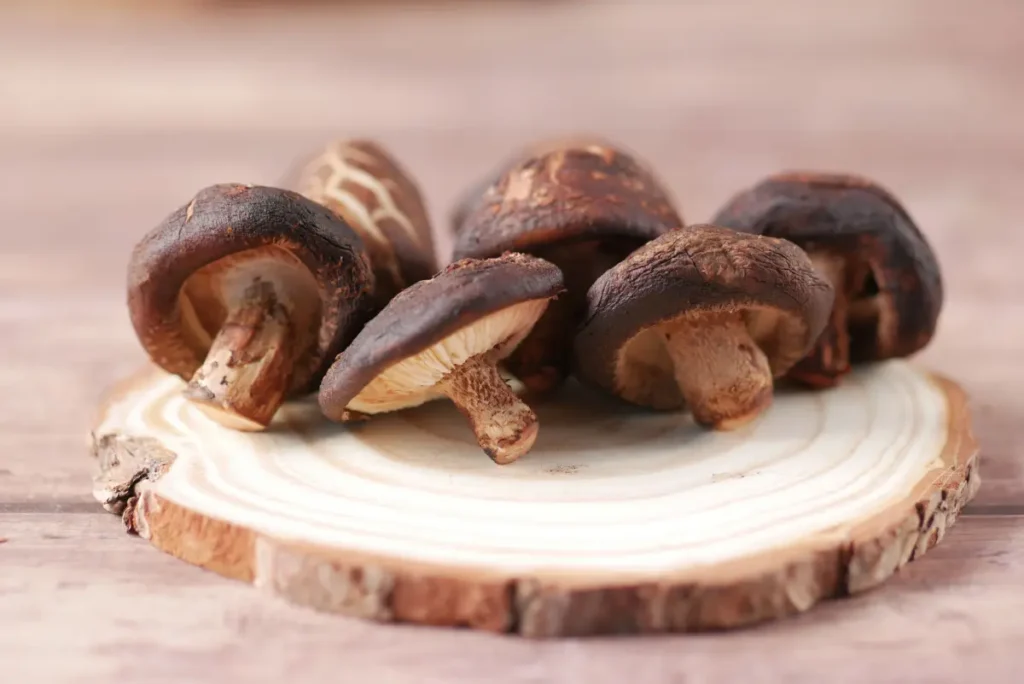
Dried shiitake are shiitake mushrooms dried whole or sliced, which concentrates their flavour into something smokier and more savoury than the fresh mushroom. Drying also boosts their natural umami, which is why the soaking liquid is treated as a stock rather than thrown away.
Where to buy dried shiitake mushrooms in the UK
Dried shiitake are sold in most large UK supermarkets in small packs, while Chinese grocers stock bigger, better-value bags.
Which aisle are dried shiitake in?
In supermarkets, dried shiitake usually sit in the world food aisle near the noodles, or with the dried mushrooms in the vegetable or speciality section.
Asian supermarkets
A Chinese grocer is the best source, with whole caps in larger bags and grades such as the prized thick, cracked flower mushroom.
Buying it online
Online is a good option for bigger bags, which keep well and work out cheaper per gram.
What are dried shiitake mushrooms?
How to rehydrate them
- Rinse off any grit, then cover with warm water for about 30 minutes, or cold water in the fridge overnight for a meatier texture.
- Squeeze out the excess water, cut away the tough stems, and slice the caps.
- Strain the soaking liquid through a fine sieve and use it in braises, soups or vegetarian dashi.
Grades of dried shiitake
The highest grade, called flower mushroom or donko, has thick caps with a cracked, flower-like pattern and is prized for the meatiest texture. Standard dried shiitake, thinner and smoother-capped, is perfectly good for everyday soups and stir-fries at a lower price.
Do not discard the soaking liquid
The water used to rehydrate dried shiitake is rich with flavour, strain it through a fine sieve to remove any grit, then use it in place of some or all of the stock in a soup or braise rather than pouring it away.
The best dried shiitake mushrooms to buy in the UK
A bag of whole dried shiitake with thick, cracked caps is the best all-round buy for UK cooks, sold in Chinese and Japanese grocers and online. Dried shiitake have a deeper, smokier flavour than fresh, and the soaking liquid makes a rich stock in its own right.
What to check on the label
- Whole versus sliced, whole caps give meatier pieces, sliced rehydrate faster.
- Thick caps with a cracked, flower-like pattern (sold as flower mushroom or donko), which are prized for flavour and texture.
- Country of origin and packing date, since older stock can taste dusty.
Dried vs fresh shiitake
| Type | Flavour | Best for |
|---|---|---|
| Dried shiitake | Deeper, smoky, more savoury | Braises, stocks, stir-fries |
| Fresh shiitake | Milder, earthy | Quick stir-fries, grilling |
Whole vs sliced
Whole caps rehydrate to a meatier bite and are better for dishes where the mushroom is a main feature, while pre-sliced dried shiitake rehydrates faster and suits soups and stir-fries where convenience matters more than texture.
How to store dried shiitake mushrooms
Keep them in an airtight container in a cool, dry cupboard, where they last up to a year, moisture is the main enemy, so a sealed jar rather than the original paper bag is worth switching to once opened.
Frequently asked questions
Why are dried shiitake stronger than fresh?
Drying concentrates the compounds responsible for their savoury, umami flavour.
Can I eat the stems?
They are tough, so remove them from the finished dish, but they are good simmered in stock and then discarded.
How long do dried shiitake keep?
Up to a year in an airtight container in a cool, dry cupboard.
Do I need to soak dried shiitake before cooking?
Yes, soak in warm water for 30 minutes, or in cold water overnight for the best texture, and keep the soaking liquid for stock.
Are dried porcini a good substitute?
They give a similar savoury depth but a different, more earthy flavour, so they work in a pinch.
How many dried shiitake do I need per person?
Three to four caps per person is plenty for a side dish.
Shop this
- Dried shiitake mushrooms. Whole dried caps for braises and stocks.