Some links in this masala dabba guide are affiliate links. As an Amazon Associate, The Asian Larder earns from qualifying purchases, at no extra cost to you.
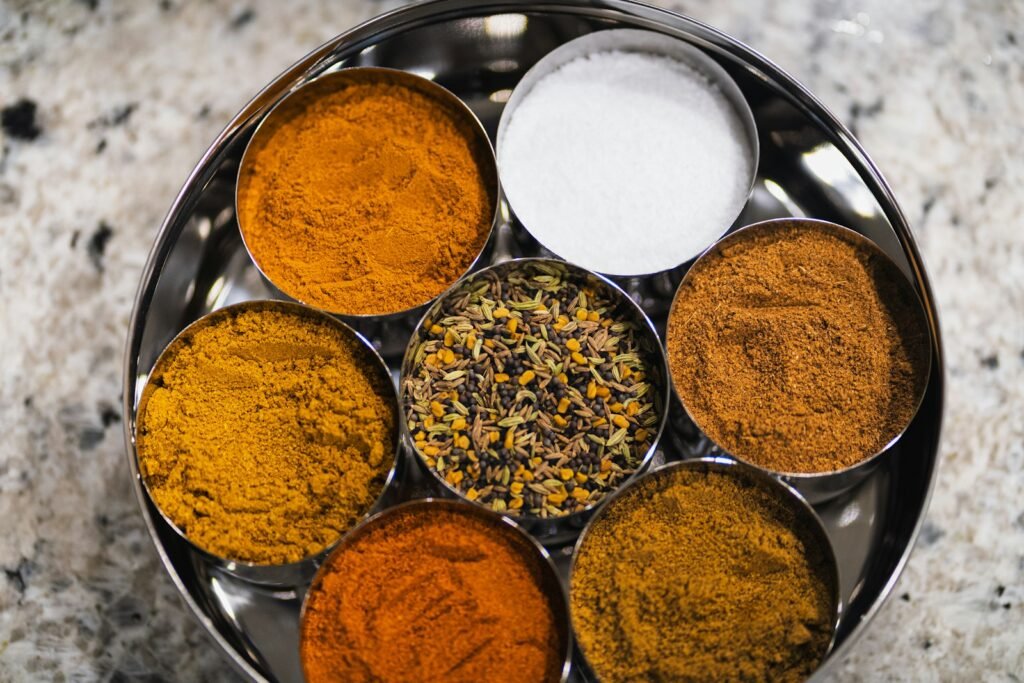
A masala dabba is a round tin that holds the spices you use most. Each spice sits in its own small bowl, and a tiny spoon lives inside the tin. In many South Asian kitchens, the tin sits by the hob and comes out at almost every meal. So when the oil is hot, every spice is one lid away.
This guide covers what to look for in a masala dabba, what to put in it and where to buy one in the UK. It also explains how to keep the spices fresh. The advice comes from maker information and retailer listings, so check each listing before you buy.
The short answer
For most kitchens, the best choice is a stainless steel tin with seven removable bowls and a clear inner lid. Steel is easy to wash, and turmeric does not stain it the way it stains plastic. The clear lid also shows you what is inside before you open the tin.
For a filled gift, the Spice Kitchen Indian Spice Tin and the Dishoom Masala Dabba both come with spices. Plain empty tins cost less, and you fill them with the spices your own cooking needs.
What is a masala dabba?
Masala means spices or a spice mix, and dabba means a box or tin. A typical tin holds small cups, often seven, inside a round or square box, as the Wikipedia entry notes. A small spoon of about half a teaspoon also comes with it.
Some modern tins have a clear lid, so you can see the spices. Old brass tins are often family heirlooms, passed down from one generation to the next.
The tin is built for speed rather than long storage. Indian, Pakistani and Bangladeshi cooking often starts with whole spices fried in hot oil for a few seconds. Because the spices sit together, you can add them on time instead of hunting for jars while the oil burns.
What to look for in a masala dabba
Most tins look alike online. However, small details change how easy a tin is to use every day.
Material
- Stainless steel. The most common choice, and the easiest to live with. It washes easily, resists rust and does not pick up the yellow stain that turmeric leaves on plastic.
- Brass. A traditional, warm metal that makes a lovely gift. Brass darkens over time, though, so it needs polishing to stay bright.
- Wood. Looks good on an open shelf, but wood is harder to clean and bright spices can mark it. Check what the bowls inside are made of.
- Plastic. Light and cheap. Still, turmeric and chilli stain it quickly, and the bowls can hold on to smells.
Size and number of bowls
Seven bowls is the standard, and seven covers everyday cooking for most people. In UK listings, seven-bowl tins are usually about 19 to 24 cm across. They stand about 8 to 10.5 cm tall, so measure your shelf or drawer first.
Nine-pot tins often include one larger pot. That suits salt or the spice you use most, such as chilli powder or cumin. Compact tins of around 16 cm also exist. They fit a tight cupboard, but the bowls hold less, so you refill them more often.
Lids
Look for a double lid: a clear inner lid with a steel outer lid on top. The inner lid keeps each spice in its own bowl if the tin tips. You can also check your spices at a glance. Some larger sets also give every pot its own small lid. That helps if you keep a strong spice such as asafoetida (hing), because its smell stays in its own pot.
Bowls and spoon
The bowls should lift out easily, so you can wash and refill them one at a time. Read the reviews on this point, because some tins pack the bowls in so tightly that they spill when you lift them.
Most tins come with one small spoon. Some sets include two spoons or one for every bowl, and a spoon for each spice stops flavours from mixing.
What to put in a masala dabba
There is no fixed list. The right spices are the ones you reach for most, so they change from one family to the next. A common starting set looks like this:
- Cumin seeds
- Mustard seeds
- Turmeric
- Chilli powder
- Ground coriander
- Garam masala
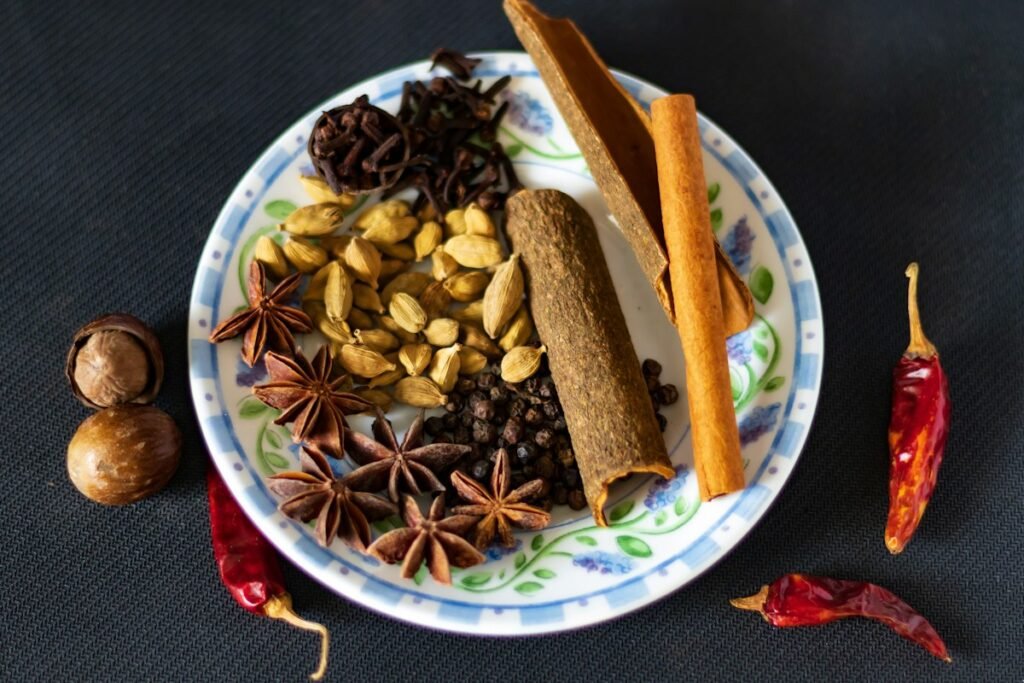
- Whole spices (khada masala), such as cloves, green cardamom and cinnamon or cassia
For example, the filled Spice Kitchen tin holds garam masala, chilli powder, cumin seeds and ground coriander. It also has turmeric, mustard seeds, cassia, cardamom and cloves.
Regional cooking changes the mix too:
- South Indian kitchens often keep mustard seeds, urad dal, asafoetida, dried red chillies and fenugreek seeds.
- Bengali kitchens often keep panch phoron, a mix of five whole seeds.
- Gujarati kitchens often keep dhana jeeru, a ground mix of coriander and cumin.
Keep fresh ginger, garlic and green chillies out of the tin, since they spoil quickly. Our guide on how to store fresh ginger and garlic covers those instead.
How to keep the spices fresh
- Fill small amounts. Put a few weeks’ worth in each bowl. Then keep the rest of the pack sealed in a cool, dark cupboard.
- Mind the heat. Keep the tin near the hob, but not right above it. Steam and heat make ground spices clump and fade faster.
- Use a dry spoon. A damp spoon turns ground spices lumpy.
- Refill clean. Tip out the old spice first, then wash the bowl and let it dry fully.
- Buy whole where you can. Whole cumin and coriander seeds keep their flavour longer than ground ones, so grind small batches as you need them.
Spice tins worth a look in the UK
The options below cover the main types you will find. Details come from the makers’ and sellers’ own listings. So check the size, contents and price on the page before you buy.
KitchenCraft World of Flavours Indian Masala Dabba
A stainless steel tin with a double lid and seven removable bowls, from the UK kitchenware brand KitchenCraft. It comes empty, so you choose the spices. Find the KitchenCraft masala dabba on Amazon UK.
Plain stainless steel tins with seven bowls
The classic everyday tin, sold by Asian grocers and many online sellers under different names. Many have a clear inner lid, and most listings say the spices are not included. Compare sizes in this stainless steel masala dabba search on Amazon UK.
Nine-pot tins with lidded pots
Some larger tins hold eight small pots and one large pot, each with its own clear lid. These tins are about 22 to 23.5 cm across. They suit cooks who keep more than seven spices in daily use. See nine-pot spice tins on Amazon UK.
Spice Kitchen Indian Spice Tin with 9 Spices
A filled tin from Spice Kitchen, a family business in Liverpool. It comes with nine spices and blends, a spice spoon and a recipe booklet. You can also add a silk sari gift wrap. It makes a good gift for someone starting out. Note that it contains mustard seeds, a listed allergen. Buy it from Spice Kitchen’s own shop.
Dishoom Masala Dabba
Dishoom’s set holds 12 spices and signature blends in gift tins, and Dishoom sells refills separately. It suits anyone cooking from the Dishoom cookbook. Find it in the Dishoom online store.
Brass and hand-painted tins
These make striking gifts and look good on a shelf. Check what the bowls inside are made of, and expect to polish brass from time to time. Browse brass spice tins on Amazon UK.
Where to buy a masala dabba in the UK
Asian grocers and South Asian kitchenware shops let you compare sizes and see how the bowls lift out. Busy South Asian shopping streets are good places to look. For example, try Southall Broadway in London, Ealing Road in Wembley, Belgrave Road in Leicester or Soho Road in Birmingham.
Online, Amazon UK has a wide range of sizes and styles. Check each listing for the width and height, and whether spices come with the tin. Also check how many bowls and spoons you get. For a filled gift tin, buy from Spice Kitchen or Dishoom direct.
Is a masala dabba worth it?
Yes, if you cook South Asian food a few times a week. The tin saves time, keeps your daily spices tidy and shows you when one runs low. However, if you only cook a curry now and then, sealed jars in a dark cupboard keep spices fresh for longer.
Stocking a kitchen for South Asian cooking? Start with our guide to the best basmati rice in the UK. Then see how to cook basmati rice. For other kit, see our list of Asian kitchen tools worth buying.
Frequently asked questions
What is a masala dabba used for?
A masala dabba keeps your most used spices in one tin by the hob, ready to add while you cook. It is a working tin for daily cooking rather than long storage.
What are the 7 spices in a masala dabba?
There is no fixed set of seven. A common start is cumin seeds, mustard seeds, turmeric, chilli powder and ground coriander. Add garam masala and a bowl of whole spices, then swap any of them for the spices your family uses most.
What size spice tin should I buy?
A seven-bowl tin of about 19 to 24 cm across suits most kitchens. Choose a nine-pot tin if you use more spices every day. Also measure your shelf or drawer height first.
Is stainless steel or brass better?
Stainless steel is easier for everyday use, because it washes easily and turmeric does not stain it. Brass looks traditional and makes a good gift, but it darkens over time and needs polishing.
How do you clean a masala dabba?
Empty the bowls, then wash them and the tin in warm soapy water. Dry everything fully before you refill, and check the maker’s care notes before you use a dishwasher.
Where can I buy a masala dabba in the UK?
Try Asian grocers, South Asian kitchenware shops and Amazon UK. For filled gift tins, Spice Kitchen and Dishoom sell their own online.