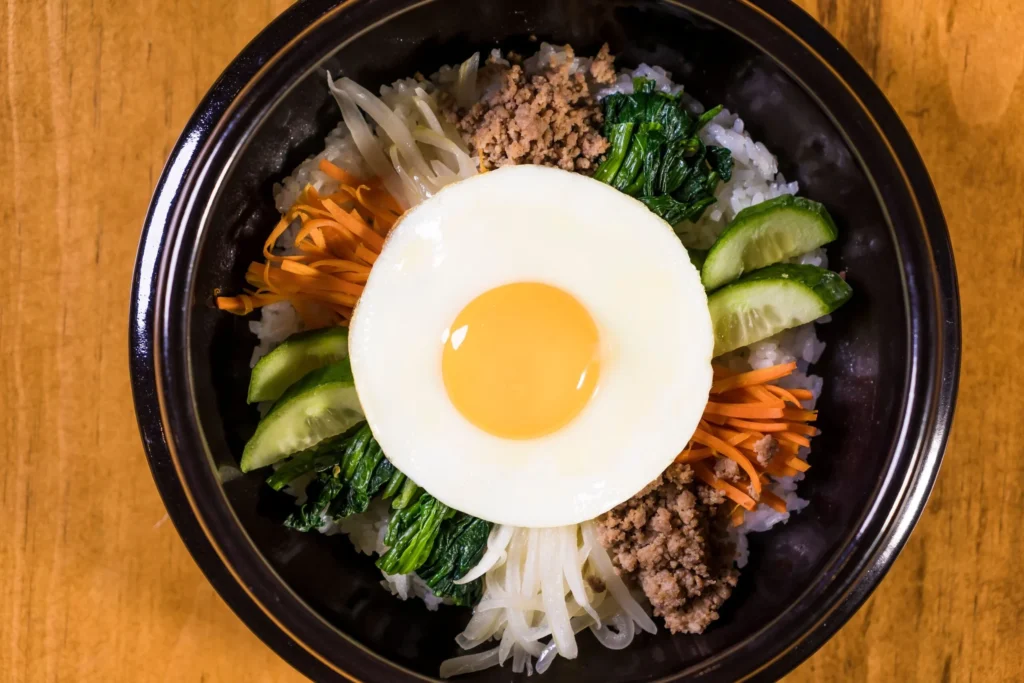
Bibimbap is a Korean rice bowl topped with seasoned vegetables, a fried egg, and gochujang, mixed together just before eating. It takes about 30 minutes if you prep the vegetables while the rice cooks, and works well with shop-bought gochujang and whatever vegetables are already in a UK fridge.
The dish does not need to be exact. Each vegetable is seasoned on its own, then everything sits on rice in sections, ready to stir together at the table.
Ingredients
| Ingredient | Amount |
|---|---|
| Cooked short grain rice | 2 bowls |
| Beef mince or sliced beef | 200g |
| Soy sauce | 1 tablespoon |
| Sesame oil | 2 teaspoons |
| Spinach | 100g |
| Carrot, julienned | 1 |
| Courgette, julienned | 1 |
| Beansprouts | 100g |
| Eggs | 2 |
| Gochujang | 2 tablespoons |
Method
- Cook the rice and keep it warm.
- Toss the beef with soy sauce and cook in a hot pan for 3 to 4 minutes, then set aside.
- Blanch the spinach for 30 seconds, drain, and mix with a little sesame oil and salt.
- Stir fry the carrot and courgette separately for 2 minutes each, keeping them crisp. Blanch the beansprouts for 1 minute.
- Fry the eggs sunny side up.
- Divide the rice between bowls. Arrange the beef and vegetables in sections on top, and finish with a fried egg and a spoon of gochujang.
Where to get the ingredients in the UK
Gochujang is the one ingredient most UK kitchens do not already have. Large Tesco and Sainsbury’s branches stock a small Korean range, and it is reliably available at Asian and Korean grocers or online. See our gochujang buying guide for which brand to pick. Short grain rice is sold as sushi rice in most UK supermarkets, which works fine here.
Making it vegetarian
Swap the beef for mushrooms, sliced and fried in a little sesame oil and soy sauce until browned. The rest of the method stays the same.
FAQ
Do I need a stone bowl to make bibimbap?
No. A stone bowl (dolsot) crisps the rice at the bottom, but a normal bowl works fine for a weeknight version. Any regular bowl gives the same flavours.
Can I make bibimbap ahead of time?
Prep the vegetables and beef up to a day ahead and store separately in the fridge. Cook the rice and fry the egg fresh, then assemble just before eating.
What other vegetables work in bibimbap?
Mushrooms, mangetout, and thinly sliced radish all work well. The dish is flexible, so use whatever fresh vegetables are on hand.
Why keep the vegetables separate before mixing?
Each vegetable is seasoned differently, so cooking and arranging them apart keeps their flavours distinct until the bowl is stirred together at the table.
For another Korean favourite, try our gochujang chicken. If gochujang is new to you, our what is gochujang guide explains the flavour and how to use it.
Shop this
Some links on this page are affiliate links. If you buy through them we may earn a small commission, at no extra cost to you.
- Gochujang paste. The one ingredient worth having in for this.
- Short grain rice. Gives the right texture for the base.