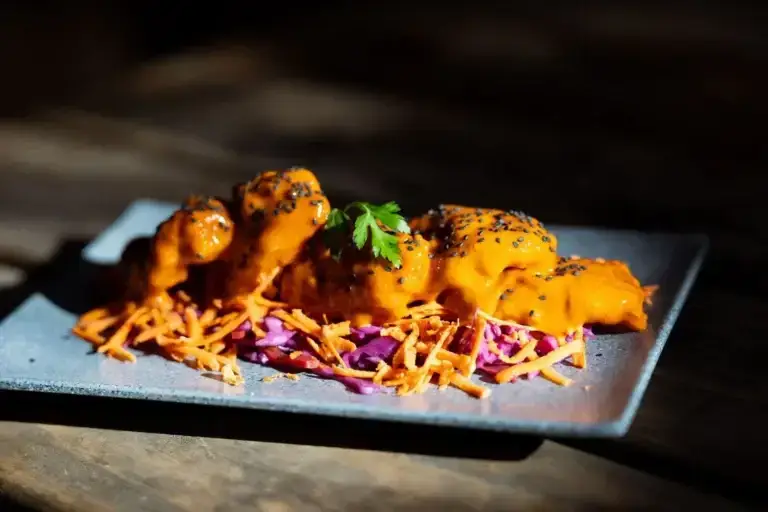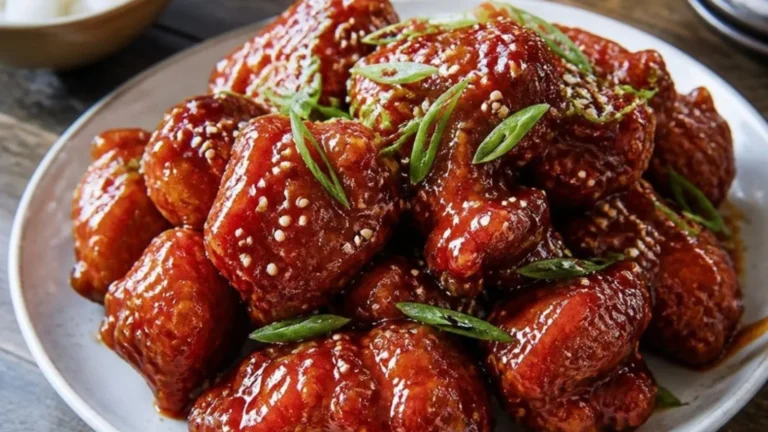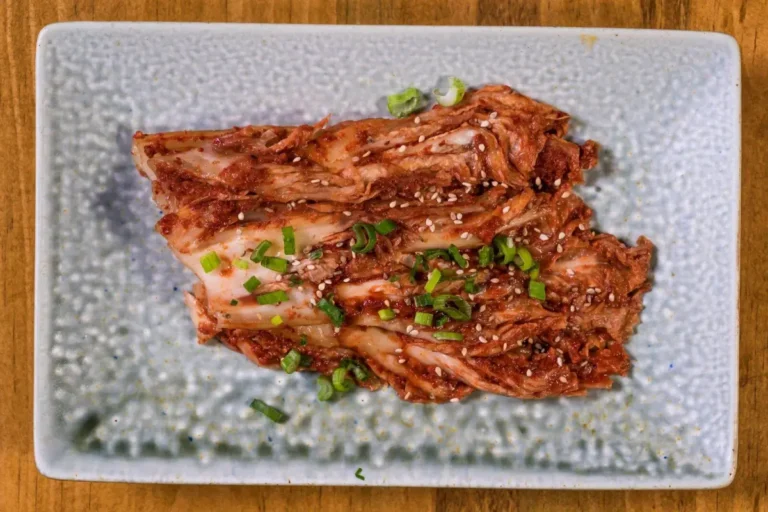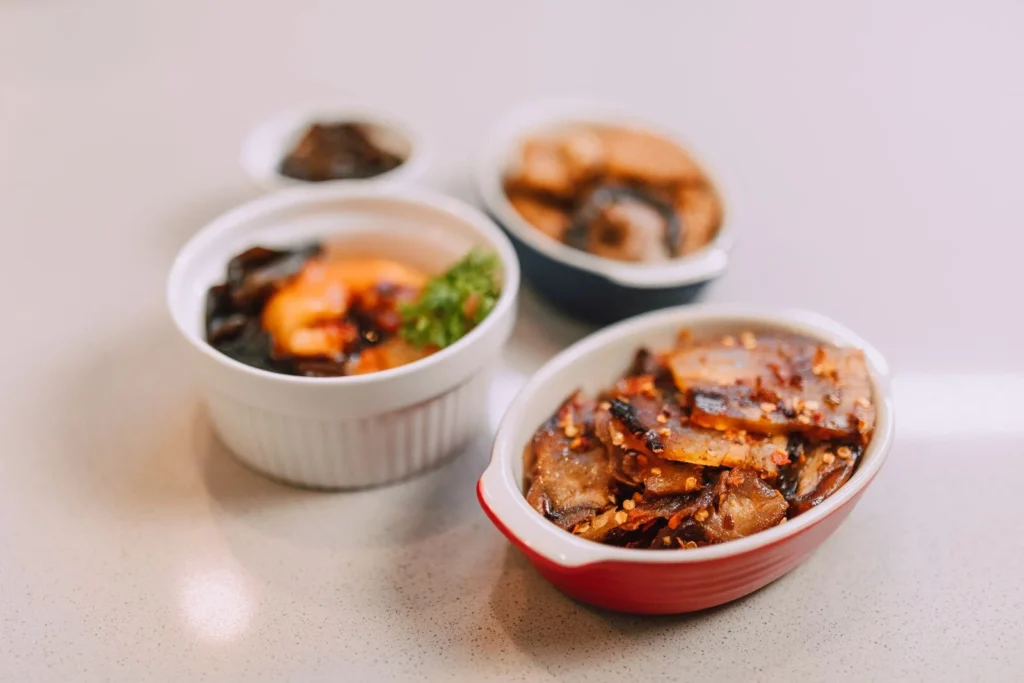
Gochujang is a thick, deep red Korean paste made from chilli powder, glutinous rice, fermented soybean and salt. It is sweet, savoury and spicy at once, and it is the base flavour behind bibimbap, tteokbokki and Korean fried chicken.
Nothing else tastes quite like it, which is why it is worth tracking down rather than substituting. This covers what it is, which tub to buy, where it sits in a UK shop, and what to do if you cannot find any.
What gochujang tastes like
Layered rather than simply hot: chilli heat at the front, a natural sweetness from the rice, deep savouriness from the fermented soybean, and a faint earthiness underneath. The heat builds slowly and is far less sharp than fresh chilli. The longer the paste has fermented, the deeper it tastes.
How it is made
Traditional gochujang mixes coarsely ground dried chillies (gochugaru), glutinous rice powder, meju (fermented soybean powder), malt syrup and salt. It is packed into large earthenware pots called onggi and left outdoors to ferment for months, sometimes years, with the lid lifted on sunny days so moisture evaporates and the paste concentrates. Most commercial gochujang uses the same ingredients but ferments faster under controlled conditions.
Gochujang vs gochugaru
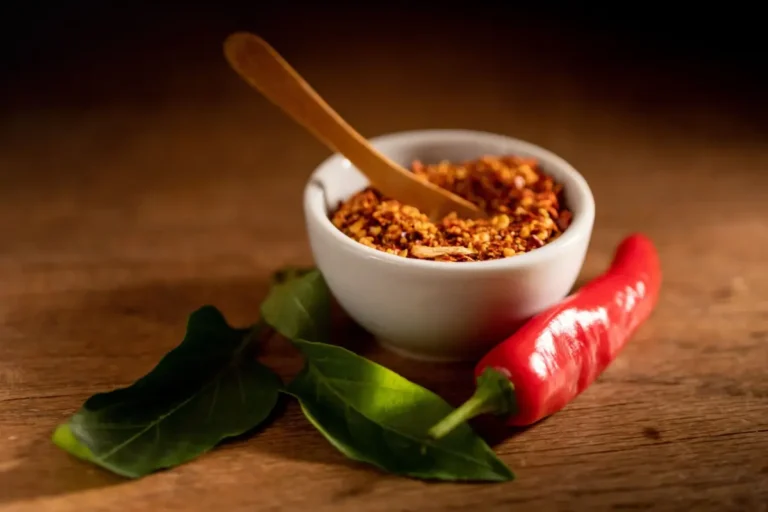
These get confused constantly, and swapping one for the other never works. Gochugaru is dried, ground chilli flakes with nothing added, used to season and colour dishes such as kimchi. Gochujang is a wet fermented paste that contains gochugaru along with rice, soybean and salt, and it is sweet and savoury as well as hot. In a shop they are not even in the same aisle: gochugaru sits with the spices, gochujang with the world food sauces.
Which tub to buy
Traditionally fermented paste beats a quick blended one by a distance. Months of ageing build a savoury, slightly funky depth alongside the heat and sweetness. Cheaper versions shorten or skip the fermentation and lean on sugar and corn syrup instead, which tastes flatter and more one-dimensional.
What to check on the label:
- Fermented soybean, glutinous rice and Korean chilli powder near the top of the ingredients list.
- A short list overall. Long chains of syrups and additives signal a shortcut version.
- A marked heat level, so you know what you are buying.
- Barley or wheat, if you are coeliac. Glutinous rice is gluten free despite the name, but some brands add grain.
Brands sold in the UK
- CJ Haechandle. The most widely available Korean brand here, reliable and consistent.
- Chung Jung One. Traditionally fermented, common in Asian supermarkets and online.
- Sempio. Another traditional producer, slightly sweeter.
- Bibigo. Made by CJ Foods, easy to find in Asian supermarkets.
- Yutaka. The version that turns up in mainstream UK supermarkets.
Mild, medium or hot
Korean tubs carry a heat rating, often a chilli symbol numbered one to five. Most UK listings default to medium, which suits bibimbap and gochujang chicken. Choose mild if you are cooking for a mixed group or for children. Hot suits stews and marinades where the paste gets diluted by everything else in the pan.
Tub or squeezy bottle?
| Tub | Squeezy bottle | |
|---|---|---|
| Texture | Thick paste, holds its shape | Thinner, pours |
| Strength | Deeper and more fermented | Often sweetened and diluted |
| Use for | Cooking, marinades, stews | Dipping and drizzling |
| Value | Better per gram | Convenient, costs more |
Buy the tub if you are cooking. Chung Jung One gochujang and Sempio gochujang are both traditionally fermented and widely stocked online.
Which aisle is gochujang in?
The world food aisle, on the shelf with the Korean and Japanese ingredients near the soy sauce and sesame oil. It is ambient, so it is never in the chiller. Work through these spots in order in a larger Tesco, Sainsbury’s, Waitrose, Asda or Morrisons:
- World food aisle, Korean or Japanese section. Red tubs and squeezy bottles near the soy sauce. The usual spot.
- Asian cooking sauces. Some chains shelve the squeezy bottles with the stir-fry and marinade jars.
- Table sauces and condiments. A few stores now treat it as a hot sauce and put it beside the sriracha.
- Meal kit or fakeaway bay. Seasonal displays sometimes pull it out of the world food aisle entirely.
Aisle numbers vary between branches of the same chain, so the section is more reliable than a number. Express, Local and Metro shops seldom carry it. If you ask a member of staff, say gochujang and add Korean chilli paste: asking only for chilli paste points people at harissa or Thai curry paste, and asking for Korean chilli sends them to gochugaru.
A Korean grocer is the better trip if you cook Korean food often. The tubs are bigger, the price per gram is far lower, and you get the full spread of heat levels rather than a single supermarket line. Look in the same aisle as the doenjang and ssamjang, which usually sit together. Gochujang also posts easily and needs no refrigeration in transit, so a large tub bought online normally beats the supermarket on price.
How to use it
It is strong, so start with less than you think and build up.
- Sauces and marinades. Mix with soy sauce, sesame oil, garlic and a little sugar for chicken, beef or pork. This is the base of both bibimbap sauce and tteokbokki sauce.
- Stews and soups. A tablespoon or two in kimchi jjigae or budae jjigae. It dissolves readily and rounds out the broth.
- As a condiment. Thinned with sesame oil and a little vinegar, served alongside rice and vegetables.
- Outside Korean food. A small spoonful into hummus, a tomato pasta sauce, or over roasted vegetables. The fermented depth does something plain chilli sauce cannot.
How to store it
Refrigerate once opened and press the surface flat so less air sits on it. It keeps for months, and up to a year, because the salt and fermentation preserve it. The colour darkens over time and the paste stiffens in the cold, both normal. A spoon of water loosens it again.
What to use instead
Gochujang does three jobs at once: heat, sweetness and fermented depth. Any swap has to cover all three.
The closest swap: 1 tbsp white miso, 1 tsp sriracha and 1 tsp honey for every tablespoon of gochujang. The miso brings the fermented base, the sriracha the chilli, the honey the sweetness.
- Red miso, chilli flakes and sugar. Deeper and saltier. Two parts miso to one part flakes, plus a pinch of sugar.
- Doubanjiang plus honey. Three parts to one. Saltier and less sweet, but properly fermented.
- Sriracha plus honey. Two parts to one. Right heat and sweetness, no depth.
- Harissa plus honey. A last resort. The cumin and caraway pull the dish somewhere else.
Cook any of these for a minute or two rather than stirring them in raw, because raw miso and raw chilli paste both taste harsh. What not to use: gochugaru on its own (a dry flake with no sweetness, salt or body), tomato puree and chilli powder (colour and nothing else), sweet chilli sauce (far too sweet and thin), and Tabasco (vinegar-led, it will sour the dish).
| Dish | Best swap |
|---|---|
| Bibimbap sauce | Miso, sriracha and honey, plus a splash of sesame oil |
| Tteokbokki | Doubanjiang plus honey, for the fermented backbone |
| Marinade for chicken or pork | Red miso, chilli flakes and sugar |
| Stew or jjigae | Doubanjiang, where salt and depth matter more than sweetness |
| A dipping sauce | Sriracha and honey, thinned with rice vinegar |
Frequently asked questions
How spicy is gochujang?
Milder than most people expect. The sugar and fermentation round the heat off, and most UK tubs are mild to medium. Korean tubs are graded, so you can pick your level rather than guess.
What is the difference between gochujang and gochugaru?
Gochugaru is dried, ground chilli. Gochujang is a fermented paste made using gochugaru along with rice, soybean and salt. They are used differently and are not interchangeable.
Does gochujang need refrigerating?
Once opened, yes. It is sold from an ambient shelf, but most labels ask for refrigeration after opening. It keeps for months that way.
Is gochujang vegan?
Usually. The base is chilli, rice, soybean and salt. Check the label, since a few brands add honey or a fish-based seasoning.
Is gochujang gluten free?
Not reliably. Glutinous rice is gluten free despite the name, but some commercial brands add barley or wheat. Check the label if you are coeliac.
Which aisle is gochujang in at Tesco?
The world food aisle, with the Korean and Japanese ingredients. If it is not there, check the Asian cooking sauces. Aisle numbers differ between branches, so search the product in the Tesco app for your store.
Can I use sriracha instead of gochujang?
At a push, with honey added, two parts sriracha to one part honey. Sriracha is thin and vinegary and lacks the fermented soybean depth, so the dish will taste sharper.