Some links on this page are affiliate links. As an Amazon Associate, The Asian Larder earns from qualifying purchases, at no extra cost to you.
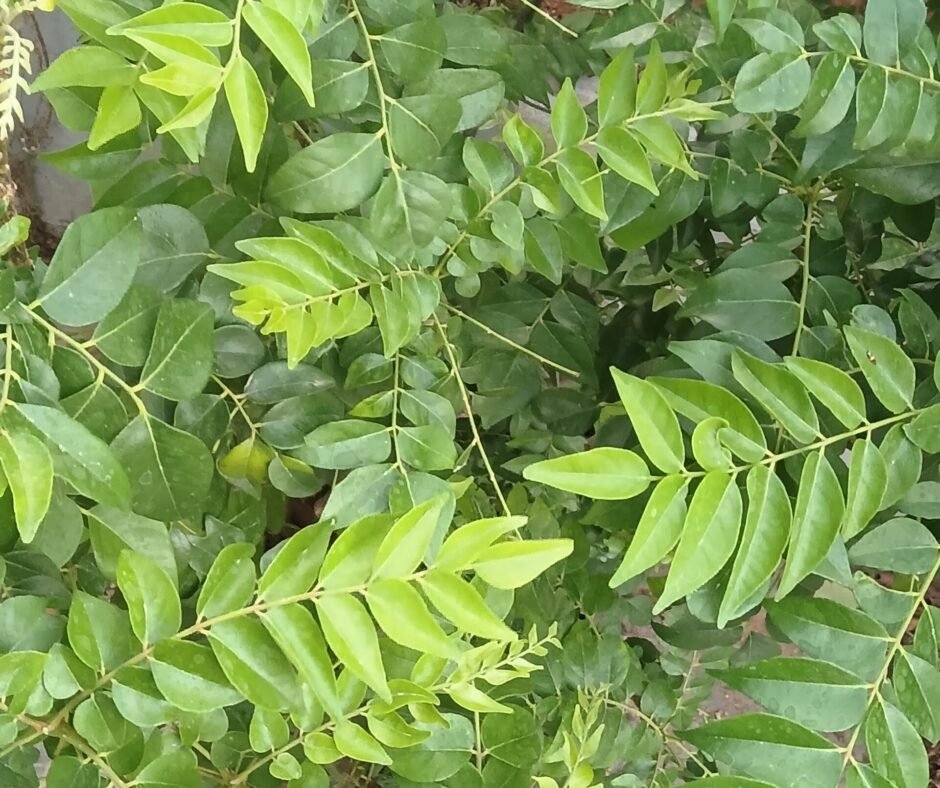
Curry leaves are the small, glossy leaves of the curry leaf tree, used across South India, Sri Lanka and Malaysia. They go into hot oil at the start of a dish, where they pop and release a citrus and nutty smell you cannot get from anything else. Finding them fresh in the UK takes a bit of knowing where to look.
Here is where to buy them, which aisle to try, and what to do when you cannot get hold of any.
Supermarkets
Fresh curry leaves are not a standard supermarket line. A few larger branches with a big world foods section carry them, usually in a small plastic punnet in the chilled herb fridge next to the coriander and mint, rather than loose on the shelf. Stores in areas with a large South Asian population are far more likely to stock them.
Dried curry leaves turn up more often, in the spice aisle with the bay leaves and dried herbs. Brands aimed at Indian cooking, such as the ones sitting on the world foods shelf, are a better bet than the mainstream herb jars.
Call ahead rather than making a special trip. Stock varies branch to branch, and a curry leaf punnet sells out fast when it does appear.
Asian grocers: the best option
An Indian, Sri Lankan, Pakistani or Bangladeshi grocer is where to go. Most carry fresh curry leaves on the stalk, sold in bags by weight, and the price is a fraction of supermarket prices. Ask at the counter if you cannot see them, because they are often kept behind the till or in the chiller to stop them drying out.
Tamil and Sri Lankan shops in particular treat curry leaves as a basic, not a special order. If you are in a city with a South Asian high street, you will almost always find them.
Online
Fresh curry leaves ship by post from several UK Asian grocers and herb specialists, usually next day so they arrive still green. Buy more than you need and freeze the rest. Fresh curry leaves on Amazon UK come and go depending on the seller, while dried curry leaves on Amazon UK are stocked all year.
Frozen curry leaves
Many Asian grocers sell frozen curry leaves in the freezer section alongside frozen grated coconut and chopped ginger. These hold their smell far better than dried leaves and go straight into hot oil from frozen. If your shop has them, they are the most practical thing to keep at home.
Grow your own
Curry leaf plants (Murraya koenigii) are sold by UK nurseries and online plant sellers. They are tender, so they need to live indoors on a bright windowsill over winter and will drop leaves if they get cold or sit in wet compost. A healthy plant gives you a steady supply of a few sprigs at a time, which suits most home cooking.
One warning. The curry plant you see in garden centres with silver leaves, Helichrysum italicum, is a different plant altogether. It smells like curry powder but is not used in South Asian cooking and is not a substitute.
How to store curry leaves
- Fridge: wrap the sprigs in kitchen paper, put them in a sealed box, and they keep for about a week
- Freezer: strip the leaves off the stalk, bag them flat and freeze for up to 6 months. Use straight from frozen
- Drying: spread on a tray somewhere warm and airy for a few days. Easy, but much of the smell goes with the moisture
- Oil: fry a big batch in oil until crisp, then keep the leaves and the flavoured oil in a jar in the fridge
What to use instead of curry leaves
Nothing matches them. Anyone telling you to swap in bay leaves is wrong, because bay is woody and savoury while curry leaf is citrusy and green. If you are stuck, these come closest:
- Dried curry leaves: the nearest thing. Use about twice as many as the fresh amount and add them a little earlier
- Makrut lime leaf: shares the citrus note, though it is sharper and more floral. Use half as many, and only in dishes where a Thai edge will not feel out of place
- Lime zest with a pinch of fenugreek seed: a rough stand-in for the citrus and faint bitterness together
- Leave them out: often the honest answer. A South Indian dish without curry leaves is a different dish, but it is better than one with the wrong leaf in it
How to use curry leaves
Curry leaves are almost always fried in hot oil or ghee at the very start, a step called a tempering or tadka. Heat the oil, add mustard seeds, wait for the pop, then throw in a sprig of curry leaves and stand back, because they spit. Ten seconds later the oil is scented and you can carry on with onions or pour the lot over a finished dal.
They also go into South Indian chutneys, sambar, rasam, Sri Lankan curries, and Malaysian and Singaporean dishes such as curry laksa. Looking for something to cook with them? A chicken bhuna takes a sprig in the oil at the start, and plain basmati rice is the usual partner.
Frequently asked questions
Where can I buy curry leaves in the UK?
Indian, Sri Lankan and Bangladeshi grocers are the most reliable source for fresh curry leaves, usually sold on the stalk in bags. Some large supermarkets with a big world foods section stock them in the chilled herb fridge. Dried leaves are easier to find, in the spice aisle, and several UK sellers post fresh leaves next day.
Which supermarket aisle are curry leaves in?
Fresh leaves sit in the chilled fresh herb section with the coriander and mint, not on the ambient spice shelf. Dried curry leaves are in the spice and world foods aisle. Frozen ones, where sold, are in the freezer with other frozen South Asian ingredients.
What are curry leaves?
Curry leaves are the leaves of Murraya koenigii, a small tree native to India and Sri Lanka. They have a citrus and nutty smell and are fried in oil at the start of a dish. They have nothing to do with curry powder, which is a spice blend.
Can you eat curry leaves?
Yes. The leaves are edible and are often left in the dish and eaten, especially when fried crisp. Some people push them to the side of the plate, the way you would a bay leaf, but there is no need to remove them.
Are curry leaves the same as the curry plant?
No. The silver leaved curry plant sold in garden centres is Helichrysum italicum. It smells of curry powder but is a Mediterranean plant with no place in South Asian cooking. The one you want is the curry leaf tree, Murraya koenigii.
Can you freeze curry leaves?
Yes, and freezing is the best way to keep them. Strip the leaves from the stalks, seal them in a bag and freeze for up to 6 months. Add them to hot oil straight from the freezer with no defrosting.
What can I use instead of curry leaves?
Dried curry leaves are the closest swap, using about double the quantity. Makrut lime leaf covers some of the citrus note but brings a Thai character. Bay leaves are not a substitute. If you have none of these, leave them out rather than guessing.