Some links on this page are affiliate links. As an Amazon Associate, The Asian Larder earns from qualifying purchases, at no extra cost to you.
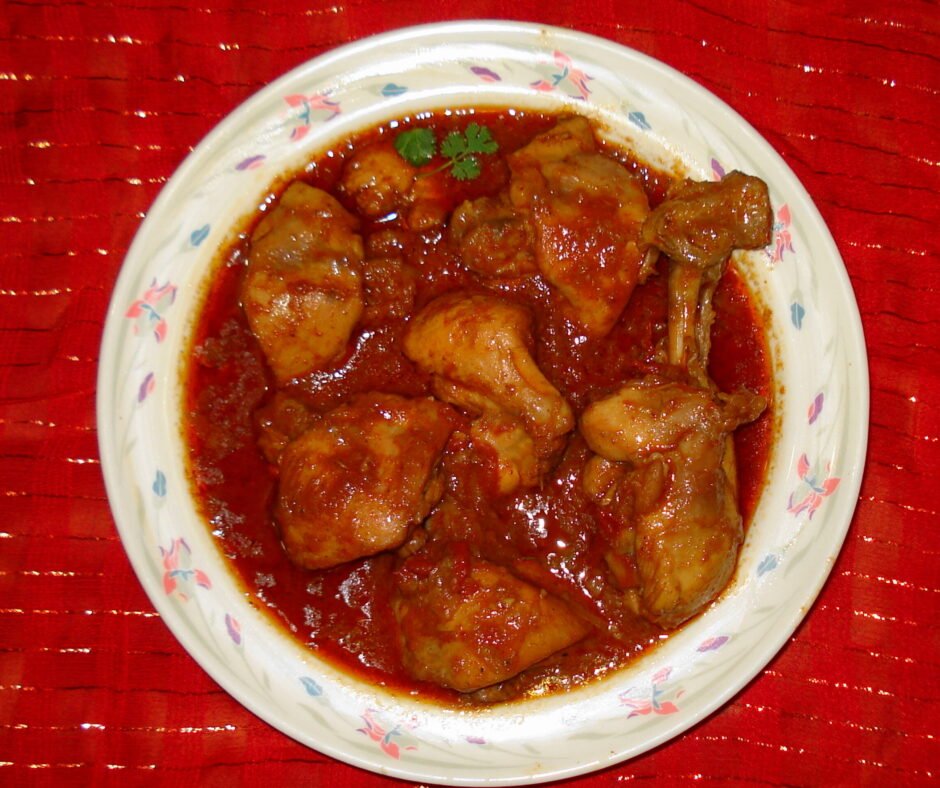
A chicken bhuna is not a curry you pour sauce over. The name comes from the Hindi and Urdu word for frying, and in a bhuna the onions, spices and tomatoes are fried down hard until the oil splits out and the masala clings to the meat. You end up with a dark, thick curry that coats the chicken rather than sitting under it.
This chicken bhuna is the home version of what you get in a British curry house. One pan, about 50 minutes, and no base gravy to make first.
Why this recipe works
- Browning the onions properly is what gives a bhuna its colour and sweetness, so the method gives them real time
- The masala is cooked until the oil separates, which is the step most home curries skip
- Chicken thighs hold up to the long fry without drying out
- Finishing with the lid off drives off the water and leaves a thick, clinging sauce
Ingredients
Serves 4
- 700 g boneless, skinless chicken thighs, cut into 3 cm pieces
- 4 tbsp vegetable oil or ghee
- 2 large onions, finely sliced
- 4 garlic cloves, crushed
- 1 thumb-sized piece of ginger, grated
- 2 green chillies, slit lengthways
- 1 x 400 g tin chopped tomatoes
- 2 tbsp tomato puree
- 1 tsp salt, plus more to taste
- Fresh coriander, chopped, to finish
Ground spices
- 2 tsp ground cumin
- 2 tsp ground coriander
- 1 tsp ground turmeric
- 1 tsp paprika, for colour
- 1 to 2 tsp Kashmiri chilli powder, to taste
- 1 tsp garam masala, added at the end
Method
- Brown the onions. Heat the oil in a wide, heavy pan over medium heat. Add the sliced onions and a pinch of salt. Fry for 12 to 15 minutes, stirring now and then, until deep golden brown. Rushing this step is the main reason a home bhuna tastes flat.
- Add the aromatics. Stir in the garlic, ginger and green chillies. Fry for 2 minutes until the raw smell goes.
- Fry the spices. Turn the heat down. Add the cumin, coriander, turmeric, paprika and chilli powder with a splash of water so they do not catch. Stir for 1 minute.
- Cook the masala. Add the tinned tomatoes and tomato puree. Cook over medium heat for 10 to 12 minutes, stirring often, until the mixture darkens, thickens and you can see oil pooling at the edges. This is the bhuna step and the whole dish rests on getting here.
- Add the chicken. Stir the chicken through the masala so every piece is coated. Add 100 ml water, cover, and cook for 15 minutes over low heat.
- Dry it out. Take the lid off, raise the heat to medium and cook for another 8 to 10 minutes, stirring, until the sauce is thick and clings to the chicken with almost no liquid left in the pan.
- Finish. Stir in the garam masala, taste for salt, and scatter with coriander. Rest for 5 minutes before serving.
Tips for a proper chicken bhuna
- Use a wide pan. A large surface area helps the water evaporate, which is what makes a bhuna dry rather than soupy.
- Wait for the oil to split. When the masala pulls away from the pan and oil gathers at the sides, the spices are cooked through.
- Keep the garam masala for the end. Added early, the aroma cooks off.
- Do not add stock. A bhuna gets its depth from fried onion and tomato, not liquid.
Is chicken bhuna spicy?
A bhuna sits around the middle of a curry house menu for heat, hotter than a korma or a tikka masala but milder than a madras or a vindaloo. The chilli is easy to control at home. Use 1 tsp of Kashmiri chilli powder and leave the green chillies whole for a mild version, or go to 2 tsp and slice the chillies for a proper kick. Kashmiri chilli powder gives strong red colour with modest heat, so you can build colour without burning the dish.
Bhuna compared with other curry house dishes
- Bhuna: dry, thick, fried-down masala. Medium heat.
- Madras: looser sauce, more chilli, sharper finish.
- Rogan josh: richer and more aromatic, with a thinner gravy.
- Karahi: close to a bhuna in dryness, usually with peppers and a lighter spice mix.
- Dopiaza: onion-led like a bhuna, but with a second batch of onions added late so they stay chunky.
What to serve with a chicken bhuna
- Plain basmati rice, which soaks up what little sauce there is
- Homemade naan bread for scooping
- Cucumber and mint raita to cool the heat
- Sliced red onion with lemon juice and a pinch of salt
Store cupboard notes
A bhuna leans on good ground spices, and old jars lose their punch fast. If yours have been open a year, replace them before you cook. Kashmiri chilli powder on Amazon UK is worth keeping for the colour alone, and garam masala on Amazon UK is the one spice blend you want fresh for the final stir.
A South Indian twist
Not traditional for a curry house bhuna, but a sprig of curry leaves dropped into the hot oil before the onions adds a citrus note worth trying. Here is where to buy curry leaves in the UK if you have not come across them.
Making chicken bhuna ahead
Bhuna improves overnight. Cool it quickly, then keep it in an airtight container in the fridge for up to 3 days. Reheat gently in a pan with a splash of water. It freezes well for up to 3 months. Defrost in the fridge overnight before reheating until piping hot.
Variations
- Lamb bhuna: use diced lamb shoulder and simmer for 1 hour with the lid on before the drying stage
- Prawn bhuna: make the masala first, then add raw king prawns for the last 4 minutes
- Vegetable bhuna: use cauliflower, potato and green beans, with 20 minutes covered cooking
- Paneer bhuna: fry the paneer cubes first, then fold them in at the end so they keep their shape
Frequently asked questions
What is a chicken bhuna?
Chicken bhuna is an Indian and Bangladeshi style curry where the spices, onions and tomatoes are fried down until thick, then the chicken is cooked in the paste with very little added liquid. The result is a dry curry with sauce clinging to the meat rather than a pool of gravy.
Is chicken bhuna spicy?
A bhuna is medium heat. It is hotter than a korma or tikka masala and milder than a madras. At home you control the heat with the amount of chilli powder and whether you slice or leave the green chillies whole.
What is the difference between bhuna and madras?
Bhuna refers to the cooking method, frying the masala down until it is dry and thick. Madras refers to the heat level and comes with a looser, redder sauce and more chilli. A bhuna is drier on the plate.
Can I make chicken bhuna in a slow cooker?
Partly. Brown the onions and cook the masala on the hob first, because a slow cooker cannot fry. Then add the chicken and cook on low for 4 hours. Finish with the lid off, or reduce the sauce in a pan, so it ends up dry rather than watery.
Can I use chicken breast instead of thighs?
Yes, but add it later. Cut the breast into large pieces and stir it in for the final 12 minutes only, otherwise it dries out during the long reduction.
What rice goes with chicken bhuna?
Plain basmati is the standard match. Its long, separate grains work well against a thick masala. Our guide to cooking basmati rice covers the ratio and the soaking step.