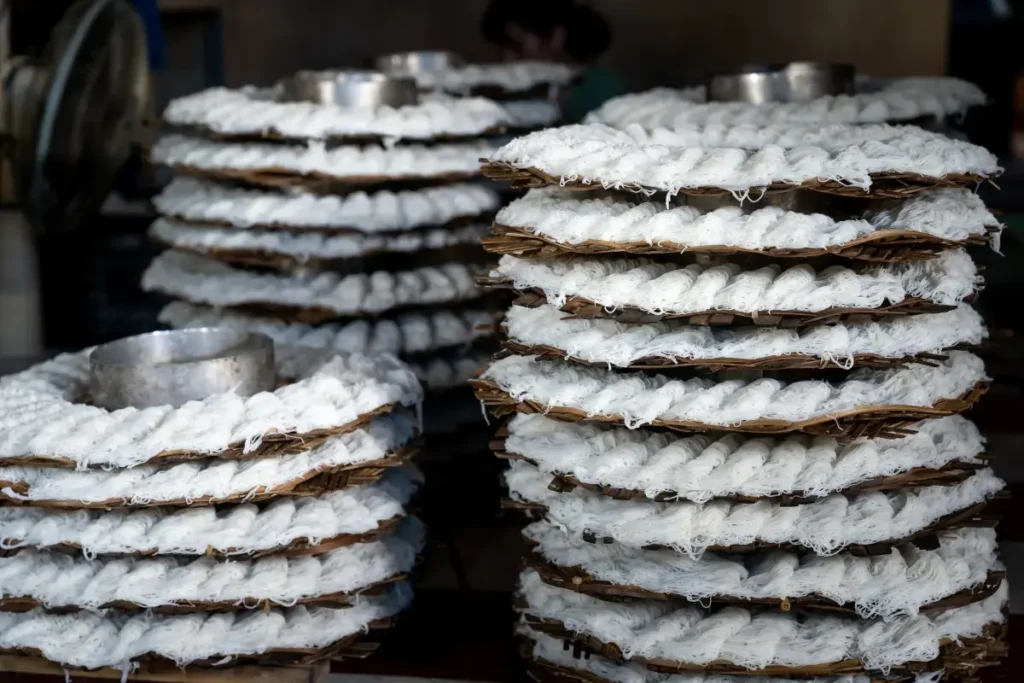
Shirataki noodles are thin, translucent Japanese noodles made from konjac yam rather than wheat or rice, very low in calories and carbohydrates. They have almost no flavour of their own, so they take on whatever broth or sauce they are cooked in.
Where to buy shirataki noodles in the UK
Shirataki noodles are increasingly stocked by larger UK supermarkets, usually in the health food or free-from aisle rather than with other noodles.
Asian supermarkets
A Japanese or Korean grocer is more likely to carry a wider range of shirataki brands than a mainstream supermarket.
Buying it online
Online is a reliable option given how patchy in-store stock can be, and packs keep well unopened.
Checking the pack for added tofu
Some shirataki packs blend in a little tofu for a firmer bite, check the ingredients if you want the plain, purely konjac version, since the two have a noticeably different texture once cooked.
What are shirataki noodles?
How to use them
- Added to hot pots and soups, where they soak up the broth’s flavour.
- Rinsed and dry-fried briefly before use, since they carry a natural liquid that can dilute a dish.
- Used as a lower-carb swap for glass noodles in stir-fries.
What shirataki noodles are actually made from
Konjac yam is ground into a flour, mixed with water and a little lime, then set into a firm gel and cut into noodle strands, a process closer to making a jelly than cooking a grain or wheat dough. This is why the texture is so different from any wheat, rice or bean-starch noodle, springy and slightly gelatinous rather than starchy.
Getting the best texture from them
Beyond rinsing, dry-frying the noodles in a hot pan for a few minutes with no oil, until they squeak slightly and lose some water content, noticeably improves the texture and helps them take on a sauce better afterwards. Skipping this step is the main reason some people find shirataki noodles unpleasantly rubbery.
Shirataki rice
The same konjac base is also sold shaped into small grains as a rice substitute, sold and used the same way, rinsed and dry-fried before serving in place of some or all of a portion of regular rice.
The best shirataki noodles to buy in the UK
Miracle Noodle and Youtiao brands are the most consistently stocked shirataki noodles in the UK, sold online and in some larger supermarkets. Shirataki noodles are made from konjac yam, very low in calories and carbohydrates, and sold in liquid-filled pouches.
What to check on the label
- Noodle shape, since shirataki comes in spaghetti-style, fettuccine-style and rice-style (shirataki rice) versions.
- Whether the pack includes tofu, some brands blend in tofu for a slightly firmer texture.
- A rinse-and-dry-fry step is usually recommended on the pack, worth checking before you cook.
Shirataki noodles vs glass noodles
| Type | Base ingredient | Best for |
|---|---|---|
| Shirataki | Konjac yam | Low-carb swaps in soups and stir-fries |
| Glass noodles | Mung bean or sweet potato starch | Traditional East and Southeast Asian dishes |
Noodle shape options
Shirataki is sold as spaghetti-style strands, flat fettuccine-style noodles, and even a rice-shaped version, so check the shape matches your intended dish rather than assuming all packs are the same. Some brands also blend in a little tofu for a slightly firmer bite.
Packaging and liquid
Shirataki is always sold in a liquid-filled pouch, which needs draining and rinsing before cooking regardless of brand, this liquid carries a distinct smell that rinsing removes, and is not a sign of a problem with the product.
Single pouches vs multipacks
Shirataki is often sold in multipacks of individual pouches, check the total weight against how many portions you need rather than assuming one pouch equals one standard serving.
How to store shirataki noodles
Keep unopened pouches in the cupboard. Once opened, refrigerate and use within a day or two.
Frequently asked questions
Do shirataki noodles taste like normal noodles?
Not really, the texture is more gelatinous and springy, and the flavour is very neutral until seasoned.
Why do shirataki noodles smell odd out of the packet?
That is normal, a faint fishy or earthy smell from the packing liquid, which rinsing under cold water removes.
Do shirataki noodles need cooking?
They are already cooked, a brief rinse and dry-fry improves texture and removes the packing liquid smell.
Are shirataki noodles gluten free?
Yes, they are made from konjac, not wheat.
Are shirataki noodles suitable for a low-carb diet?
Yes, they are very low in calories and carbohydrates, which is why they are typically stocked in the health food aisle.