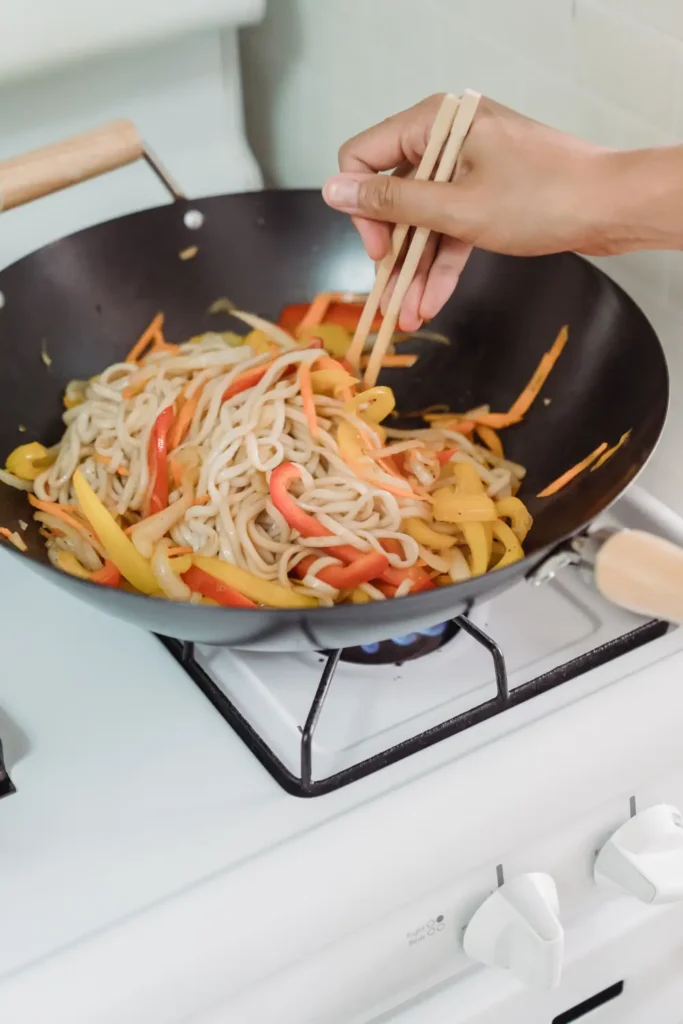
Wok hei is the smoky, slightly charred flavour that comes from cooking over very high heat in a well-seasoned wok, the signature taste of good Cantonese stir-fries. The name translates roughly to “breath of the wok”, referring to the brief moment the food catches flame and smoke.
How to get closer to it at home
- Preheat the wok until it is lightly smoking before adding oil.
- Cook in small batches so the pan stays hot and the food sears rather than stews.
- Use the highest burner you have, and a carbon steel wok rather than nonstick, which cannot take the heat.
Signs you are getting close
A faint smoky aroma and a few lightly charred spots on vegetables or meat, without the dish tasting burnt, are the signs of getting genuinely closer to wok hei at home. If food is steaming rather than searing in the pan, that is the clearest sign the wok has not been preheated enough or too much is being cooked at once.
Does the type of wok matter?
Carbon steel and cast iron woks reach and hold much higher heat than non-stick, which is the main reason non-stick pans cannot produce wok hei no matter how the food is cooked in them. A thinner carbon steel wok actually responds faster to heat changes than a very heavy one, which some cooks find gives more control when chasing that seared, smoky result.
A home stove ring can still help
An outdoor gas burner or a high-powered wok ring designed for home use closes some of the heat gap with a professional restaurant burner, and is worth considering if wok cooking is a regular habit rather than an occasional one. Even without one, working in small batches and letting the pan fully reheat between additions makes the biggest practical difference on a standard home hob.
What wok hei actually is
Wok hei is a Cantonese term often translated as the breath of the wok. It describes the smoky, slightly charred flavour of food stir fried in a very hot wok over a strong flame. It comes from a mix of things: the Maillard browning of food at high heat, oil and sauce hitting very hot metal, and tiny droplets of oil catching fire as the cook tosses the food through the flame.
Restaurant wok burners can produce many times the heat of a home gas ring, which is why the effect is hard to match fully in a home kitchen.
Dishes where wok hei matters most
- Beef ho fun and char kway teow, made with flat rice noodles.
- Egg fried rice and special fried rice.
- Stir fried greens with garlic.
- Chow mein and other noodle stir fries.
- Simple meat and vegetable stir fries with little sauce.
A safe shortcut: the blowtorch
Some home cooks use a kitchen blowtorch to add a smoky edge. Spread the stir fried food in the wok, add a few drops of oil and pass the torch flame over the surface for a few seconds while tossing. Do this away from anything flammable and never point the flame at the oil bottle.
FAQ
Can a home stove produce real wok hei?
Not fully, since most home burners run cooler than a restaurant wok ring, but preheating properly and not overcrowding the pan gets you much closer.
Is a carbon steel wok necessary?
It helps a lot. Carbon steel takes and holds higher heat than nonstick, which is central to getting any char at all.