Some links on this page are affiliate links. If you buy through them we may earn a small commission, at no extra cost to you.
The green paste next to your sushi is almost certainly not wasabi. Here is what the real thing is, and what you are actually eating.
What is wasabi?
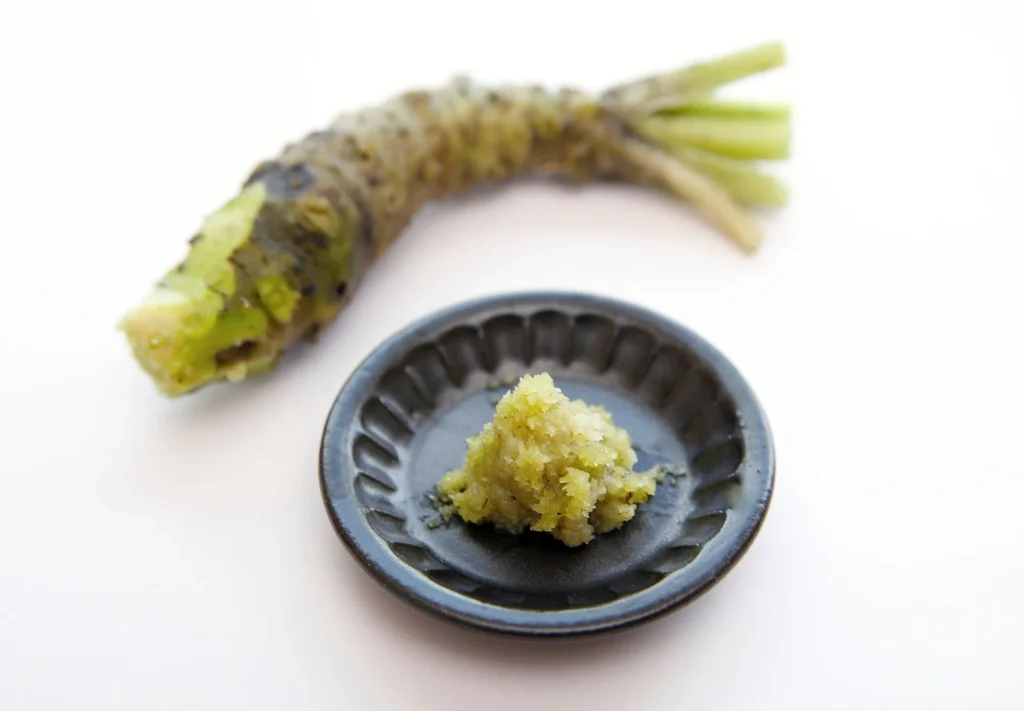
Wasabi is the grated rhizome of Eutrema japonicum, a plant grown in cold running water in Japan. Freshly grated, it is bright green, faintly sweet and sharply pungent in the nose rather than hot on the tongue. It is difficult to farm, which is why almost all wasabi sold outside Japan is an imitation.
Is the wasabi I buy real?
Probably not. Most tubes, sachets and supermarket pastes are made from horseradish, mustard powder and green colouring, with little or no wasabi in them. Check the ingredients list. If horseradish appears before wasabi, or wasabi is missing entirely, you have the imitation.
| Real wasabi | Imitation paste | |
|---|---|---|
| Made from | Grated wasabi rhizome | Horseradish, mustard, colouring |
| Colour | Soft pale green | Bright, uniform green |
| Heat | Sharp, clean, fades fast | Harsher, lingers longer |
| Texture | Slightly grainy | Smooth paste |
| Sold as | Fresh rhizome or frozen grated | Tubes, sachets, powder |
What does wasabi taste like?
Wasabi hits the nose, not the mouth. The heat comes from allyl isothiocyanate, a compound released when the cells are crushed, which evaporates upwards rather than burning the tongue like chilli. The rush is intense and then gone within seconds, leaving a faint sweetness behind.
That short life is also why freshly grated wasabi loses most of its punch within about fifteen minutes.
How to use wasabi with sushi
Put a small smear directly on the fish, not in the soy sauce. Stirring wasabi into soy dilutes the aroma, which is the whole point of it, and muddies the taste of both. At good sushi counters the chef has already placed the right amount between the rice and the fish.
- Use less than you think. A rice grain sized amount is plenty.
- Dip the fish side into soy, not the rice side.
- Real wasabi is grated in a circular motion, traditionally on a sharkskin grater called an oroshigane.
- Grate it right before eating, never in advance.
Other things to do with it
Wasabi works anywhere you want a clean, short lived heat that will not sit heavy on the plate.
- Whisked into mayonnaise for a dip or a sandwich
- Stirred through mashed potato for steak
- Mixed into a soy and rice vinegar dressing for cucumber
- A small amount folded into cream cheese for smoked salmon
Where to buy wasabi in the UK
Imitation paste and powder are in the world food aisle of every major supermarket. Real wasabi is a specialist buy: Japanese grocers and a small number of UK growers sell fresh rhizome and frozen grated wasabi, and both cost many times more than the tube. The Wasabi Company in Dorset grows it commercially in England.
Storage
Keep a fresh rhizome wrapped in damp kitchen paper in the fridge and use it within about two weeks, grating only what you need. Tubes keep in the fridge for a few weeks once opened, though the heat fades. Powder lasts for months in a sealed jar in the cupboard.
Frequently asked questions
Why is real wasabi so expensive?
It is slow and fussy to grow. The plant wants cool, shaded conditions and constantly running fresh water, and takes a year or more to reach a usable size. Yields are small and the crop is easily lost, so supply stays tight.
Is wasabi just horseradish?
No, though most wasabi paste is. They are related plants in the same family and share the compound that gives the heat, but wasabi is milder, sweeter and cleaner tasting. Horseradish is coarser and stays with you longer.
What can I use instead of wasabi?
Fresh horseradish, grated fine, is the closest by some distance. Failing that, English mustard mixed with a little water gives a similar nose hit, though without the sweetness. Neither looks the part without colouring.
Why does wasabi burn my nose and not my tongue?
The compound behind the heat evaporates easily, so it travels up into the nasal passages instead of staying on the tongue. Chilli heat comes from capsaicin, which is oil soluble and stays put in the mouth, which is why chilli lingers and wasabi does not.
Shop this
Some links on this page are affiliate links. If you buy through them we may earn a small commission, at no extra cost to you.
- Wasabi paste. Ready made paste in a tube, no mixing needed.