Some links on this page are affiliate links. As an Amazon Associate, The Asian Larder earns from qualifying purchases, at no extra cost to you.
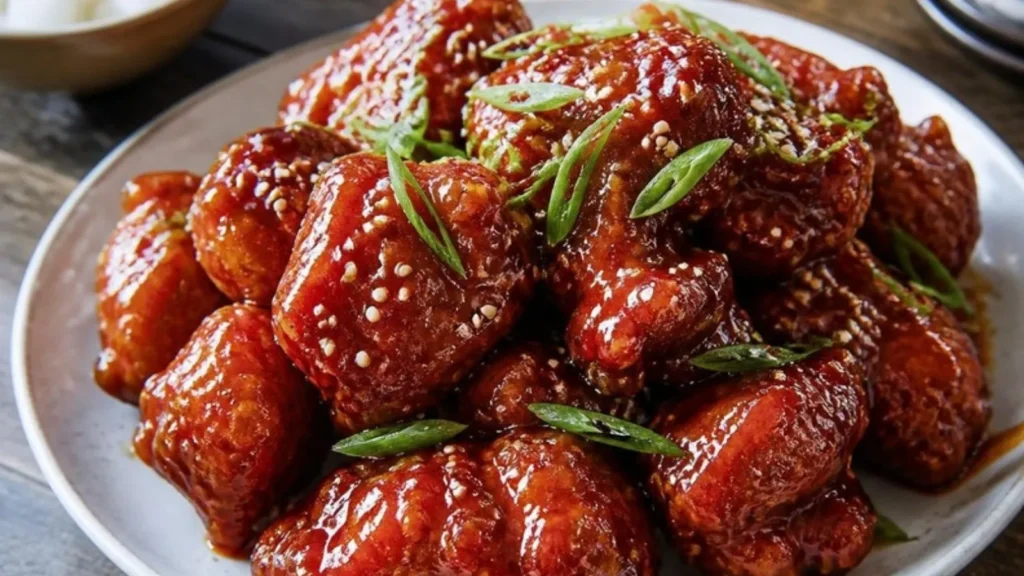
Korean fried chicken gets its shatter-crisp coating from a double fry, and a shallow pan does the job as well as a deep-fat fryer. Coat the chicken in a thin cornflour batter, fry it twice with a rest in between, then toss it in a sticky gochujang glaze.
The double fry is what separates Korean fried chicken from an ordinary fry-up. The first fry cooks the chicken through, the rest lets the crust set, and the second, hotter fry is what makes it crackle.
Ingredients
Serves 3 to 4
| Ingredient | Amount |
|---|---|
| Chicken thighs, boneless, cut into pieces | 500g |
| Cornflour | 100g |
| Egg | 1 |
| Vegetable oil, for frying | 500ml |
| Gochujang | 2 tablespoons |
| Honey | 2 tablespoons |
| Soy sauce | 1 tablespoon |
| Rice vinegar | 1 tablespoon |
| Garlic, minced | 2 cloves |
| Sesame oil | 1 teaspoon |
| Sesame seeds, to finish | To taste |
Method
- Whisk the egg into the cornflour with a splash of water to make a thin, loose batter. Coat the chicken pieces and shake off the excess.
- Heat 2 to 3cm of oil in a wide, heavy pan to 160C. Fry the chicken in batches for 5 to 6 minutes, until cooked through but still pale. Drain and rest for 10 minutes.
- Raise the oil to 180 to 190C. Fry the chicken a second time for 2 to 3 minutes, until deep golden and very crisp.
- Warm the gochujang, honey, soy sauce, rice vinegar, garlic and sesame oil in a small pan for about a minute, until glossy.
- Toss the fried chicken through the glaze while both are still hot, finish with sesame seeds, and serve straight away.
Korean fried chicken without a deep-fat fryer
A wide, heavy-based pan or wok with 2 to 3cm of oil does the same job as a fryer. A cooking thermometer keeps the temperature honest, because guessing tends to undercook the first fry or burn the second. Without one, a cube of bread should brown in about 45 seconds at 180C.
Tips for the crispiest Korean fried chicken
- Cornflour gives a lighter, crispier shell than plain flour. Do not swap it.
- Do not crowd the pan. Too much chicken at once drops the oil temperature and the coating goes greasy rather than crisp.
- The 10 minute rest between fries is not optional. It lets steam escape and the crust firm up.
- Toss in the glaze at the last possible moment. Left sitting in sauce, the crust softens within minutes.
- If you are feeding a crowd, keep the chicken and the glaze separate and combine at the table.
Adjusting the glaze
This glaze is more sweet and sticky than hot. Shift the honey and gochujang ratio to suit: more honey for a sweeter, more lacquered finish, more gochujang or a pinch of gochugaru for real heat. The rice vinegar is what stops the whole thing tasting cloying, so do not leave it out.
Reheating leftovers without losing the crunch
An air fryer or a hot oven brings back far more crispness than a microwave, which turns the coating soft. A few minutes at a high temperature is usually enough. Glazed chicken never comes back quite as crisp as it started, which is another argument for saucing only what you are about to eat.
Frequently asked questions
Why fry the chicken twice?
The first fry cooks the meat through at a lower temperature. The rest lets the crust firm up, and the second, hotter fry drives out the remaining surface moisture, which is what gives the shatter-crisp texture.
Can I use chicken breast instead of thigh?
Yes, though thigh stays juicier through the double fry. If using breast, cut the pieces slightly larger so they are less likely to dry out.
Can I use wings instead?
Yes, and wings are the traditional cut. Keep the same temperatures and add a couple of minutes to the first fry, since they are on the bone.
Is Korean fried chicken very spicy?
This glaze is more sweet than hot. Add extra gochujang or a pinch of gochugaru if you want more heat.
Can I bake Korean fried chicken instead of frying it?
Baking will not give the same crust. An air fryer gets closer: cook in batches at 200C for 12 to 15 minutes, shaking halfway, then toss in the warm glaze.
For another gochujang-based dinner, try our gochujang chicken. New to the ingredient? See what is gochujang.
Shop this
- Cooking thermometer. Takes the guesswork out of the two frying temperatures.
- Gochujang paste. The base of the glaze.