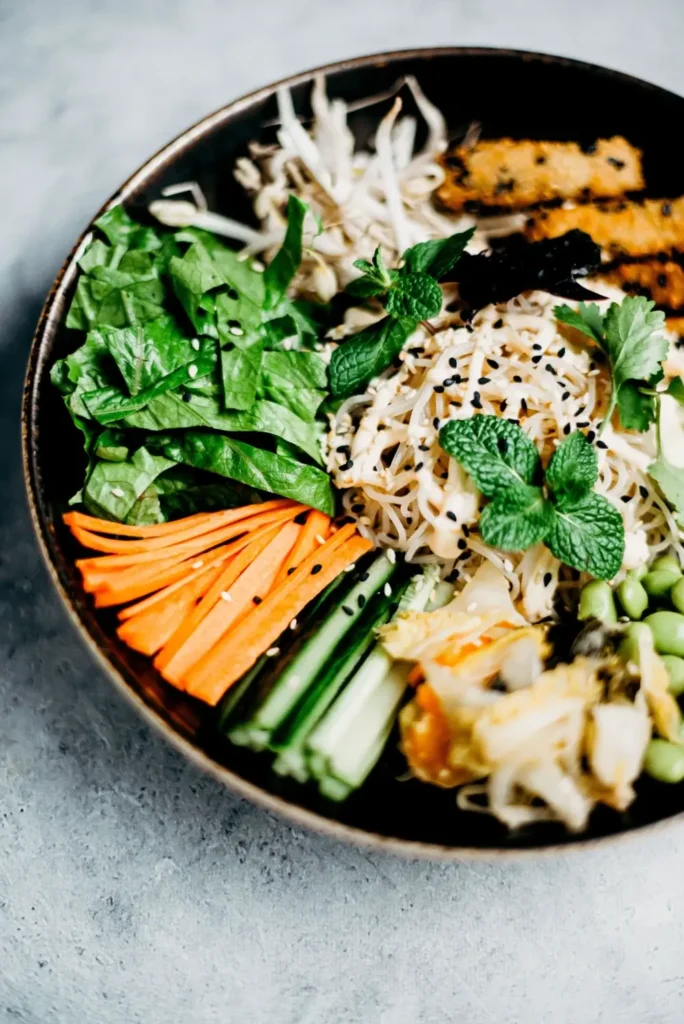
Korean glass noodles stir-fried with vegetables and beef in a sweet soy dressing. Served warm or at room temperature.
Japchae
- 200g sweet potato glass noodles
- 150g beef sirloin, thinly sliced
- 1 carrot, julienned
- 1/2 red pepper, sliced
- 100g spinach, blanched
- 4 shiitake mushrooms, sliced
- 3 tbsp soy sauce
- 2 tbsp sugar
- 1 tbsp sesame oil, plus extra to finish
- 2 cloves garlic, minced
- Sesame seeds, to finish
- Soak the noodles in hot water until soft, about 8 minutes, then drain and cut into shorter lengths.
- Marinate the beef in a little soy sauce and garlic, then stir-fry until cooked. Set aside.
- Stir-fry the carrot, pepper, and mushrooms separately until just softened.
- Toss the noodles with soy sauce, sugar, and sesame oil in a hot pan for 2 minutes.
- Combine the noodles, beef, vegetables, and spinach.
- Finish with extra sesame oil and sesame seeds.
Why this recipe works
Cooking each vegetable and the beef separately keeps every ingredient at its best texture, rather than turning everything the same shade of soft in one pan.
What is japchae?
Japchae is a Korean dish of sweet potato glass noodles stir fried with beef, spinach, carrot, onion and mushrooms in a sesame and soy sauce. The noodles are chewy, glossy and slightly sweet. It is served at birthdays, holidays and celebrations, often as a side dish.
Japchae dates back to the 17th century royal court, when it was first made with vegetables only. Noodles were added much later.
Ingredient notes and UK swaps
- Noodles: Korean sweet potato starch noodles (dangmyeon), sold in Korean grocers. Mung bean glass noodles are thinner but work.
- Beef: thin strips of sirloin or rump, marinated in soy, sugar and garlic.
- Vegetables: cook each one separately so they keep their colour and texture.
- Sesame oil and seeds: give the nutty finish.
Tips for the best japchae
- Cut the soaked noodles with scissors, since they can be very long and unwieldy otherwise.
- Do not overcook the noodles in the pan at the end, or they turn gummy.
- This keeps well and tastes good cold, making it a good make-ahead side.
Cooking the noodles right
Glass noodles for japchae should be tender but still with a slight chew, overcooking them turns the whole dish mushy. Cutting them with scissors after cooking, into more manageable lengths, makes the finished dish much easier to toss and eat.
Serving it hot, cold or at room temperature
Japchae is unusual among stir-fries in that it is genuinely good served at any temperature, making it a practical dish to prepare ahead for a gathering rather than needing to be served immediately.
Vegetable variations
Spinach, carrot and mushroom are the classic vegetables, but bell pepper or beansprouts are common additions, each vegetable is traditionally stir-fried separately before combining, keeping their individual textures and flavours distinct.

Frequently asked questions
How long does japchae keep?
Up to 3 days in the fridge. The noodles firm up when cold, so warm them in a pan or microwave with a splash of water.
Can I make japchae vegetarian?
Yes. Leave out the beef and add extra mushrooms, tofu or a fried egg cut into strips.