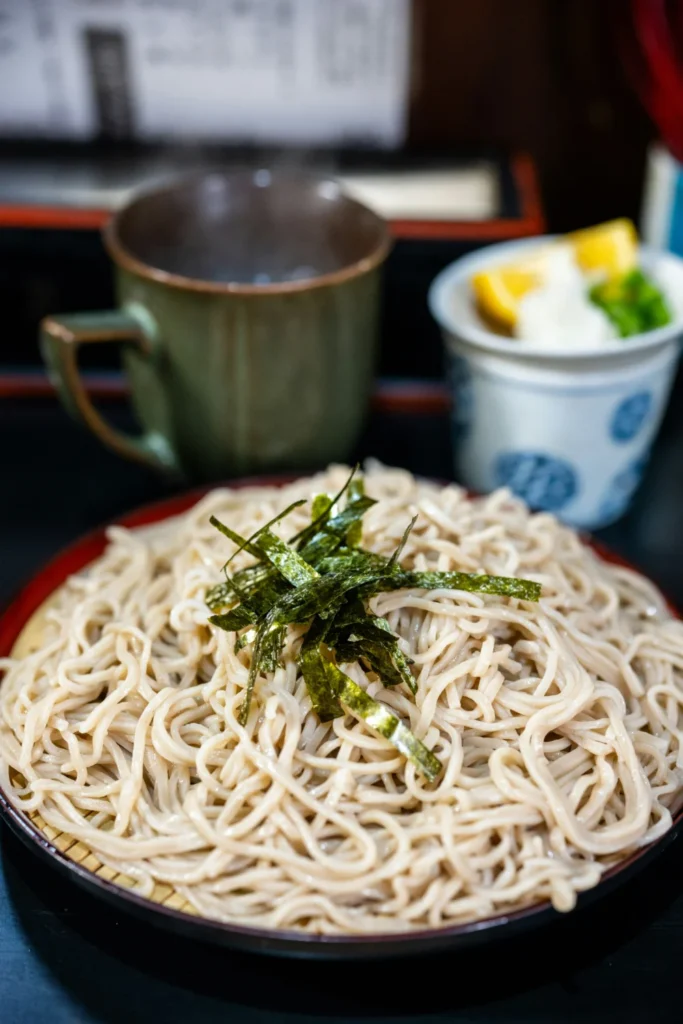
Soba noodles cook in 4 to 5 minutes in boiling water, then need a cold-water rinse straight after to wash off the surface starch and stop them turning gummy. They’re made from buckwheat flour, sometimes blended with wheat, and are used in both hot and cold Japanese noodle dishes.
Method
- Bring a large pan of unsalted water to a rolling boil.
- Add the noodles and stir once to stop them sticking together.
- Cook for 4 to 5 minutes, or per the packet instructions, until just tender.
- Drain and rinse immediately under cold running water, rubbing gently to remove excess starch.
Hot or cold
For a cold dish, such as zaru soba, the noodles are rinsed, chilled, and served with a cold dipping sauce. For a hot dish, the rinsed noodles are briefly dipped back into hot broth just before serving, so they warm through without overcooking.
Why the rinse matters
Soba noodles are made partly or fully from buckwheat flour, which releases a lot of surface starch as it cooks. A thorough cold-water rinse straight after draining is what stops the noodles clumping into a single starchy mass and gives them their proper springy, separate texture, whether you are serving them hot or cold.
Hot or cold soba
Cold soba, rinsed and chilled, served with a dipping sauce (mentsuyu), is the more traditional summer preparation. For a hot bowl, rinse the noodles the same way to remove excess starch, then reheat briefly by dipping them in hot broth just before serving, rather than leaving them simmering, which turns them mushy.
What are soba noodles?
Soba are Japanese noodles made from buckwheat flour, often mixed with some wheat flour. They have a nutty, earthy taste and a firm texture, and are eaten cold with a dipping sauce in summer and in hot broth in winter. Toshikoshi soba is eaten on New Year’s Eve in Japan for luck.
Ways to serve soba
- Zaru soba: cold noodles on a bamboo mat with dipping sauce, spring onion and wasabi.
- Kake soba: hot noodles in a light dashi and soy broth.
- Soba salad: cold noodles tossed with vegetables and a sesame or ponzu dressing.
- Tempura soba: hot soba topped with prawn tempura.
Buying soba in the UK
Dried soba is sold in many UK supermarkets and in Japanese grocers. Check the label for the buckwheat content: higher buckwheat soba tastes stronger and is more delicate, while noodles with more wheat flour are easier to cook and hold together better.
FAQ
Why do soba noodles need a cold rinse?
It washes away the surface starch that would otherwise make the noodles sticky and gummy as they cool.
Are soba noodles gluten-free?
Not always. Many soba noodles are a blend of buckwheat and wheat flour, so check the label if you need a gluten-free option; 100% buckwheat soba does exist but is less common.
Can I reheat soba noodles?
Briefly dipping them in hot water or broth warms them through without overcooking, since boiling them again will make them mushy.