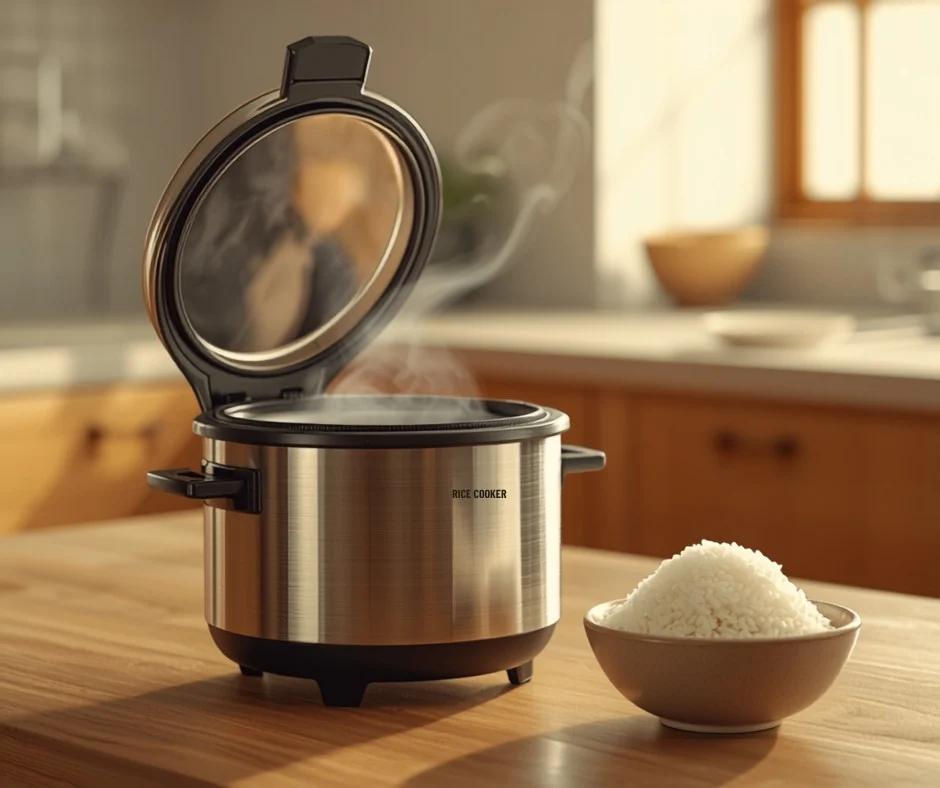
The best rice cooker for sushi rice has a dedicated sushi or fuzzy logic setting, a thick non-stick inner pot, and a soak-then-steam cycle rather than a single flat cook. Sushi rice needs a slightly firmer, stickier result than everyday steamed rice, and a cooker built for it adjusts timing and temperature automatically instead of leaving you to guess.
Any rice cooker can technically cook sushi rice, but not every one gets the texture right without help. This guide covers the features that matter and the ones that are mostly marketing.
Do you need a sushi setting?
A sushi setting is not essential, but it removes the guesswork. It typically extends the soak time before cooking and adjusts the steam cycle to leave the rice slightly firmer and stickier than a normal white rice setting, which is exactly what sushi rice needs to hold together without turning to mush.
Fuzzy logic vs basic rice cookers
Fuzzy logic cookers use sensors to adjust cooking time and temperature based on the exact amount of rice and water in the pot, rather than running a single fixed programme. This matters more for sushi rice than for everyday rice, since the margin for over or under cooking is smaller. A basic single-setting cooker can still make good sushi rice, but it needs closer attention to water ratio and rinsing.
Inner pot material
A thick, non-stick inner pot matters more for sushi rice than for drier rice types, since the higher stickiness makes rice more likely to catch and burn on a thin base. Ceramic-coated and ceramic pots tend to release rice more cleanly than basic non-stick coatings, and last longer with regular scrubbing.
Do you need a Japanese brand?
Japanese brands such as Zojirushi and Tiger are well regarded for rice specifically, since rice cooking is their main focus. They cost more than general kitchen brands, and that cost mainly buys more precise fuzzy logic control rather than a dramatically different result. A mid-range cooker with a proper sushi setting will produce good sushi rice for most home cooks.
FAQ
Can I make sushi rice in a normal rice cooker?
Yes. Use slightly less water than for everyday rice, rinse until the water runs mostly clear, and season with rice vinegar once cooked.
What is the rice to water ratio for sushi rice?
A common starting point is 1 cup of rice to just under 1 cup of water, since sushi rice needs to be firmer than standard steamed rice.
Do I still need to season sushi rice after cooking?
Yes, always. The rice cooker only cooks the rice. Rice vinegar, sugar, and salt are mixed in afterwards while the rice is still warm.
Is a bigger rice cooker better for sushi rice?
Not necessarily. A smaller cooker sized to your usual batch gives more even results than a large one running well under its capacity.
Once your rice is cooked, our how to cook sushi rice guide covers seasoning and cooling. For the wider basics of rice cooking, see how to cook jasmine rice.
Shop this
Some links on this page are affiliate links. If you buy through them we may earn a small commission, at no extra cost to you.
- Rice cooker with sushi setting. A cooker built with a dedicated sushi or fuzzy logic mode.
- Sushi rice. Short grain rice, the type sushi actually needs.