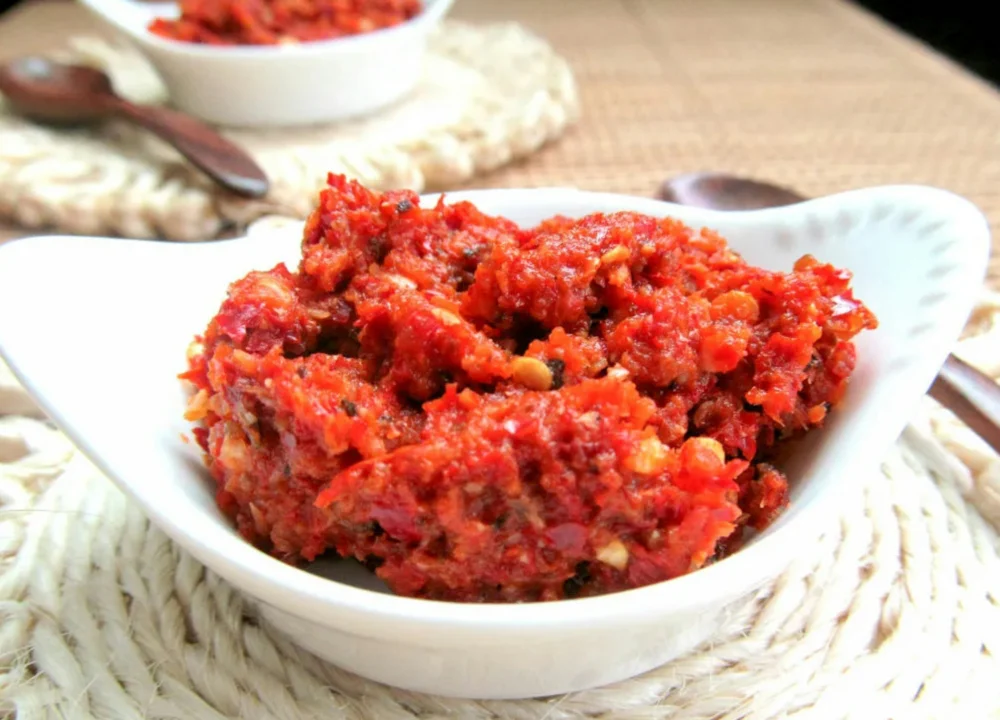
Doubanjiang is a salty, savoury Chinese fermented broad bean and chilli paste, most associated with Sichuan cuisine, where it forms the base of dishes like mapo tofu and Sichuan hotpot. The most sought-after version, Pixian doubanjiang, is fermented for months or years and has a deep, complex flavour.
What it tastes like
Doubanjiang is intensely savoury and salty, with a moderate chilli heat and a slight funk from fermentation. It’s used as a flavour base rather than a finishing sauce, usually fried in oil at the start of cooking to release its aroma before other ingredients are added.
How to use it
- Fry a spoonful in oil at the start of cooking to build a savoury base for stir-fries and braises.
- Use in mapo tofu, dan dan noodles, and other Sichuan dishes.
- Add sparingly, since it’s salty; taste before adding extra salt or soy sauce.
FAQ
Is doubanjiang the same as chilli bean sauce?
They’re closely related. Doubanjiang is a specific style of fermented broad bean and chilli paste, and Pixian doubanjiang is the most prized regional version.
What can I use instead of doubanjiang?
A mix of miso paste and chilli flakes or a Korean gochujang can approximate the savoury heat, though the flavour won’t be identical.
Does doubanjiang need to be refrigerated?
Yes, once opened. It keeps for a long time in the fridge thanks to its salt content.