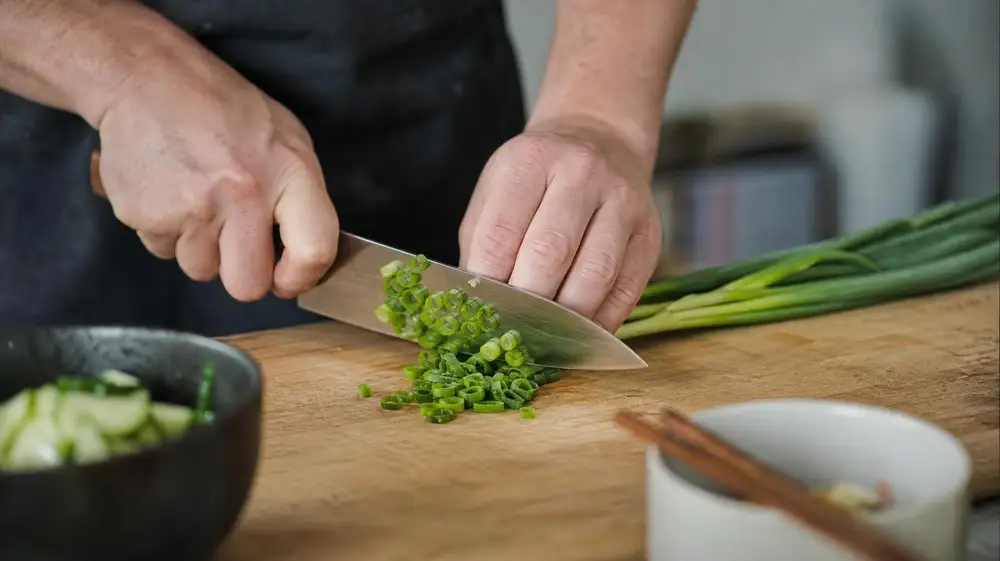
A single-bevel gyuto or santoku in VG-10 or similar high-carbon stainless steel is the best all-round choice for a UK home kitchen. Look for a full tang, a comfortable handle, and a blade between 18cm and 21cm. Brands such as Tojiro, Global, Shun, and Yaxell sell well-made, widely stocked options that suit both Western and Asian cooking styles.
A Japanese knife holds a finer edge than most Western knives and cuts through vegetables, fish, and meat with less pressure. This guide covers what to check before you buy, three styles worth knowing, and where to shop.
What to check before you buy
- Steel type. VG-10 and AUS-8 stainless steel hold an edge well and resist rust, which suits a UK kitchen where knives get washed daily. Carbon steel sharpens easier but needs drying straight after use.
- Blade shape. A santoku has a flat edge and rounded tip, good for chopping and dicing. A gyuto is closer to a Western chef’s knife and handles a wider range of tasks.
- Weight and handle. Japanese knives are lighter than most Western ones. Hold one before you commit if you can, since the balance point matters more than the brand name.
- Full tang construction. The blade metal should run the length of the handle. This adds durability and balance.
Three styles worth knowing
| Style | Best for | Blade length |
|---|---|---|
| Santoku | Chopping vegetables, mincing garlic and ginger | 15 to 18cm |
| Gyuto | An all-purpose chef’s knife for meat, fish, and veg | 18 to 24cm |
| Nakiri | Straight-edged, made for vegetables | 16 to 18cm |
Looking after it
Hand wash and dry a Japanese knife straight after use. Store it on a magnetic strip or in a blade guard rather than a drawer, and use a whetstone or a fine honing rod every few weeks to keep the edge.
Shop this
FAQ
Do I need a full Japanese knife set?
No. One good gyuto or santoku covers most home cooking. Add a paring knife later if you want one for small, precise jobs.
Are Japanese knives hard to sharpen?
They take a finer edge than Western knives, so a coarse steel can damage them. A whetstone or a pull-through sharpener rated for Japanese steel works well.
Can I put a Japanese knife in the dishwasher?
No. Heat and detergent dull the edge and can damage the handle. Hand wash and dry it straight away.
Related reading
- Best Chinese Cleaver: A Buying Guide for Home Cooks covers a different set of jobs.
- Best wok in the UK to pair with it.