Some links on this page are affiliate links. If you buy through them we may earn a small commission, at no extra cost to you.
Price tells you very little. Colour, origin and grade tell you almost everything.
Which matcha should you buy?
Buy ceremonial grade Japanese matcha if you drink it with water, and culinary grade if you are putting it in lattes or baking. Look for a single named growing region, a bright jade green colour and a stated harvest date. Anything dull, khaki or unnamed will taste bitter however you make it.
Ceremonial or culinary grade?
The two grades are not different qualities of the same thing. Ceremonial matcha comes from the youngest leaves of the first harvest and is made to drink on its own. Culinary matcha uses later leaves, tastes stronger and more bitter, and is built to hold its own against milk and sugar.
| Ceremonial | Culinary | |
|---|---|---|
| Leaves | First harvest, youngest | Later harvests |
| Colour | Bright jade | Duller, more olive |
| Taste | Sweet, smooth, little bitterness | Sharper and more bitter |
| Use for | Whisked with hot water | Lattes, baking, ice cream |
Buying ceremonial grade for a latte is money down the drain. The milk flattens the delicacy you paid for.
What to look for on the tin
- Origin named. Uji in Kyoto, Nishio in Aichi, Yame in Fukuoka and Kagoshima are the recognised Japanese regions. Product of Japan on its own is not enough.
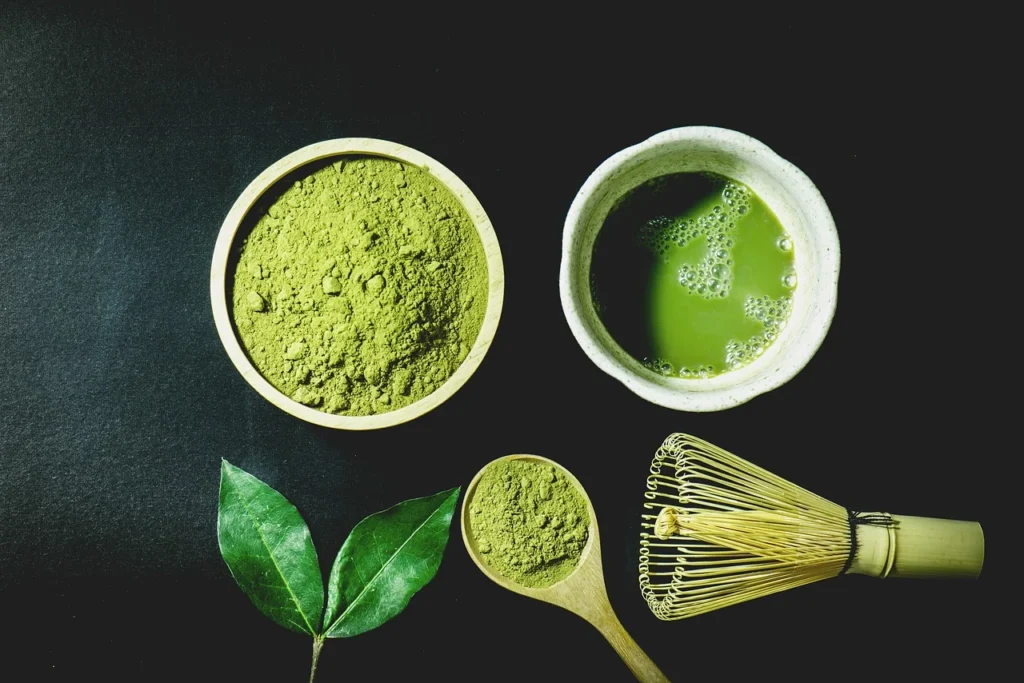
- Colour. Bright, almost electric green. Yellow or brownish green means old, oxidised or low grade.
- Harvest or best before date. Matcha fades fast. A tin with no date is a tin nobody wants to date.
- Stone ground. The traditional method, and slower than machine milling, which heats and dulls the powder.
- A small tin. 30 g or 40 g. Buying 100 g to save money means drinking stale matcha for months.
Japanese or Chinese matcha?
Japanese matcha is shade grown for several weeks before picking, which raises the amino acids that give it sweetness and the deep green colour. Chinese green tea powder is usually not shaded and is ground differently, so it costs less and tastes flatter and more astringent. For drinking, buy Japanese.
Brands to look for in the UK
Clearspring and Kenko are the easiest to find in UK health food shops and larger supermarkets, and both are honest about grade. Ippodo and Marukyu Koyamaen are long established Kyoto tea houses that ship to the UK and sit at the top end. Japanese grocers in London carry a wider range than anywhere online.
How to store it
Keep matcha sealed, cold and dark. An airtight tin in the fridge is the standard advice, and once opened you want to finish it within about a month. Light and air are what turn bright green powder into dull, bitter dust.
Let a chilled tin come to room temperature before opening, or condensation gets into the powder and clumps it.
Do you need a whisk?
A bamboo whisk, called a chasen, makes a smoother, frothier bowl than anything else, and a cheap one works fine. A small electric milk frother is the practical alternative. A metal spoon will not do the job, because matcha clumps and needs breaking apart rather than stirring.
Sift the powder first and use water at around 80C. Boiling water scorches matcha and makes even good tea taste bitter.
Frequently asked questions
Why is good matcha so expensive?
The plants are shaded for weeks before picking, the best leaves are hand selected, and the powder is ground slowly on stone mills. All three steps cut yield and add labour, and the result cannot be rushed.
How can you tell if matcha is good quality?
Look at the colour first. Good matcha is vivid green and very fine, almost like talc. It should smell sweet and grassy rather than hay like, and dissolve smoothly rather than leaving grit at the bottom of the bowl.
Is culinary matcha worth buying?
Yes, if you are making lattes, cakes or ice cream. It is cheaper and its stronger flavour survives milk and sugar. Only step up to ceremonial grade if you drink matcha plain.
Does matcha go off?
It does not become unsafe, but it loses colour and flavour quickly once opened. Aim to use a tin within a month of opening and store it in the fridge, sealed.
Where to buy
Options on Amazon UK that match what is described above. These are affiliate links, so we may earn a small commission if you buy through them. Stock and prices change, so check the listing before ordering.
- Ceremonial grade matcha. For drinking with water. Check the tin names a Japanese region and carries a date.
- Culinary grade matcha. For lattes and baking, where the milk and sugar need something stronger.
- Bamboo whisk (chasen). A cheap one works. It breaks the clumps a spoon cannot.