Some links on this page are affiliate links. As an Amazon Associate, The Asian Larder earns from qualifying purchases, at no extra cost to you.
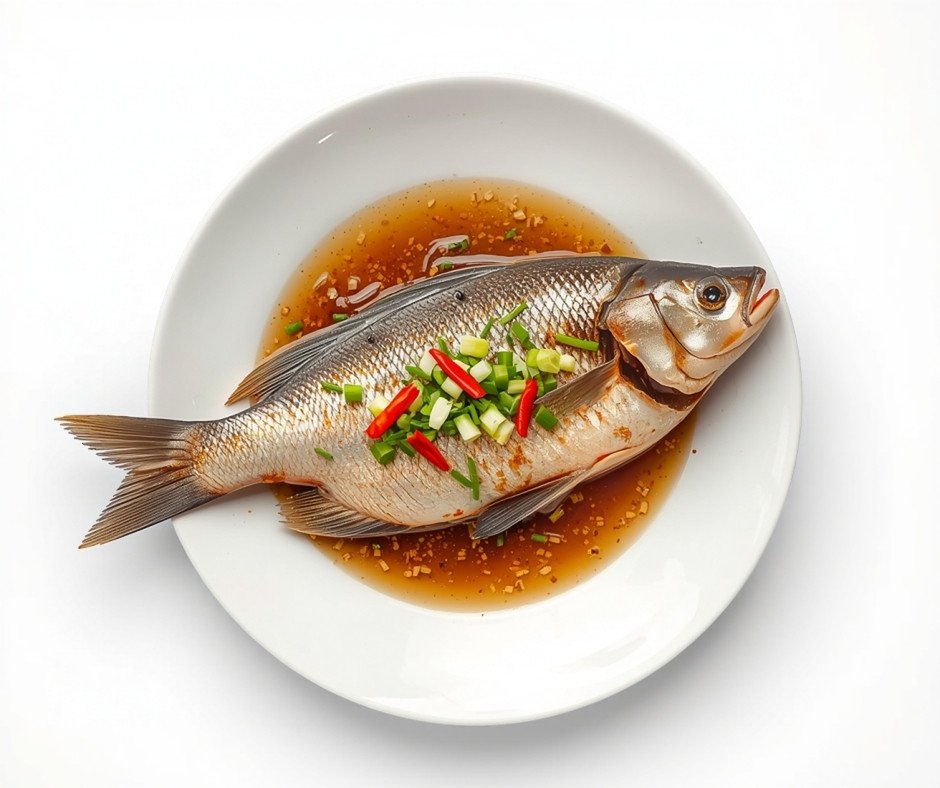
Steamed fish with ginger and spring onion is one of the most common home-cooked dishes in China. The method is simple, the ingredients are few, and the result is clean and fresh-tasting. It is also a good way to understand how Chinese cooking uses heat and seasoning together — the hot oil poured over at the end is what wakes everything up.
This recipe works with sea bass, bream, or any whole white fish. You can also use fillets if a whole fish is not available.
Ingredients (serves 2)
- 1 whole sea bass or bream, around 400 to 500g, cleaned and scored
- 4cm piece of fresh ginger, peeled and cut into thin matchsticks
- 4 spring onions, cut into thin strips lengthways
- 2 tablespoons light soy sauce
- 1 tablespoon Shaoxing rice wine
- 3 tablespoons neutral oil (sunflower or vegetable)
- 1 teaspoon sesame oil
- A small pinch of white sugar
Method
Prepare the fish
Score the fish on both sides with two or three diagonal cuts, going down to the bone. This helps the steam penetrate and the fish cook evenly. Rub the inside of the fish and the scored areas with the Shaoxing wine and a small amount of the ginger matchsticks. Set aside while you heat the steamer.
Steam the fish
Bring a wok or large pot of water to a rolling boil. Place the fish on a shallow plate or steaming dish. Scatter half the ginger over the fish. Place into the steamer, cover, and steam over a high heat for 8 to 10 minutes, depending on the size of the fish. The flesh should be just opaque and flake easily at the thickest part.
Prepare the sauce and oil
While the fish steams, mix the light soy sauce with the sugar and a tablespoon of water in a small bowl. In a separate small pan or ladle, heat the neutral oil until it just begins to smoke.
Finish the dish
When the fish is done, carefully pour away any liquid that has collected on the plate — this liquid is bitter and will dilute the flavour. Lay the spring onion strips and remaining ginger over the fish. Pour the soy sauce mixture over evenly. Then, immediately pour the hot oil directly over the ginger and spring onion. You will hear it sizzle. Drizzle over the sesame oil and serve straight away with steamed jasmine rice.
Notes
Do not overcook the fish. Steaming is gentle but a fish that goes even a minute too long will be dry and tough. Check it at 8 minutes by pressing the thickest part — it should give easily.
The hot oil step is not optional. It is what makes the dish. Without it, the ginger and spring onion stay raw and flat. With it, they bloom and the whole dish comes alive.
Frequently asked questions
What is the best fish for steaming Chinese-style?
Sea bass and sea bream are the best choices in the UK. Both have firm white flesh that holds together during steaming and a clean, mild flavour. Tilapia and snapper also work well. Oily fish like salmon are less suited to this method.
How long do I steam a whole fish for?
A whole fish of 400 to 500g needs 8 to 10 minutes over a high, rolling boil. Check at 8 minutes by pressing the thickest part of the flesh near the backbone. It should give easily and flake when pressed. A minute over is enough to dry it out.
Can I steam fish without a bamboo steamer?
Yes. A wok with a lid works well. Place a small wire rack or two pairs of chopsticks in the wok to lift the plate above the water. Bring the water to a full boil before adding the fish and keep the heat high throughout.
Why is hot oil poured over the fish at the end?
Hot oil sizzles when it hits the ginger and spring onion on top of the fish, releasing their fragrance and softening their raw edge. Without this step the aromatics stay sharp and flat. The oil also carries the soy sauce flavour across the whole surface of the fish.

Shop this
- Bamboo steamer basket. Sits over a wok and holds the plate above the boiling water.
- Light soy sauce. Mixed with a little water and sugar for the steamed fish dressing.
- Sesame oil. Drizzled over at the end for fragrance and depth.