Some links on this page are affiliate links. If you buy through them we may earn a small commission, at no extra cost to you.
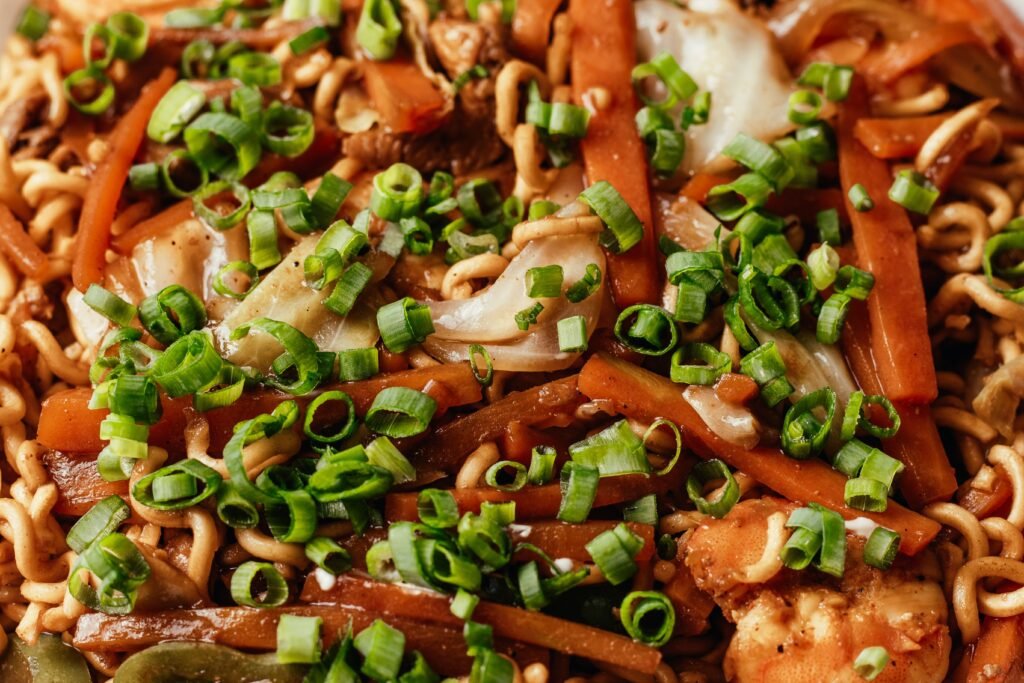
A fast Japanese stir fry noodle dish, in one wok in about 20 minutes.
Yaki udon
Ingredients
Method
- Loosen the udon noodles under warm water if using vacuum packed, and set aside.
- Heat the oil in a wok over high heat. Fry the meat until browned.
- Add the carrot and cabbage and stir fry for 2 minutes.
- Add the noodles, soy sauce, oyster sauce and sesame oil. Toss everything together for 2 to 3 minutes until the noodles are coated and hot through.
- Scatter with spring onions and serve straight from the wok.
Notes
Nutrition figures are an estimate and will shift with the meat and noodle brand used.
Tips for the best yaki udon
- Keep the wok on high heat the whole way through, so the noodles fry rather than steam.
- Fresh udon needs no boiling, just a rinse under warm water to loosen the strands.
- Do not overcrowd the wok. Cook the meat first and set it aside so it browns properly.
Swaps and variations
- Vegetable yaki udon: leave out the meat and add mushrooms or beansprouts instead.
- Seafood version: swap the meat for prawns, added in the last two minutes so they do not overcook.
- Extra heat: add a spoon of chilli oil at the end.
What to serve with yaki udon
It is a complete meal on its own, though prawn toast makes a good starter alongside it.
Frequently asked questions
Can I use dried udon noodles?
Yes. Boil according to the pack instructions, then drain and rinse in cold water before adding to the wok, so they do not clump together.
Why are my noodles sticking together?
This usually means they went into the wok too dry, or the wok was not hot enough. A splash of oil and high heat keeps the strands separate.
Shop this
Some links on this page are affiliate links. If you buy through them we may earn a small commission, at no extra cost to you.
- Udon noodles. Thick, chewy, and ready in minutes.
- Oyster sauce. Rounds out the sauce with savoury depth.