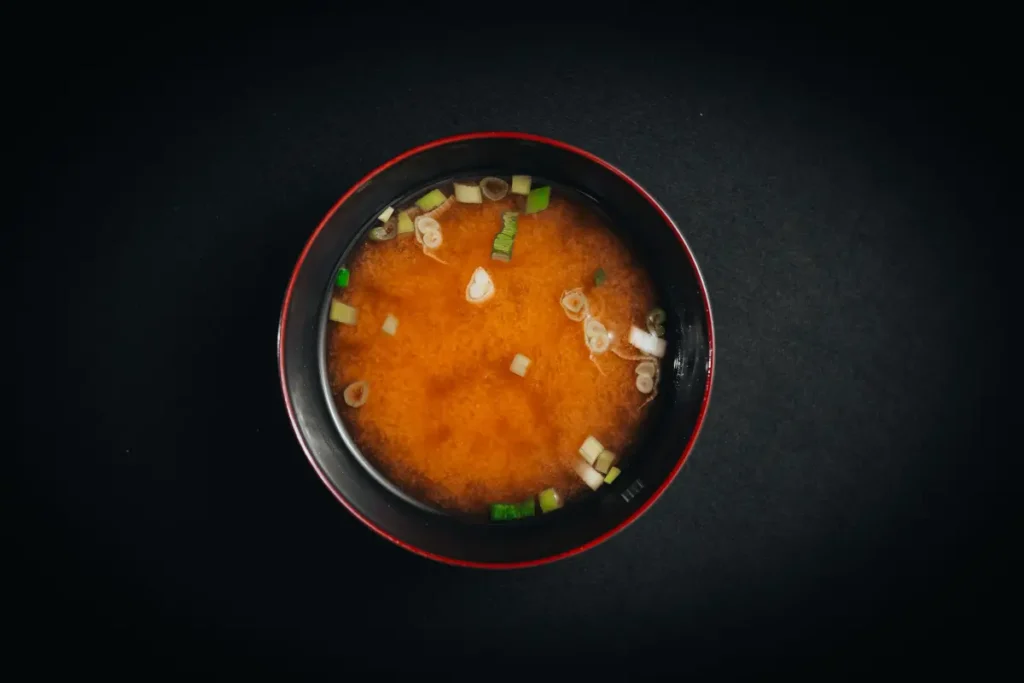
Tare is the concentrated, salty seasoning base spooned into the bottom of a ramen bowl before the broth is added, and it is what defines a bowl as shoyu, miso or shio ramen. Without tare, ramen broth would taste flat, since the broth itself is mostly about body and richness rather than seasoning.
Common types of tare
- Shoyu tare, built on soy sauce, the most common style.
- Miso tare, built on miso paste, as in our miso ramen.
- Shio tare, a lighter, salt-based seasoning rather than soy or miso.
Making a simple tare at home
A basic shoyu tare can be made by combining soy sauce, mirin and a little sake, then simmering briefly with aromatics such as garlic, ginger and spring onion to infuse extra flavour before straining. This is spooned into the bottom of each bowl before the hot broth is ladled in, rather than mixed into the broth itself while it cooks.
Why tare is kept separate from the broth
Making a large batch of broth without pre-seasoning it lets a ramen shop, or a home cook making several different bowls, vary the seasoning per bowl using different tares, shoyu, miso or shio, from a single pot of base broth, rather than needing to cook several broths from scratch.
Storing homemade tare
A batch of shoyu tare keeps in the fridge for a couple of weeks thanks to the soy sauce’s natural preservation, making it worth batch-making if you cook ramen at home more than once in a while.
What tare does in a bowl of ramen
A bowl of ramen has three main parts: the broth, the tare and the fat or aroma oil. The broth gives body, but on its own it tastes flat and under seasoned. Tare is the concentrated seasoning that brings the salt and much of the character. A spoon or two goes in the empty bowl, then the hot broth is poured over.
The type of tare gives the ramen its name. Shoyu ramen uses a soy based tare, shio ramen uses a salt based tare, and miso ramen uses a tare built on miso paste.
What goes into each kind
- Shoyu tare: soy sauce simmered with mirin, sake and sometimes kombu, dried shiitake or bonito flakes.
- Shio tare: salt dissolved in a light stock with kombu, dried seafood such as scallop or shrimp, and sometimes a little sake.
- Miso tare: miso paste blended with garlic, ginger, sesame, chilli and a little sugar or mirin.
- Chashu braise: many shops use the liquid left from braising chashu pork as part of their shoyu tare.
FAQ
Can I buy tare ready-made?
Some Japanese grocers and online shops sell bottled tare, though many home cooks make a simple version with soy sauce, mirin and a little dashi.
How much tare do I need per bowl?
Usually a tablespoon or two per bowl, added to the base before ladling in the hot broth.
Can I use tare for other dishes?
Yes. Shoyu tare makes a good glaze for grilled chicken or a seasoning for fried rice, and miso tare can be thinned into a dressing.