Some links on this page are affiliate links. As an Amazon Associate, The Asian Larder earns from qualifying purchases, at no extra cost to you.
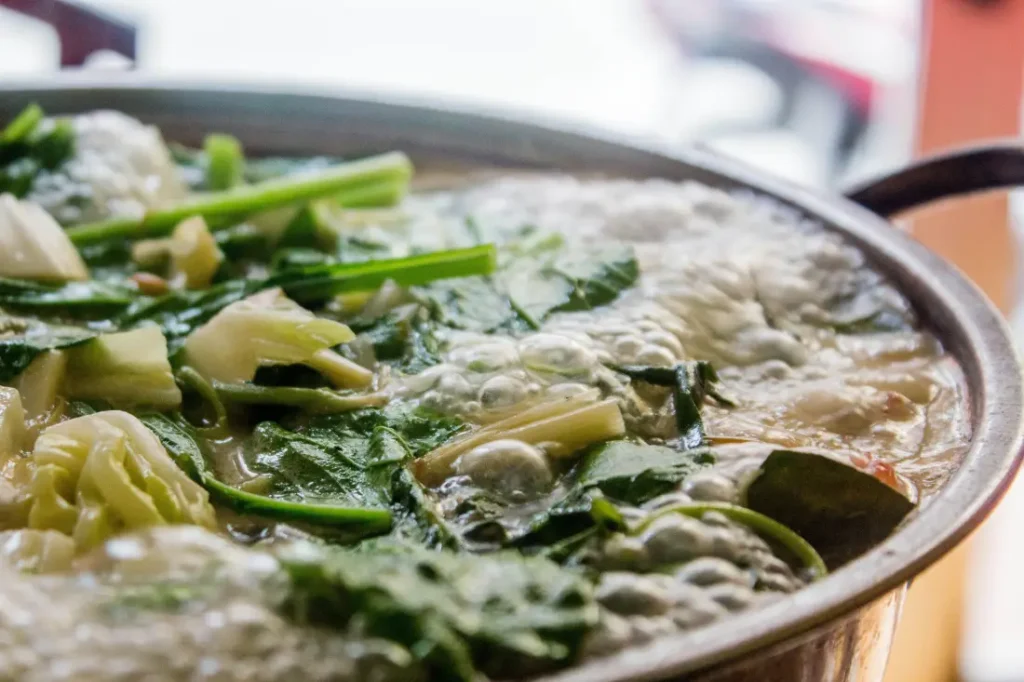
Thin slices of rice cake in a clear, savoury beef broth, topped with egg ribbons and seaweed. Traditionally eaten on Korean New Year.
Tteokguk
- 400 g sliced Korean rice cakes
- 150 g beef brisket or chuck, thinly sliced
- 1.5 litres water or beef stock
- 2 cloves garlic, minced
- 1.5 tbsp soup soy sauce or light soy sauce
- 1 tsp sesame oil
- 2 eggs
- 2 spring onions, sliced
- roasted seaweed (gim), crumbled, to serve
- Soak the rice cakes in cold water for 20 minutes if firm.
- Fry the beef in the sesame oil with the garlic for 2 minutes.
- Add the water or stock and simmer for 20 minutes, skimming any scum.
- Season with soy sauce, then add the drained rice cakes and simmer for 4 to 5 minutes until soft.
- Beat the eggs and drizzle into the simmering soup, then leave for 30 seconds before stirring gently.
- Serve topped with spring onion and crumbled seaweed.
What is tteokguk?
Tteokguk is a light Korean soup of sliced rice cakes in a clear beef broth, finished with egg and seaweed. In Korea it is the dish of Seollal, the Lunar New Year, and many families say you are not a year older until you have eaten a bowl. The white oval slices are meant to look like coins, so the soup is also linked with luck for the year ahead.
Outside the new year it is still a common quick meal. The broth is mild, the rice cakes are soft and chewy, and the whole bowl comes together in about half an hour.
Ingredient notes and UK swaps
- Rice cakes: look for sliced oval tteok (sometimes labelled tteokguk tteok) in the fridge or freezer of Korean grocers. Frozen slices need a 20 minute soak in cold water first.
- Beef: brisket or a thin cut of chuck gives the best flavour. Thin sliced beef for hot pot also works and cooks fast.
- Soup soy sauce: Korean guk ganjang is lighter in colour and saltier than standard soy. If you only have regular light soy sauce, add it a little at a time and season the rest with salt.
- Seaweed: roasted laver (gim) is crushed over the top just before serving. Plain nori sheets toasted for a few seconds over a flame are a fine swap.
Serving and storing
Serve tteokguk straight away with kimchi on the side. Rice cakes keep soaking up broth as they sit, so they turn soft and the soup thickens. If you want to cook ahead, keep the broth in the fridge for up to 3 days and add fresh rice cakes when you reheat it. Cooked leftovers can be loosened with a splash of water.
Tips for the best tteokguk
- Add the rice cakes near the end so they soften without falling apart.
- Soup soy sauce seasons without darkening the broth.
Getting a clear broth
Skim the scum that rises while the beef simmers, doing this a few times in the first stages of cooking keeps the broth clear rather than cloudy, which matters for the clean, delicate look tteokguk is known for.
Vegetarian version
A kombu and dried anchovy or mushroom-based stock replaces the beef broth for a vegetarian tteokguk, the rice cakes, egg and seaweed garnish stay the same regardless of the broth used.
Frequently asked questions
Can I use cylinder rice cakes?
Yes, slice them thinly on the diagonal first.
Can I make it vegetarian?
Use a kombu and shiitake stock and leave out the beef.
Can I use frozen rice cakes?
Yes. Soak them in cold water for about 20 minutes so they soften evenly, then drain and add to the broth as normal.
Shop this
- Korean rice cakes. For tteokbokki and tteokguk.