Some links on this page are affiliate links. As an Amazon Associate, The Asian Larder earns from qualifying purchases, at no extra cost to you.
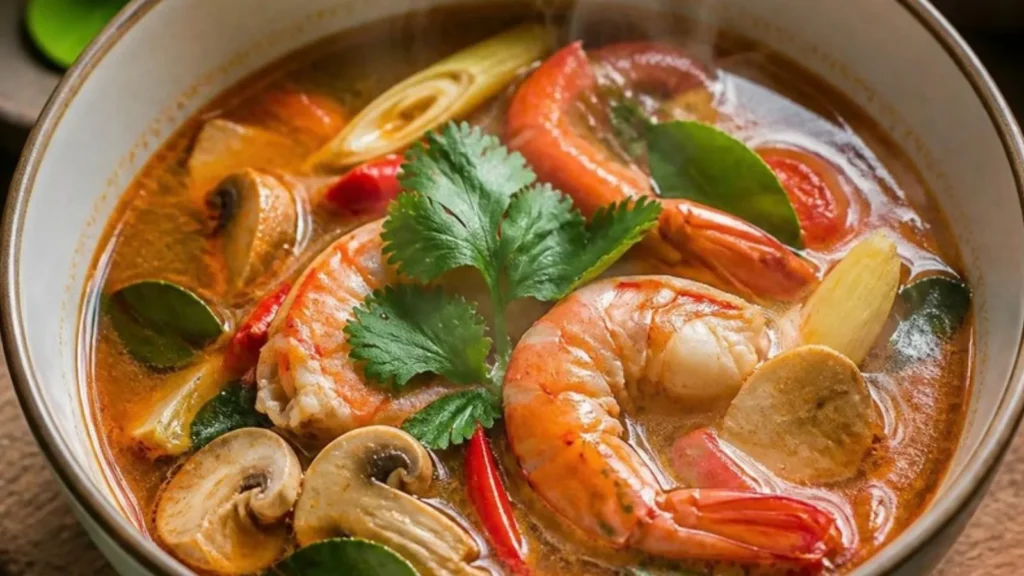
Tom yum is a hot and sour Thai soup built on lemongrass, galangal and makrut lime leaves. It is sharp, fragrant and fast, and it works either from scratch with fresh aromatics or from a jar of paste on a weeknight. Both routes are below.
The thing that makes or breaks a bowl is balance. Sour, salty and hot should all be present, and none of them should win.
Ingredients
Serves 4
| Ingredient | Amount |
|---|---|
| Chicken or vegetable stock | 1 litre |
| Lemongrass, bruised and cut into lengths | 2 stalks |
| Galangal, sliced | 4 slices |
| Makrut lime leaves, torn | 4 |
| Tom yum paste | 3 tablespoons |
| Raw prawns | 200g |
| Mushrooms, halved or sliced | 150g |
| Tomatoes, quartered | 2 |
| Fish sauce | 2 tablespoons |
| Lime juice | 2 tablespoons |
| Sugar | 1 teaspoon |
| Bird’s eye chilli and coriander, to finish | To taste |
Method
- Bring the stock to a simmer with the lemongrass, galangal and lime leaves. Leave it for 5 minutes to infuse.
- Stir in the tom yum paste until it dissolves.
- Add the mushrooms and tomatoes, and simmer for 3 minutes.
- Add the prawns and cook for 2 to 3 minutes, until just pink through.
- Stir in the fish sauce and sugar, then take the pan off the heat and add the lime juice.
- Taste and adjust the balance of sour, salty and hot. Scatter with chilli and coriander, and serve straight away.
Why this tom yum works
Infusing the aromatics in the stock before the paste goes in builds a rounder, more fragrant base than stirring everything together at once. Adding the lime juice off the heat matters just as much, because boiling lime juice turns the flavour flat and slightly bitter.
Tom yum in under 20 minutes
Skip the fresh lemongrass, galangal and lime leaves, and go straight from stock to paste. It still works, and it takes under 20 minutes start to finish. Stir the paste into the stock rather than frying it in oil first, which keeps the soup light instead of greasy.
Paste brands vary a lot in salt and heat, so add it gradually and taste rather than tipping in the full three tablespoons at once.
Adjusting the heat and sourness
- Add lime juice a spoon at a time at the end, not all at once.
- Taste before adding more chilli. Bird’s eye chillies vary a lot in strength from batch to batch.
- A teaspoon of sugar is not there to sweeten the soup, it is there to round off the sourness.
- The lemongrass, galangal and lime leaves are for flavour, not for eating. Fish them out or warn people at the table.
Clear tom yum vs creamy tom yum
This makes the clear version, nam sai. The creamy version, nam khon, is made by stirring in evaporated milk or a spoonful of nam prik pao near the end. It is milder and richer, and worth trying if the clear version feels too sharp.
Frequently asked questions
Is tom yum the same as tom kha?
No. Tom kha is made with coconut milk and is milder and creamier. Tom yum is clear and sharply sour, with no coconut milk in the standard version.
Can I make tom yum from scratch without paste?
Yes. Simmer fresh lemongrass, galangal, makrut lime leaves and bird’s eye chillies in the stock, and season with fish sauce, lime and a little sugar. The aromatics can be hard to find in a standard UK supermarket, which is why most weeknight versions use paste.
What can I use instead of prawns?
Thinly sliced chicken thigh or firm tofu both work. Add chicken a few minutes earlier than the prawn timing, as it takes longer to cook through.
Why has my tom yum gone bitter?
Usually boiled lime juice. Add it off the heat at the very end. Over-simmered lime leaves can do the same, so pull them once the stock smells fragrant.
Can I add coconut milk?
Yes, stirred in at the end. It becomes closer to tom yum nam khon, milder and less sharply sour.
For another quick Thai dish, try our Thai green curry. If fish sauce is new to you, our guide to buying fish sauce in the UK covers what to look for. For the Chinese take on a hot and sour bowl, see hot and sour soup.
Shop this
- Tom yum paste. The fast route to the right flavour base.
- Fish sauce. Rounds out the salt and depth.