Some links on this page are affiliate links. As an Amazon Associate, The Asian Larder earns from qualifying purchases, at no extra cost to you.
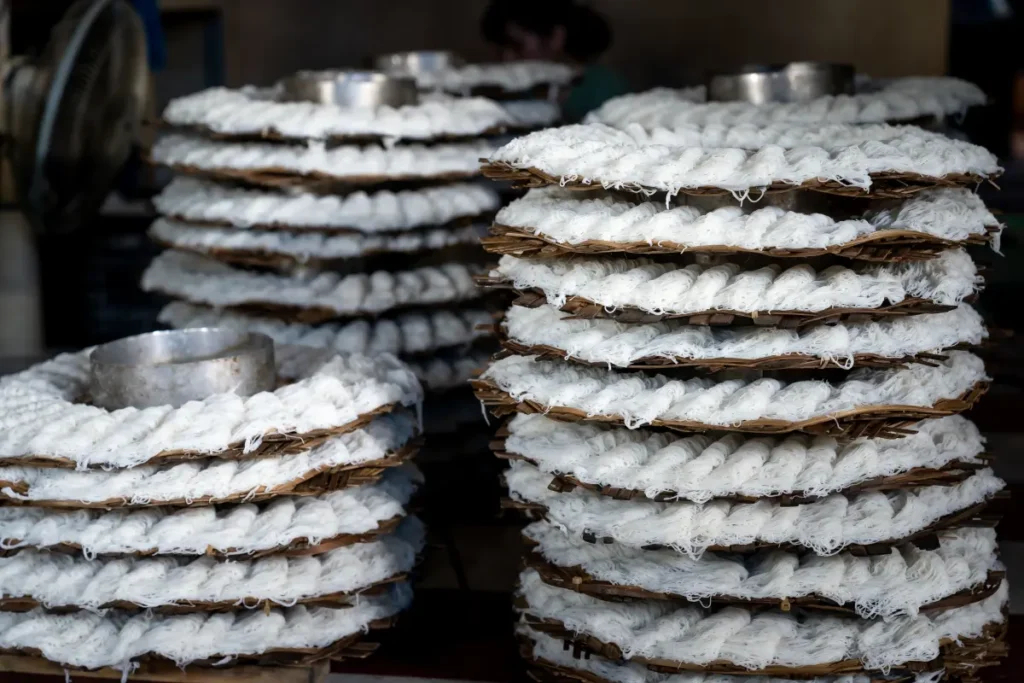
Very thin wheat noodles, chilled and served with a light soy dipping sauce, a refreshing Japanese dish for warm weather.
Hiyashi somen
- 200 g somen noodles
- 100 ml soy sauce
- 100 ml mirin
- 100 ml dashi stock
- ice cubes, for serving
- spring onion, sliced, to serve
- grated ginger, to serve
- Combine the soy sauce, mirin and dashi in a small pan, bring to a brief simmer, then cool and chill.
- Bring a pot of water to a rolling boil and cook the somen for 1 to 2 minutes, following the pack timing.
- Drain and rinse immediately under cold running water, rubbing gently to remove excess starch.
- Drain well and pile into a bowl over ice to keep chilled.
- Pour the chilled dipping sauce into small individual bowls.
- Serve the noodles alongside the sauce, spring onion and ginger for dipping.
What is hiyashi somen?
Hiyashi somen is a Japanese summer dish of very thin wheat noodles, cooked, chilled in iced water and dipped into a cold, savoury sauce called mentsuyu. Somen cook in about 2 minutes, so the whole meal is ready in 10.
In Japan it is eaten on hot days when nobody wants to stand over a stove. The noodles are often served on ice, with small bowls of toppings for each person to add to their dipping sauce.
Ingredient notes and UK swaps
- Somen noodles: sold dried in bundles in Japanese and Asian grocers. Hiyamugi are slightly thicker and work the same way.
- Mentsuyu: a ready made noodle sauce, diluted with cold water. You can make your own from dashi, soy sauce and mirin simmered together and chilled.
- Toppings: sliced spring onion, grated ginger, shredded nori, toasted sesame seeds and a little wasabi are the classic choices.
- Extras: cucumber batons, thin omelette strips, ham or cooked prawns turn it into a fuller meal.
Serving
Serve the noodles in small portions on a plate or in a bowl of iced water, with the dipping sauce in a small cup for each person. Pick up a mouthful of noodles, dip, and eat. Somen are best eaten straight after cooking, as they turn soft and stick together if left to sit.
Tips for the best hiyashi somen
- Rinse the noodles thoroughly under cold water, this is what gives them their clean, springy texture.
- Somen cooks very fast, set a timer so it does not turn mushy.
Rinsing thoroughly after cooking
A thorough cold-water rinse straight after draining, rubbing the noodles gently, removes the surface starch that would otherwise make them clump, this step matters more for somen than for most other noodles given how thin the strands are.
Frequently asked questions
Can I use soba or udon instead of somen?
Yes, both work with the same dipping sauce, though the texture and thickness will be different from traditional hiyashi somen.
How do I stop the noodles sticking together?
A thorough cold rinse and a little ice water while serving keeps them from clumping.
How much dipping sauce do I need?
Around 100 ml of diluted sauce per person is plenty. Top it up as you go, as it gets weaker from the water on the noodles.
Shop this
Some links on this page are affiliate links. As an Amazon Associate, The Asian Larder earns from qualifying purchases, at no extra cost to you.
- Somen noodles. Very thin wheat noodles for a light, cold dish.