Some links on this page are affiliate links. If you buy through them we may earn a small commission, at no extra cost to you.
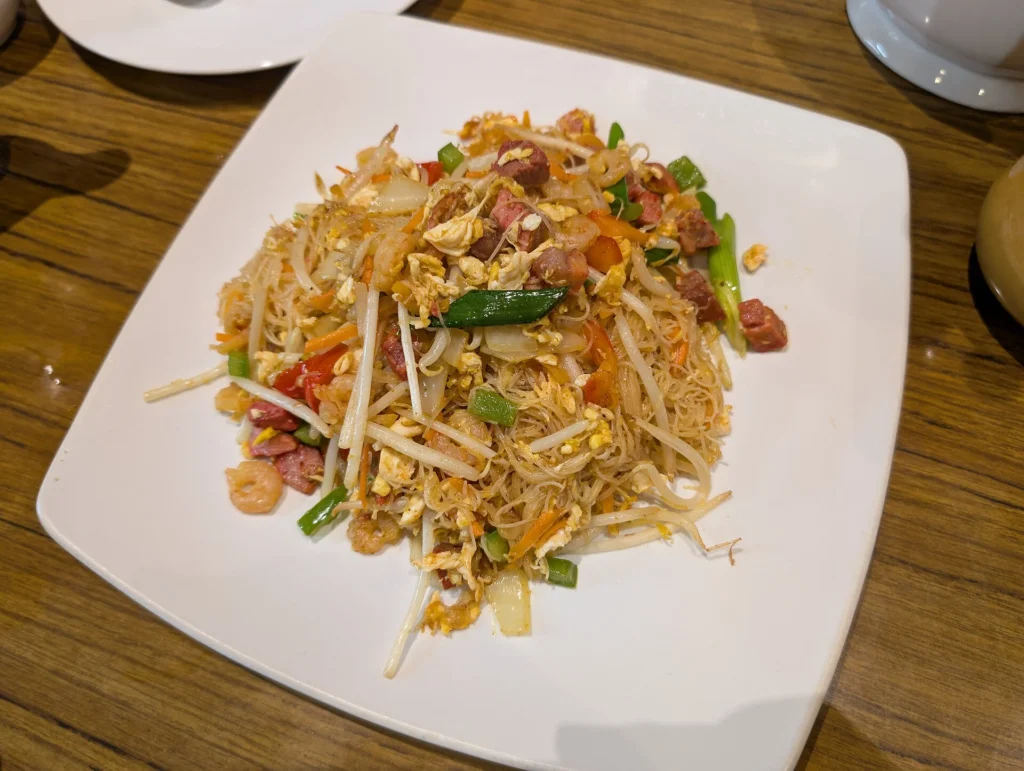
Singapore noodles are thin rice vermicelli stir fried with curry powder, prawns, egg and crunchy vegetables until every strand turns yellow. The dish takes about 25 minutes in one wok. Despite the name it comes from Hong Kong, not Singapore, and it is a fixture of British Chinese takeaway menus.
The whole thing lives or dies on the noodles. Get the soak right and the rest is a five minute stir fry.
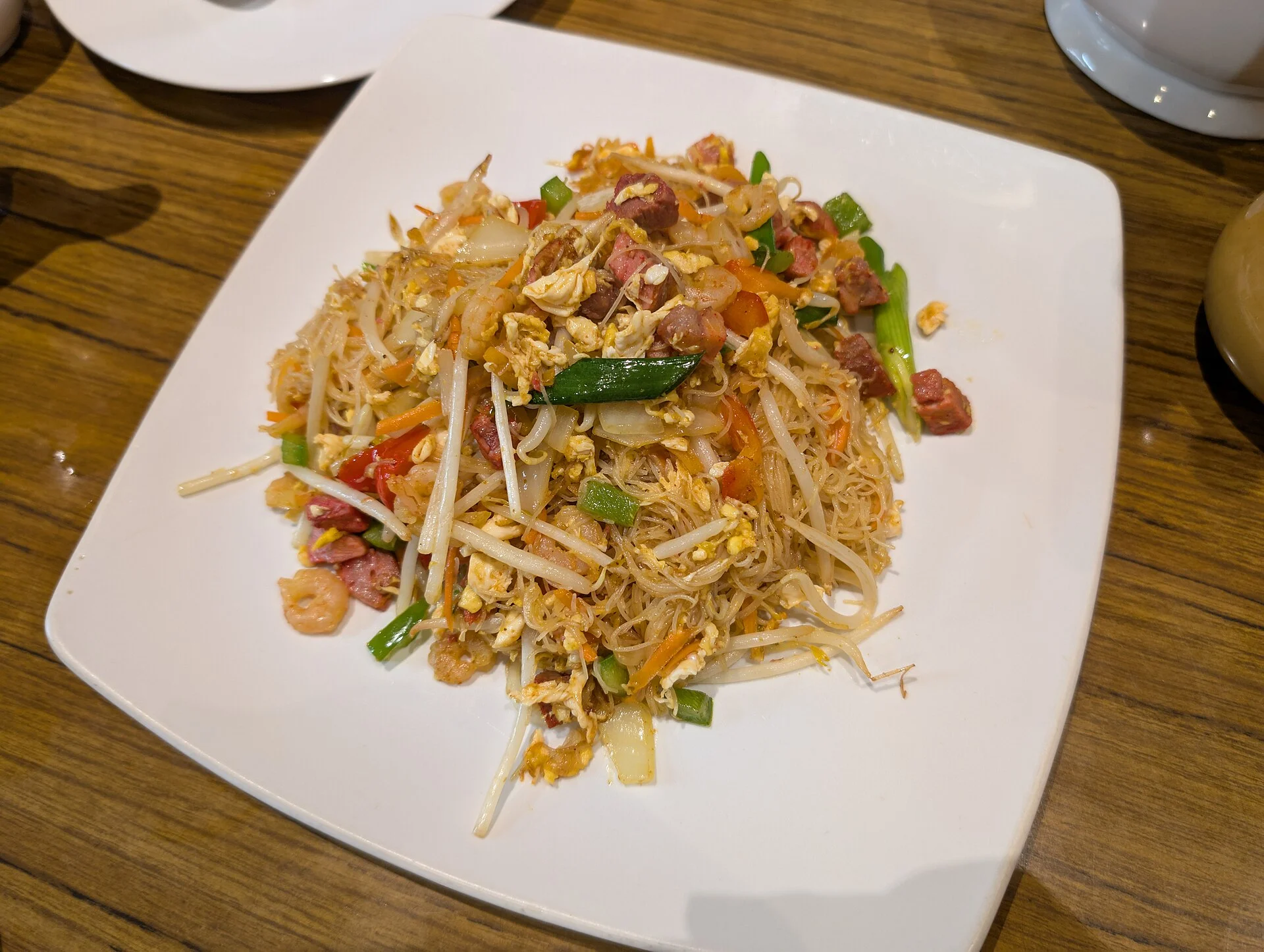
Singapore noodles
Ingredients
Method
- Put the vermicelli in a large bowl and cover with just boiled water. Soak for 3 to 4 minutes until bendy but still firm. Drain, rinse under cold water, then toss with a teaspoon of the oil so the strands stay separate.
- Mix the curry powder, turmeric, soy sauce, sugar, sesame oil and white pepper in a small bowl.
- Heat a wok over a high heat with 1 tbsp oil. Pour in the beaten egg, swirl to a thin omelette, cook for 1 minute, then slide out and slice into ribbons.
- Add the last tablespoon of oil. Stir fry the prawns for 90 seconds until just pink, then lift them out.
- Add the onion and pepper and stir fry for 2 minutes. Add the garlic and the ham or char siu and cook for 30 seconds.
- Tip in the drained noodles and the spice mix. Toss with tongs for 2 minutes, lifting rather than stirring, until every strand is yellow.
- Return the prawns and egg. Add the beansprouts and spring onions, toss for 1 minute and serve straight away.
Notes
Why this recipe works
Most home versions come out as a clumped yellow brick. Two things fix that. The noodles get soaked rather than boiled, then rinsed cold and oiled. The spice goes in as a dry mix at the end, so it coats the strands instead of sitting in a puddle at the bottom of the wok.
- Soak, do not boil. Boiled vermicelli turns to paste in a hot wok.
- Rinse cold and toss with oil. This stops the strands welding together while you cook everything else.
- Toss with tongs, lifting the noodles. Stirring with a spoon breaks them.
What are the ingredients for Singapore noodles?
Singapore noodles need rice vermicelli, curry powder, soy sauce, egg, prawns and char siu pork, plus onion, pepper, beansprouts and spring onion. Turmeric deepens the yellow. Nothing on the list is unusual apart from the char siu, and cooked ham stands in for it well.
What sauce is used for Singapore noodles?
There is no wet sauce. The seasoning is a dry spice blend of curry powder and turmeric loosened with light soy sauce, sugar, sesame oil and white pepper. Two tablespoons of liquid is plenty for four portions. Add more and the noodles go soggy instead of staying loose and separate.
Which curry powder to use
A mild British curry powder is closest to what a takeaway uses. Madras works if you want heat, but it is heavier on cumin and will pull the dish towards an Indian flavour. Whatever you buy, check it is fresh, because ground spice loses its punch after about six months open.
UK supermarket swaps
| Called for | Swap |
|---|---|
| Char siu pork | Thick cut cooked ham, or leftover roast pork tossed in hoisin |
| Rice vermicelli | Thin rice noodles, sometimes sold as rice sticks |
| King prawns | Frozen raw prawns, defrosted and patted dry |
| Beansprouts | Shredded white cabbage, added a minute earlier |
Making it vegetarian
Drop the prawns and pork and add 200 g of firm tofu, pressed and cubed, fried until golden before anything else goes in the wok. Keep the egg or leave it out for a vegan version. Add a handful of sliced mushrooms for the savoury depth the meat was giving.
Storage and reheating
Leftovers keep in a sealed box in the fridge for up to two days. Reheat in a hot dry wok for two minutes with a splash of water to loosen the noodles. The microwave works but softens the vegetables. Singapore noodles do not freeze well, because the vermicelli goes mushy on thawing.
Frequently asked questions
Are Singapore noodles from Singapore?
No. The dish was created in Hong Kong and is not part of Singaporean cooking. The name was borrowed to suggest a Southeast Asian, curry led flavour. You will struggle to find it on a menu in Singapore itself.
Why do my Singapore noodles clump together?
The noodles were overcooked or not rinsed. Soak for 3 to 4 minutes only, rinse under cold water to stop the cooking, then toss with a teaspoon of oil before they go anywhere near the wok.
Can I make Singapore noodles without a wok?
Yes. Use the widest frying pan you own and cook in two batches. A crowded pan steams the noodles instead of frying them, and you lose the dry, separate texture the dish is known for.
What can I serve with Singapore noodles?
The dish is a full meal on its own. For a takeaway spread, pair it with something saucy such as beef in black bean sauce, plus a dry dish like salt and pepper chicken.
Shop this
Some links on this page are affiliate links. If you buy through them we may earn a small commission, at no extra cost to you.
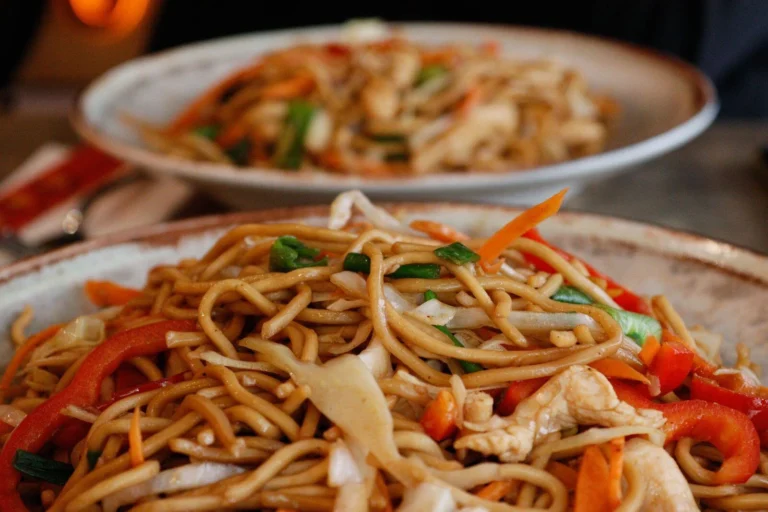
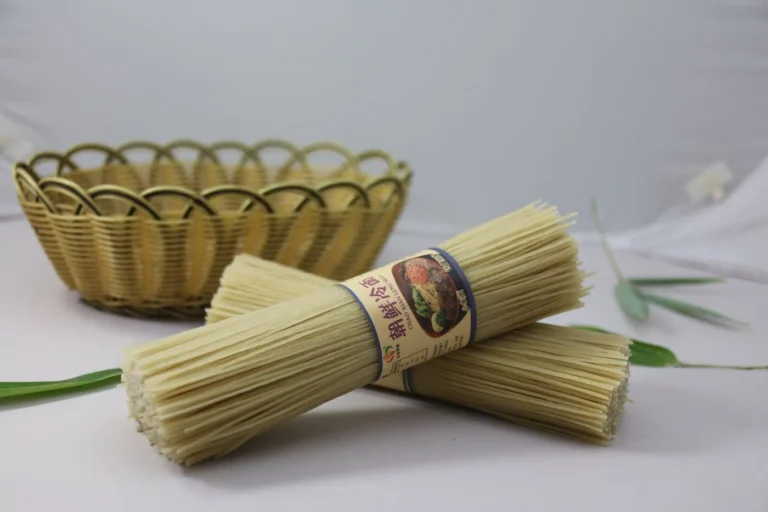
- Rice vermicelli noodles. Thin noodles, the base of the dish.
- Curry powder. Gives Singapore noodles their yellow colour and flavour.