Some links on this page are affiliate links. As an Amazon Associate, The Asian Larder earns from qualifying purchases, at no extra cost to you.
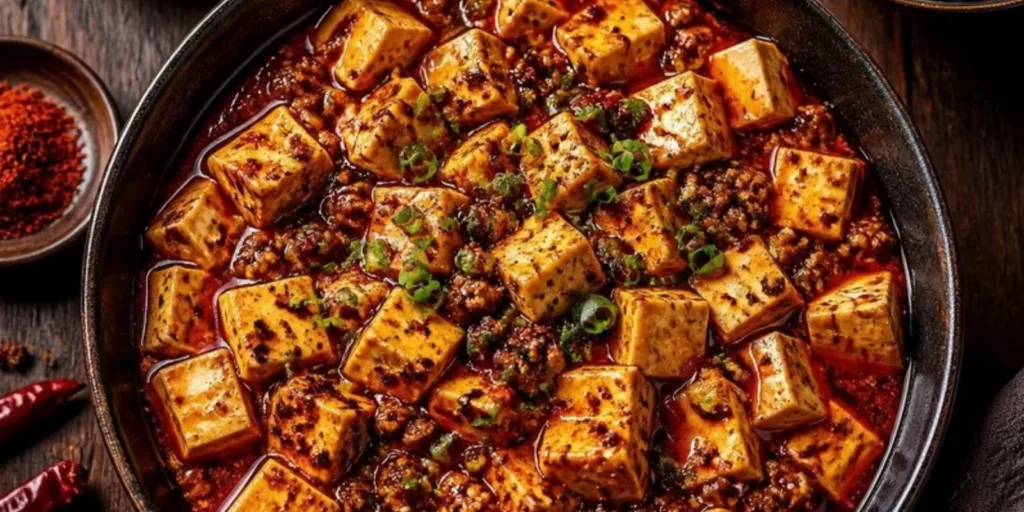
Mapo tofu is a Sichuan dish of silken tofu and minced pork in a fermented chilli bean sauce, finished with ground Sichuan peppercorns. The peppercorns are what give it the tingling numbness, and that part is entirely under your control.
Below is the full mapo tofu with the numbing spice, plus how to dial it down if you are new to it.
Ingredients
Serves 3 to 4
| Ingredient | Amount |
|---|---|
| Silken or soft tofu, cubed | 400g |
| Pork mince | 150 to 200g |
| Doubanjiang (fermented chilli bean paste) | 1 to 2 tablespoons |
| Fermented black beans, chopped | 1 tablespoon |
| Garlic, minced | 2 cloves |
| Ginger, grated | 1 teaspoon |
| Chicken or vegetable stock | 200ml |
| Light soy sauce | 1 tablespoon |
| Cornflour, mixed with 2 tbsp water | 1 teaspoon |
| Sichuan peppercorns, toasted and ground | ¼ to ½ teaspoon |
| Spring onions, sliced | 2 |
Method
- Fry the pork mince in a splash of oil over high heat until browned, breaking it up as it cooks.
- Add the doubanjiang, black beans, garlic and ginger. Fry for 1 minute, until fragrant and the oil turns red.
- Pour in the stock and soy sauce, and bring to a simmer.
- Slide in the tofu cubes and simmer for 3 to 4 minutes. Do not stir hard, or the tofu breaks up.
- Stir in the cornflour mixture and simmer for another minute, until the sauce thickens enough to coat.
- Finish with the ground Sichuan peppercorns and spring onion, and serve over rice.
Why mapo tofu needs the paste fried first
Frying the doubanjiang in oil before any liquid goes in releases its colour and aroma properly. That step is the base flavour the whole dish rests on, and skipping it leaves the sauce tasting flat and looking brown rather than red.
Adjusting the numbing heat
The numbing sensation from Sichuan peppercorns, called ma, is separate from chilli heat and can be surprising the first time. Use a quarter teaspoon to start, or leave it out altogether for a version with no numbing at all.
- Toast whole peppercorns in a dry pan and grind them fresh. Old pre-ground powder has almost no effect.
- Add them at the end rather than cooking them in, because the effect fades the longer they cook.
- Doubanjiang varies a lot in heat between brands. Start with one tablespoon and add more after tasting.
Keeping the tofu whole in mapo tofu
Silken tofu breaks apart easily. Slide it in rather than dropping it, and move it by shaking the pan gently instead of stirring with a spoon. Firm tofu holds together more easily if the silken version feels too delicate, though the texture will be firmer than the traditional dish, which should be soft and almost custardy.
Frequently asked questions
What is doubanjiang, and can I substitute it?
Doubanjiang is a fermented chilli bean paste and the base flavour of the dish. Gochujang is not a real substitute, as it is sweeter and less savoury. If you cannot find doubanjiang, a mix of miso and chilli flakes gets closer than any single swap.
Can I make mapo tofu vegetarian?
Yes. Swap the pork for finely chopped mushrooms and use vegetable stock. The doubanjiang and tofu carry most of the flavour anyway. Check the doubanjiang label, as some brands are not vegetarian.
Can I use firm tofu instead of silken?
Yes, and it holds together more easily, though the texture is firmer than the traditional dish. Silken gives the classic soft, custard-like result.
Is mapo tofu spicy?
It can be, but both the chilli and the numbing spice are adjustable. One tablespoon of doubanjiang and a quarter teaspoon of ground peppercorn makes a mild version that still tastes like the real thing.
Does mapo tofu reheat well?
It keeps for two days in the fridge, though the tofu softens further on reheating. Warm it gently over low heat rather than boiling it hard.
For another Sichuan-style dish, try our crispy chilli beef. To understand the key ingredient, see what is doubanjiang.
Shop this
- Doubanjiang. The essential base flavour, worth seeking out rather than swapping.
- Sichuan peppercorns. Buy whole and grind them fresh.