
Some links on this page are affiliate links. As an Amazon Associate, The Asian Larder earns from qualifying purchases, at no extra cost to you.
Thick udon noodles in a clean, savoury dashi broth, the simplest and most everyday of Japanese noodle soups.
Kake udon
- 600 ml dashi stock
- 2 tbsp soy sauce
- 1 tbsp mirin
- 1 tsp sugar
- 400 g fresh or frozen udon noodles
- spring onion, sliced, to serve
- shichimi togarashi, to serve (optional)
- Combine the dashi, soy sauce, mirin and sugar in a pot and bring to a gentle simmer.
- Taste and adjust the seasoning, it should be clean and savoury rather than heavily salty.
- Cook the udon according to the pack, fresh needs only a minute or two, frozen a little longer.
- Drain the noodles and divide between bowls.
- Ladle the hot broth over the noodles.
- Top with spring onion and a pinch of shichimi togarashi if using.
What is kake udon?
Kake udon is the simplest Japanese udon dish: thick wheat noodles in a hot, light broth made from dashi, soy sauce and mirin, topped with spring onion. Kake means to pour over, as the hot broth is poured over the noodles in the bowl.
It is a comfort food eaten across Japan, from station noodle stands to home kitchens. Once you have the plain bowl right, you can add toppings to make other classic udon dishes.
Ingredient notes and UK swaps
- Udon: frozen udon gives the best chewy texture and is sold in Japanese grocers. Vacuum packed fresh udon from UK supermarkets is a good everyday option.
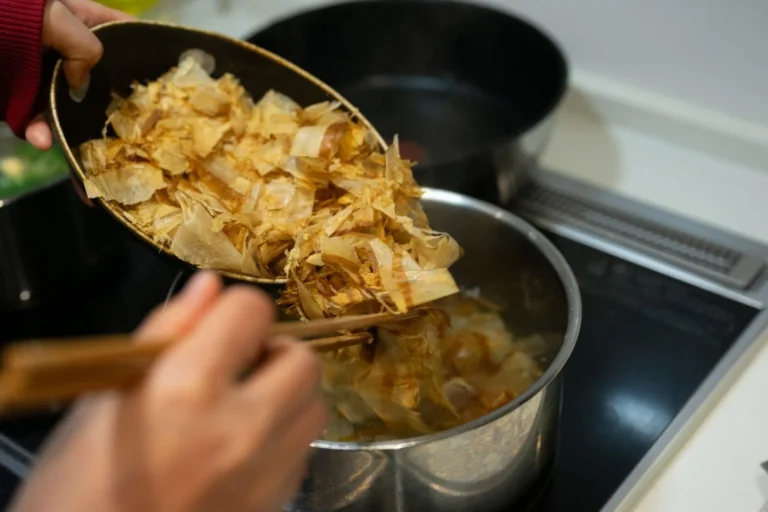
- Dashi: made from kombu and bonito flakes, or from dashi powder or a dashi bag for speed.
- Soy sauce: Japanese light soy (usukuchi) keeps the broth pale. Regular Japanese soy sauce is fine but makes it darker.
- Mirin: adds a mild sweetness. A pinch of sugar can stand in if you have none.
Ways to top it
- Kitsune udon: add a sweet simmered fried tofu pouch (inari age).
- Tsukimi udon: crack a raw egg into the hot broth and let it poach.
- Tempura udon: add a prawn tempura or tempura flakes (tenkasu).
- Wakame udon: add a little soaked dried wakame seaweed.
Tips for the best kake udon
- The broth should taste clean and balanced on its own, since it carries the whole dish with so few ingredients.
- Add toppings like tempura, a soft egg or fish cake to turn this simple base into a heartier meal.
Keeping the broth clean and clear
Since this dish has so few ingredients, the dashi itself needs to taste properly balanced on its own, taste the broth before adding the noodles and adjust the soy sauce or mirin if it seems flat, since there is nowhere for a weak broth to hide here.
Frequently asked questions
Can I use instant dashi for this?
Yes, instant dashi powder dissolved in hot water works well and is the quickest route to a proper broth.
What toppings suit kake udon?
Tempura, a soft-boiled egg, fish cake (kamaboko) or fried tofu (aburaage) are all common additions.
Can I make the broth ahead?
Yes. The broth keeps for 3 days in the fridge. Cook the noodles fresh and pour the reheated broth over them.

Shop this
Some links on this page are affiliate links. As an Amazon Associate, The Asian Larder earns from qualifying purchases, at no extra cost to you.
- Dashi bags. A mess-free way to make dashi at home.