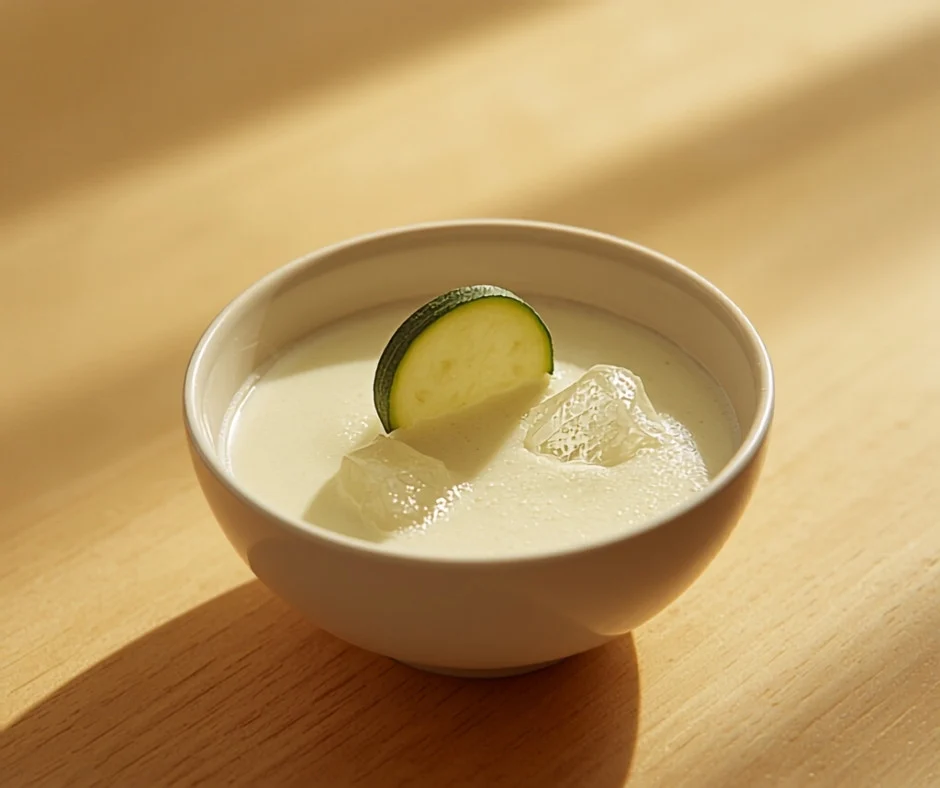
To make tempura batter, mix ice cold water into plain flour with a few light strokes, leaving lumps in the batter rather than stirring until smooth. The cold water and the lumps are both deliberate. They stop gluten developing, which is what keeps tempura light and crisp instead of doughy.
Tempura batter has very few ingredients, but small mistakes in temperature and mixing change the result completely. This guide covers the ratio, the method, and the two mistakes that ruin a light batter.
The basic ratio
| Ingredient | Amount |
|---|---|
| Plain flour | 150g |
| Ice cold water | 200ml |
| Egg yolk (optional) | 1 |
| Ice cubes | A handful, kept in the batter bowl |
Method
- Put the flour in a bowl and place it in the fridge for ten minutes before you start, so it stays cold.
- Mix the egg yolk, if using, into the ice cold water.
- Pour the water into the flour and stir with chopsticks or a fork for no more than five or six strokes.
- Stop while the batter still has visible lumps and a few dry patches of flour.
- Keep a few ice cubes floating in the batter while you fry, to keep it cold throughout.
Where the technique comes from
Tempura is widely credited to Portuguese missionaries and traders in 16th-century Japan, who fried food in batter for meatless fasting days, known in Latin as “quattuor tempora”. The Japanese adapted the method over time into the light, cold-batter style used today, quite different from the heavier fritters it is thought to have started from. It is one of the clearer examples of a borrowed technique becoming something distinct in its new home.
Why the batter must stay cold
Warm batter develops gluten faster, which makes tempura chewy rather than crisp. The temperature difference between the cold batter and the hot oil is also what creates the light, lacy texture on the surface. Keep the flour, water, and bowl cold from start to finish, and mix the batter in small batches so it never sits out for long before frying.
Two mistakes that ruin the batter
- Overmixing. A smooth, lump-free batter means the gluten has developed too far, and the tempura will come out dense.
- Letting the batter sit. Tempura batter should be mixed just before frying. Left to stand, it thickens and loses its light texture.
FAQ
Why is my tempura batter not crispy?
This usually means the batter was overmixed, was not cold enough, or the oil was not hot enough when the food went in.
What oil temperature is best for tempura?
Around 170 to 180C. Test with a small drop of batter. It should sizzle and rise to the surface within a few seconds.
Can I make tempura batter ahead of time?
It is best mixed just before frying. If you need to prepare in advance, keep the flour and water separately chilled and mix them at the last moment.
Do I need sparkling water for tempura batter?
It is not essential. Cold still water works well as long as the batter is kept cold and undermixed. Sparkling water gives a slightly lighter texture if you have it.
Once your batter is ready, try it with prawns or vegetables, or use the same cold-batter method in our sesame prawn toast recipe. For another crumb coating option, see what is panko.