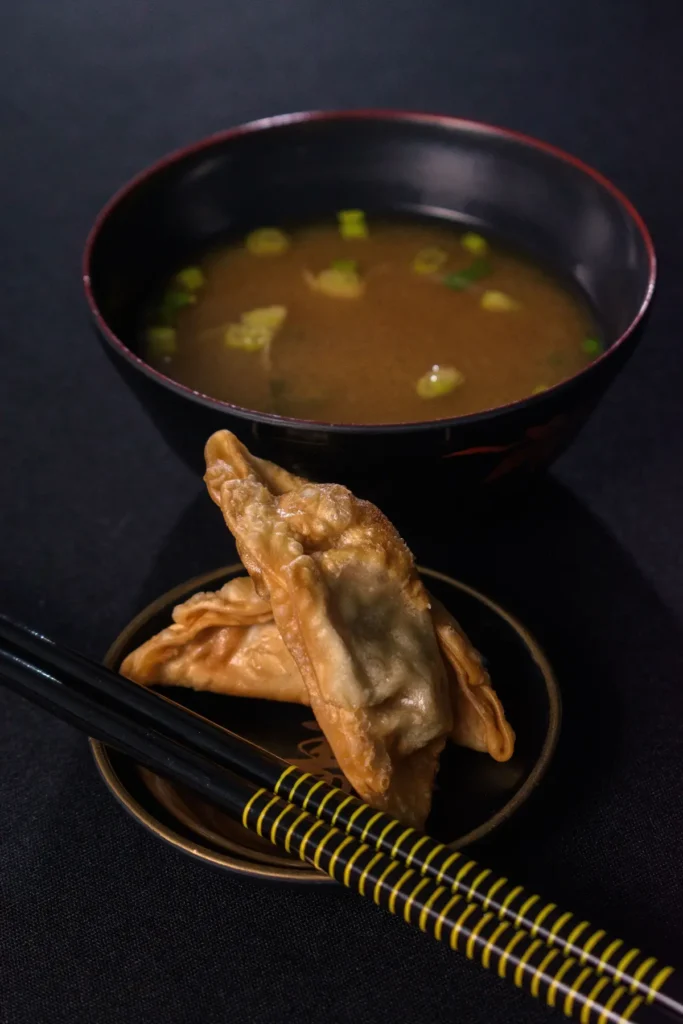
A basic pleat is all you need for a well-sealed dumpling, and it gets easier after the first few tries. The fold matters more for keeping the filling sealed in than for looks, though a neat pleat does help a dumpling sit upright while frying.
Using ready-made wrappers makes this quicker. Here is where to buy dumpling wrappers in the UK.
A simple pleated fold
- Place a spoonful of filling in the centre of the wrapper, and wet the edge lightly with water.
- Fold the wrapper in half, pinching the centre point first to anchor it.
- Working from the centre outwards, make small pleats along one side only, pressing each pleat against the flat opposite edge as you go, as in our gyoza recipe.
Other folds worth knowing
Beyond the classic pleated half-moon, a simple purse fold, gathering the edges up around the filling and pinching the top closed, works well for wontons and needs no pleating skill at all. A triangle fold, folding a square wrapper corner to corner then bringing the two side points together, is the traditional wonton shape for soup, designed to open up attractively once it floats.
Sealing properly matters more than the shape
Whichever fold you use, a fully sealed edge with no gaps is what actually keeps the filling in during cooking. Wetting the edge of the wrapper with a fingertip of water before folding, and pressing firmly rather than just pinching the surface, is the detail that matters most regardless of which shape you choose.
Practising before a real batch
Folding gets noticeably faster and neater after the first ten or so attempts, practising with a few spare wrappers and no filling first, just to get a feel for the pleating motion, saves wasted filling on early mistakes.
Getting the filling right first
A good fold starts with a filling that is not too wet. Salt watery vegetables such as cabbage or courgette and squeeze them dry. Chill the filling for 20 minutes so it firms up. Use about one heaped teaspoon per wrapper. Overfilling is the most common reason dumplings split.
Store bought vs homemade wrappers
- Store bought: thin and even, sold frozen in Asian grocers. Thaw in the fridge and keep under a damp cloth as you work, as the edges dry fast.
- Homemade: plain flour and water, rolled thinner at the edges than the middle. They are softer, stickier and easier to pleat, and seal without water.
- Gyoza wrappers: usually thinner than Chinese jiaozi wrappers, good for pan frying.
- Wonton wrappers: square and thin, best for wontons and siu mai.
Freezing folded dumplings
Lay the folded dumplings on a floured tray so they do not touch and freeze for 1 to 2 hours. Once hard, tip them into a freezer bag. They keep for up to 3 months and can be cooked straight from frozen.
FAQ
What if my dumplings keep bursting open?
Usually too much filling or not enough water on the seal. Use a slightly smaller spoonful and press the edges firmly together.
Do I need to pleat every dumpling?
No, a simple half-moon fold with a firm pinch works fine, pleating is mostly about presentation.