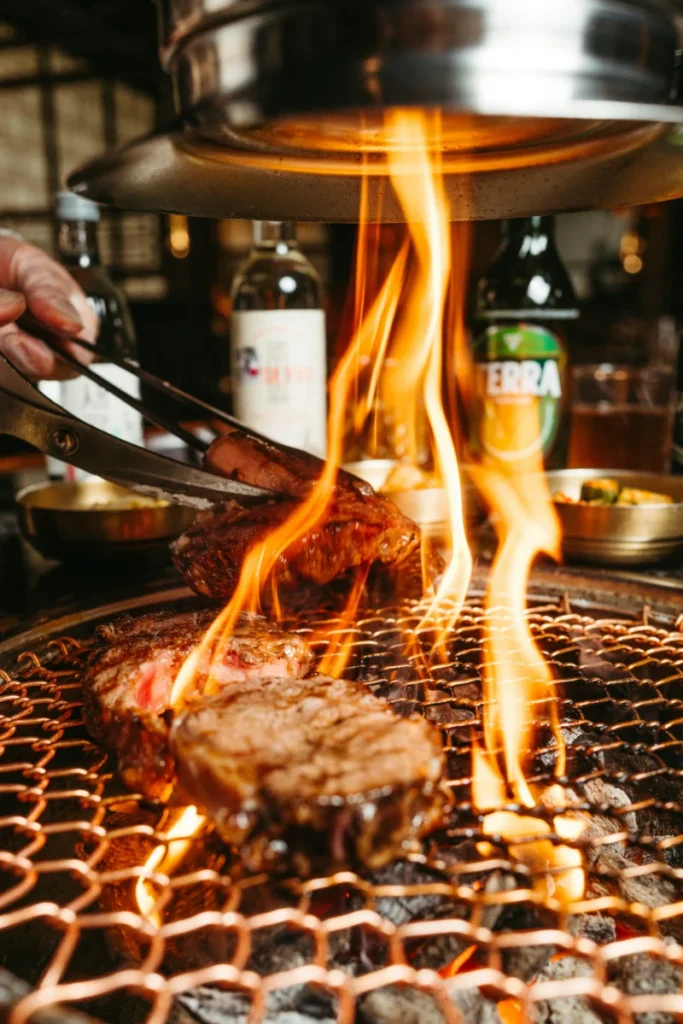
Sweet, savoury Korean marinated beef, grilled or seared hot and fast. One of the easiest Korean dishes to make at home.
Beef Bulgogi
- 500g beef sirloin or ribeye, thinly sliced
- 4 tbsp soy sauce
- 2 tbsp brown sugar
- 1 tbsp sesame oil
- 1 Asian pear or 1/2 apple, grated
- 3 cloves garlic, minced
- 1 tsp grated ginger
- 2 spring onions, sliced
- 1 tbsp sesame seeds
- Mix soy sauce, sugar, sesame oil, grated pear, garlic, and ginger into a marinade.
- Coat the beef and marinate for at least 30 minutes, ideally a few hours.
- Heat a pan or griddle until very hot.
- Sear the beef in batches for 1 to 2 minutes per side, don’t crowd the pan.
- Finish with spring onion and sesame seeds. Serve with rice and lettuce leaves for wrapping.
Why this recipe works
Grated pear or apple in the marinade contains natural enzymes that tenderise the beef while also adding sweetness, which is the classic Korean trick behind bulgogi’s texture.
What is bulgogi?
Bulgogi means fire meat in Korean. Thin slices of beef are marinated in soy sauce, sugar, sesame oil, garlic and grated pear, then cooked quickly over a high heat. The pear helps tenderise the beef and adds a gentle sweetness.
It is one of the best known Korean dishes, cooked at home and at Korean barbecue restaurants, and is usually eaten wrapped in lettuce leaves with rice and ssamjang.
Ingredient notes and UK swaps
- Beef: ribeye or sirloin sliced very thin across the grain. Freeze it for 30 minutes first so it slices easily, or buy pre sliced beef from Korean grocers.
- Asian pear: grated into the marinade. A ripe conference pear or a grated apple works well.
- Soy sauce: regular light soy sauce is fine.
- Extras: sliced onion, carrot and mushrooms can be cooked with the beef.
Serving and storing
Serve with rice, lettuce leaves, kimchi and ssamjang for wrapping. Raw marinated beef can be frozen in bags for up to 2 months, ready to cook straight from thawed. Cooked bulgogi keeps for 2 days in the fridge.
Tips for the best bulgogi
- Slice the beef thinly against the grain, or ask your butcher to do it, since thick slices won’t cook fast enough to stay tender.
- Cook in batches over high heat rather than crowding the pan, which steams the meat instead of searing it.
- Serve wrapped in lettuce leaves with a dab of ssamjang or gochujang for the classic way to eat it.
Marinating ahead of time
Bulgogi benefits from a longer marinade than many stir-fries, a few hours minimum and ideally overnight, letting the sweet soy marinade properly tenderise the beef. Marinating in a resealable bag rather than a bowl uses less marinade and coats the meat more evenly.
Grilling instead of pan-frying
A hot barbecue or griddle pan gives a smokier, more charred result than a regular frying pan, closer to how bulgogi is often cooked in Korea, worth trying if you have the option.
Frequently asked questions
How long should I marinate bulgogi?
At least 30 minutes, and up to 24 hours in the fridge. Thin slices take on flavour quickly.
Can I make bulgogi with pork or chicken?
Yes. Pork shoulder or chicken thigh sliced thin both work well with the same marinade.