
The katsu curry sauce everyone asks for. One pan, about ten minutes of real work, and a flavour that beats the jar. Pour it over chicken, tofu or a bowl of rice.

Katsu curry sauce
Ingredients
Method
- Heat the oil in a pan and soften the onion over a low heat for 8 to 10 minutes.
- Stir in the garlic and curry powder and cook for one minute until fragrant.
- Add the flour and stir to a paste.
- Pour in the stock a little at a time, stirring until smooth.
- Add the soy sauce and honey, then simmer for 15 minutes until thick.
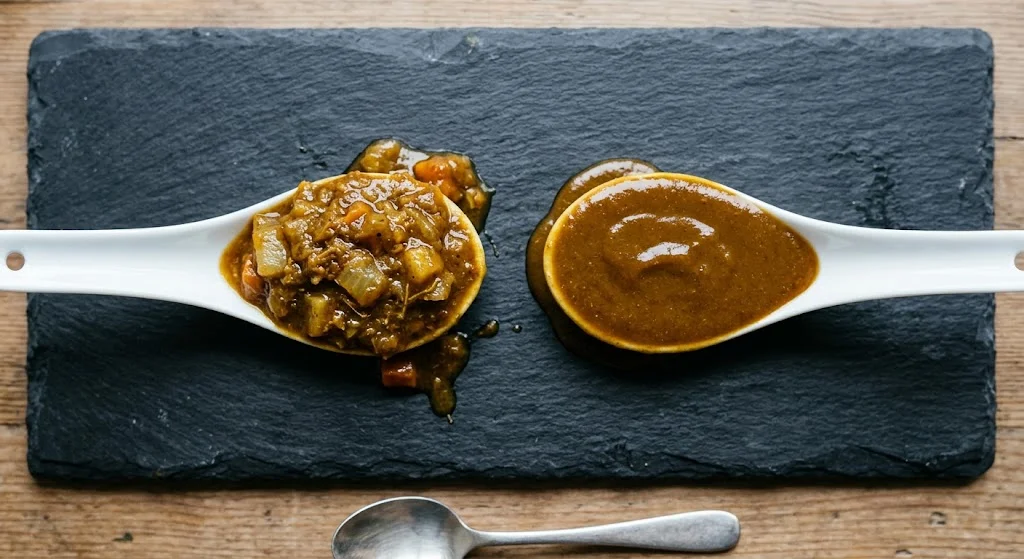
- Blend until smooth, then pour over chicken, tofu or rice.
Notes
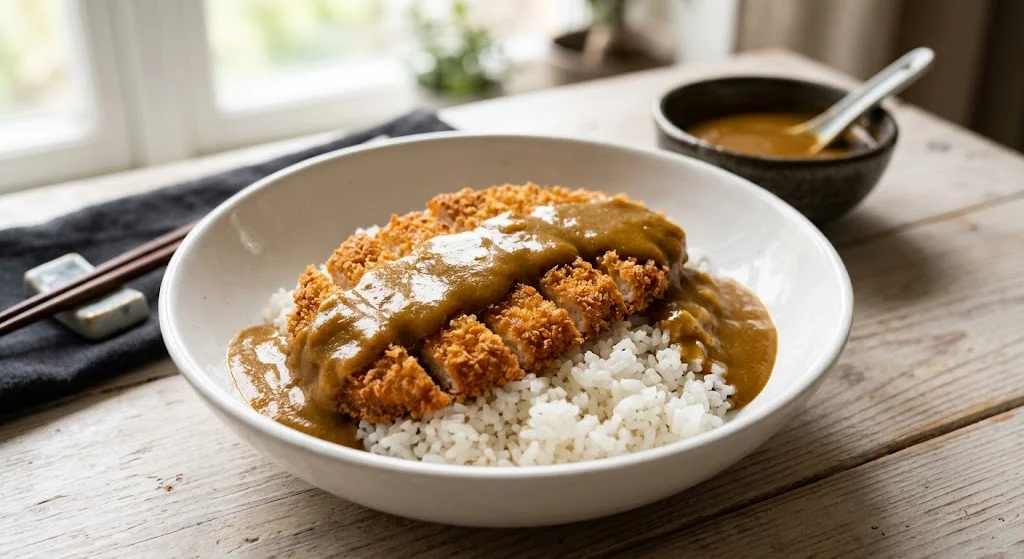
Why cooking the flour first makes the sauce smooth
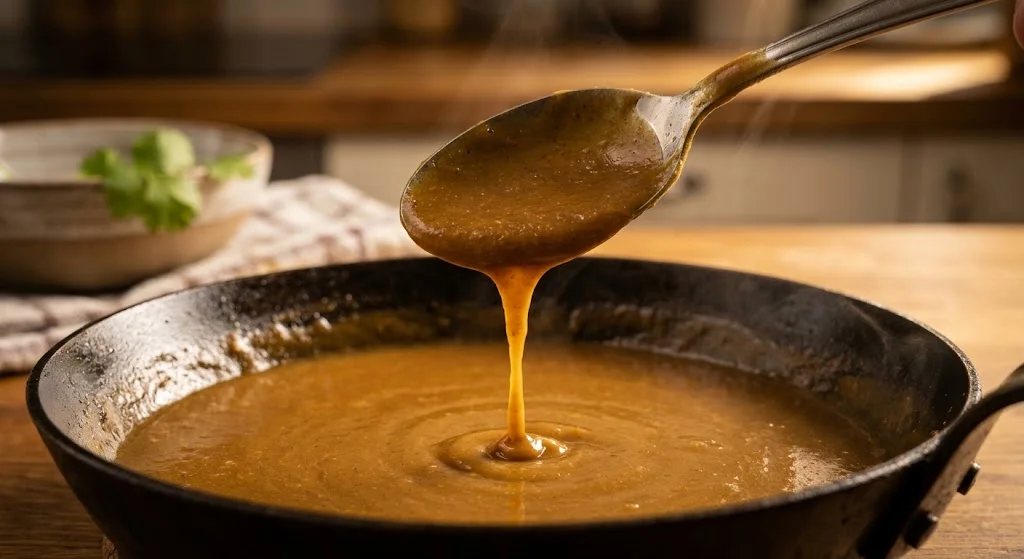
The key is cooking the flour off properly before you add the stock. That one step is what keeps the sauce smooth and thick rather than gluey. Blending at the end gives the glossy, restaurant finish.
How to get a lump free katsu sauce
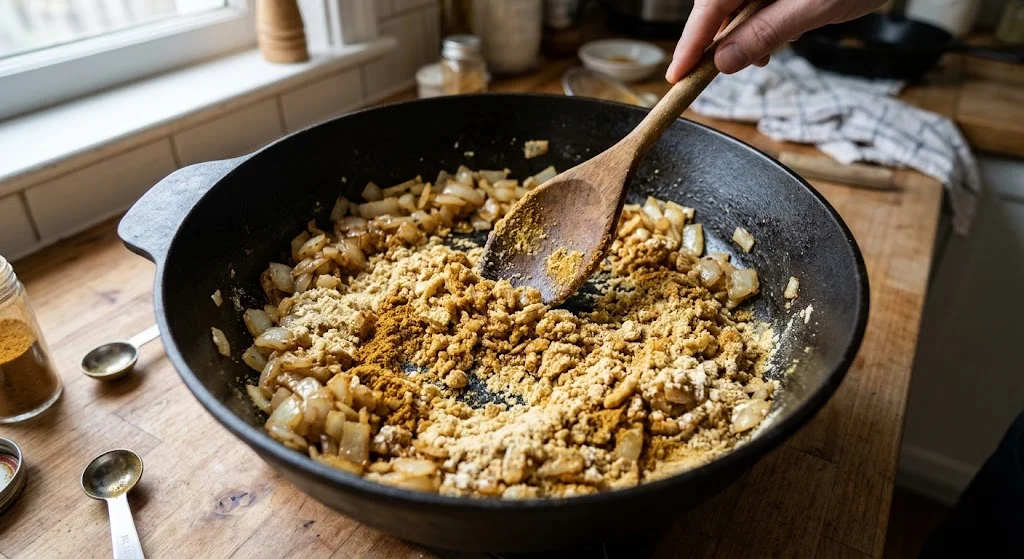
- Use mild curry powder, not hot. The sauce should be warm and comforting, not fiery.
- Add the stock gradually, stirring each time, so lumps cannot form.
- A stick blender in the pan is easier than transferring to a jug blender.
- Taste before serving and adjust with a little more soy or honey.
Vegan, coconut and gluten free versions
- Vegan: swap chicken stock for vegetable stock and honey for maple syrup.
- Coconut version: stir in 100ml coconut milk with the stock for a creamier, milder sauce.
- Gluten-free: swap plain flour for cornflour and use tamari instead of soy sauce.
Keeping and freezing katsu sauce
The sauce keeps well in the fridge for up to five days and freezes for three months. Reheat gently in a pan with a splash of water to loosen it. It thickens when cold, so do not panic.
Nutrition (per serving, makes 4)
Roughly 95 kcal, 4g fat, 3g sugar and 420mg sodium per serving of sauce on its own, based on the ingredients above, before you add chicken, rice or tofu. These are estimates rather than a lab figure, but they show the main difference from a shop-bought sachet: there is no coconut milk or cream in this version, and you control the salt, so it comes in lower in both fat and sodium than most jarred katsu mixes, which rely on dried flavourings for a shelf life of a year or more.
Chicken, tofu or sweet potato to pour it over
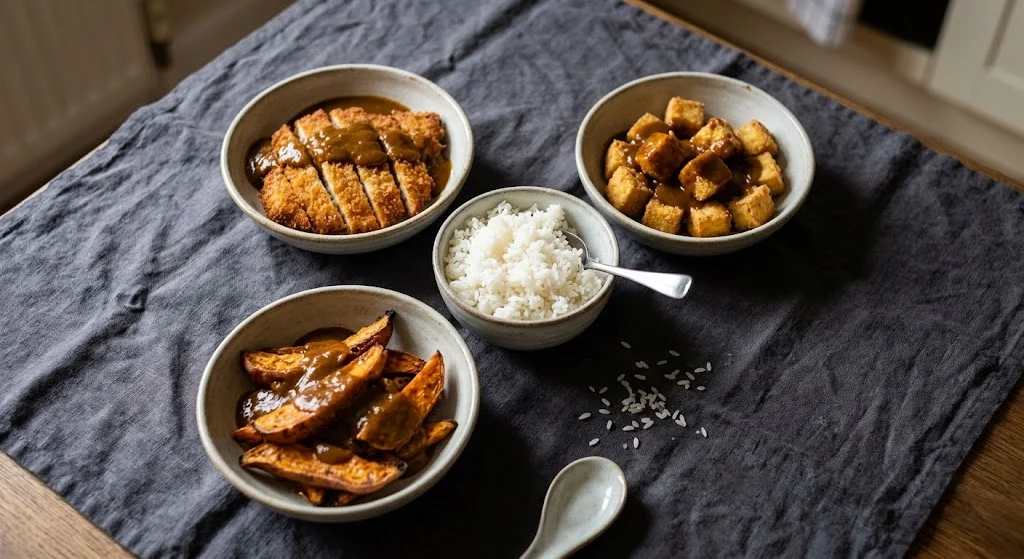
Classic with panko breaded chicken and steamed Japanese rice. Also excellent with tofu, roasted sweet potato, or just poured over a bowl of egg fried rice.
Katsu sauce questions answered
Can I use curry paste instead of curry powder?
You can, but the flavour will be different. Curry powder gives the mild, clean Japanese flavour. Paste is usually more intense and changes the colour.
Why is my katsu sauce lumpy?
The flour was added to liquid too fast. Always stir the flour into the softened onion first, then add liquid slowly.
Is this the Wagamama katsu sauce recipe?
It is inspired by the Wagamama version rather than a copy. Wagamama uses their own blend, but this recipe gets very close to the taste.
Can I make a double batch and freeze half?
Yes, and it is worth it. The sauce freezes for up to three months in a sealed container, so doubling the recipe means a second batch is ready in minutes next time, just defrosted and reheated gently in a pan.