Some links on this page are affiliate links. If you buy through them we may earn a small commission, at no extra cost to you.
Small plates, steamer baskets, endless tea. Here is what to order and how the meal actually works.
What is dim sum?
Dim sum is a Cantonese style of eating: dozens of small steamed, fried and baked dishes shared around a table with tea. It is a meal format rather than a single dish, served from mid morning to early afternoon. Dumplings are part of dim sum, but so are buns, rolls, ribs and custard tarts.
Why is it called dim sum?
Dim sum comes from the Cantonese for touching the heart, in the sense of a small bite that lightly satisfies rather than fills. The custom grew out of teahouses on the old trade routes into Guangzhou, where travellers stopped for tea and something small to eat. The practice of going for dim sum is called yum cha, which means drink tea.
Dim sum or dumplings?
All dumplings served at yum cha are dim sum. Not all dim sum are dumplings. Ordering dim sum means ordering a spread of small plates, which will include dumplings alongside plenty of things that are not.
| Dim sum | Dumplings | |
|---|---|---|
| What it is | A whole category of small plates | One type of food |
| Includes | Buns, rolls, ribs, tarts, dumplings | Filled wrappers only |
| Origin | Cantonese teahouse tradition | Found across most of China |
What is usually on a dim sum menu?
Most UK dim sum menus run to forty or fifty items, but a dozen classics turn up almost everywhere. If you know these, you can order confidently anywhere.
| Dish | What it is |
|---|---|
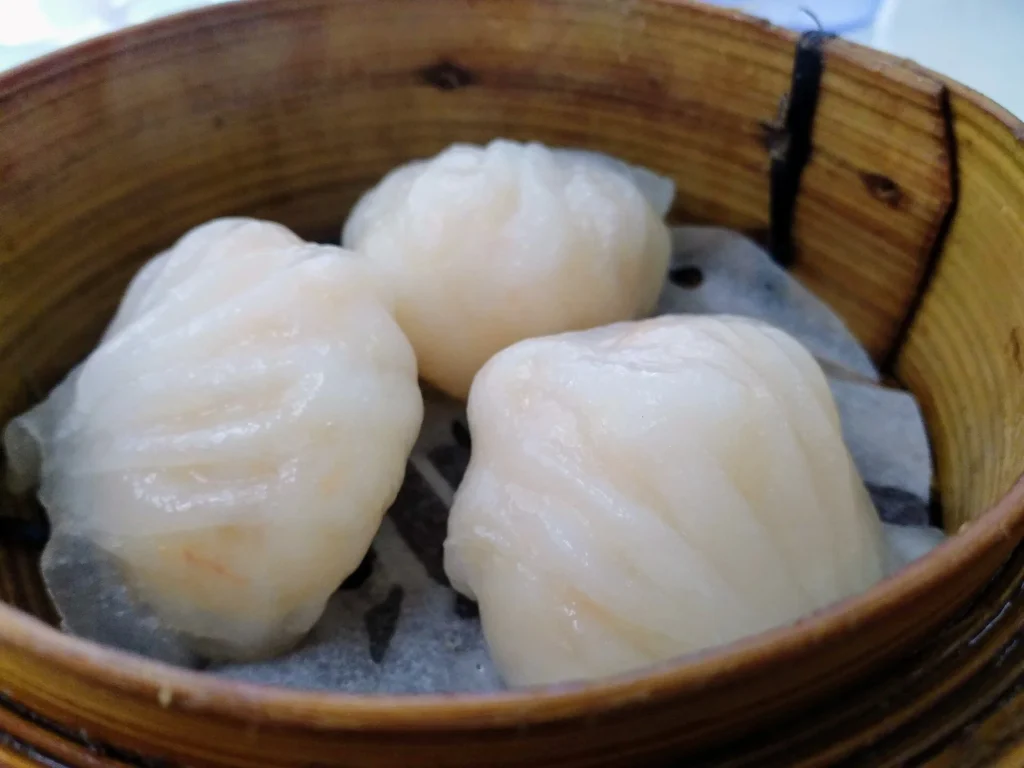
| Har gow | Prawn dumplings in a translucent wheat starch wrapper |
| Siu mai | Open topped pork and prawn dumplings |
| Char siu bao | Fluffy steamed buns filled with barbecue pork |
| Cheung fun | Slippery rice noodle rolls in sweet soy sauce |
| Lo mai gai | Sticky rice with chicken, steamed in a lotus leaf |
| Phoenix claws | Braised chicken feet in black bean sauce |
| Spare ribs | Small cuts steamed with black beans and garlic |
| Turnip cake | Pan fried squares of daikon and rice flour |
| Egg tarts | Custard tarts in flaky pastry, served warm |
How a dim sum meal works
You order from a paper tick sheet at the table, or from trolleys pushed between the tables at older restaurants. Dishes arrive as they are ready, not in courses, and you keep ordering through the meal. Everything goes in the middle to share.
- Tea comes first. Jasmine, pu erh and chrysanthemum are the usual choices.
- Three or four plates per person is a normal amount.
- Tap two fingers on the table when someone pours your tea. It means thank you.
- Leave the lid ajar on the teapot when you want a refill.
- Order the fried things and the egg tarts last, so they arrive hot.
What to order the first time
Start with har gow, siu mai, char siu bao and cheung fun. Those four cover steamed prawn, steamed pork, bread and noodle, which is the spread of textures the meal is built on. Add turnip cake for something fried and egg tarts at the end.
Is dim sum healthy?
It depends entirely on what you order. Steamed dumplings, rice rolls and greens in oyster sauce are light. Deep fried items, sticky rice parcels and sweet buns are not. Portions are small, so the risk is quantity rather than any single dish.
Frequently asked questions
What time is dim sum served?
Traditionally from around 10am to 3pm, which is why it is treated as brunch rather than dinner. Some UK restaurants now serve it all day, but the classic slot is late morning at weekends.
Can you get vegetarian dim sum?
Yes. Look for vegetable spring rolls, mushroom dumplings, choi sum or pak choi in garlic, and lotus paste buns. Check the dipping sauces, since oyster sauce and shrimp paste turn up in things that look meat free.
Can you make dim sum at home?
Some of it. Siu mai and char siu bao are realistic with a bamboo steamer. Har gow wrappers, made from wheat starch, take practice to get thin without tearing. Start with siu mai.
What is the difference between dim sum and yum cha?
Dim sum is the food. Yum cha is the occasion, literally drinking tea. In Hong Kong you would say you are going for yum cha and eat dim sum when you get there.
Shop this
Some links on this page are affiliate links. If you buy through them we may earn a small commission, at no extra cost to you.
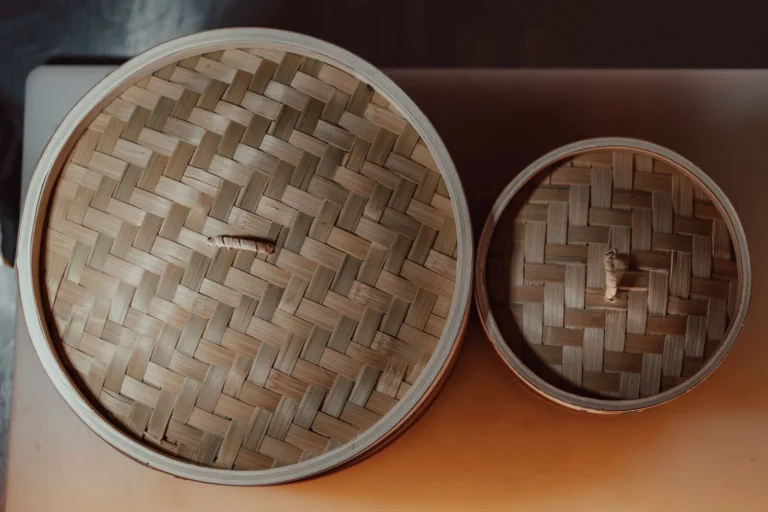
- Bamboo steamer. Used to cook and serve steamed dim sum at home.
- Dim sum wrappers. For folding your own dumplings and siu mai.