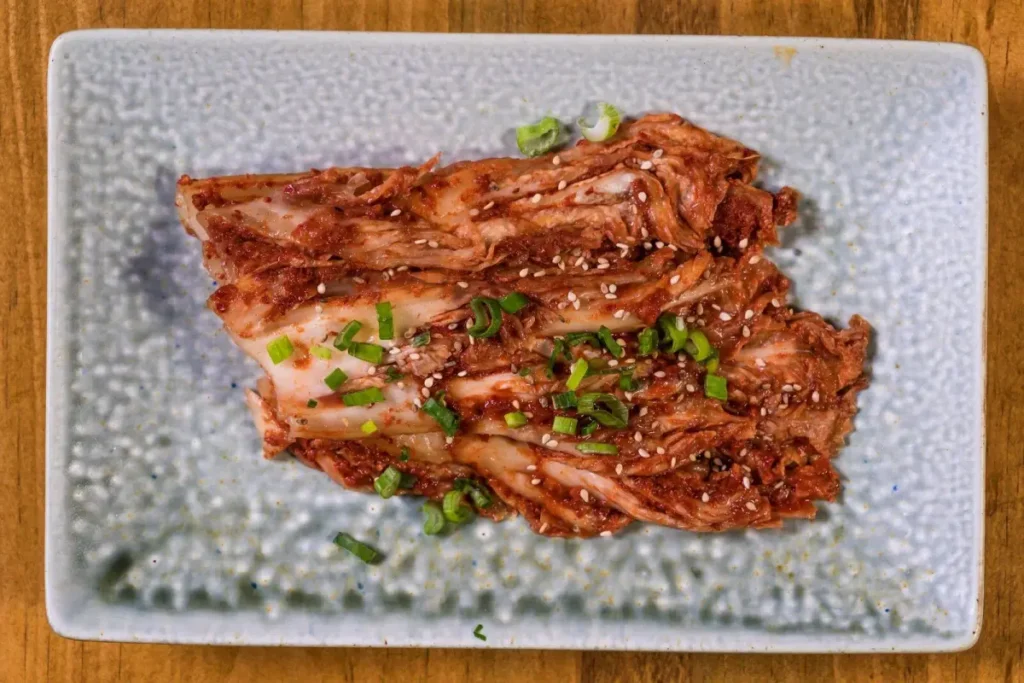
Kimchi is a Korean side dish of vegetables, usually napa cabbage, salted and fermented with chilli, garlic, ginger and salted seafood. It is sour, savoury and warming, and it is eaten with almost every Korean meal.
This covers what it tastes like, how to tell a good jar from a flat one, and where it actually sits in a UK supermarket, which is not where most people look.
What kimchi tastes like
Sour and tangy from the fermentation, with a savoury depth and a chilli warmth. The heat comes from gochugaru, Korean chilli flakes, which is warming rather than fierce, so most kimchi sits between mild and medium. Older, riper kimchi tastes stronger and more sour.
What goes into it
Napa cabbage is the classic base, salted to draw out moisture, then coated in a paste of gochugaru, garlic, ginger, spring onion and usually fish sauce or salted shrimp for savoury depth. Vegan versions swap the seafood for extra soy sauce or a seaweed-based substitute. Other vegetables get the same treatment: radish (kkakdugi), cucumber (oi sobagi), and white kimchi made without chilli at all.
Fresh vs fermented
Freshly made, it is crunchy and mild, closer to a spicy pickled salad. Left in the fridge it keeps fermenting, turning softer, sourer and more pungent over weeks. Neither stage is wrong. The fresh stage suits eating cold on its own; the well-fermented stage is better cooked into kimchi fried rice or kimchi jjigae, where the sourness balances rich, fatty ingredients.
Which aisle is kimchi in?
Fresh kimchi is in the chilled section, usually with the vegan and plant-based range or near the fresh sauerkraut and kefir. It is not with the jarred pickles, and it is not in the world food aisle. Shelf-stable jars are the exception and do sit on an ambient shelf near the Korean sauces.
Work these spots in order in a large Tesco, Sainsbury’s, Asda, Morrisons or Waitrose:
- The chilled vegan or plant-based cabinet. Often shelved with tofu and meat-free products. The most common spot.
- Chilled fermented foods. Next to fresh sauerkraut, kefir and live yoghurt in stores that group them.
- The chilled world food section. Some larger stores keep a small Korean and Japanese chiller.
- World food aisle, ambient shelf. For pasteurised jars.
Aisle numbers change between branches of the same chain, so the section is more useful than a number. Convenience format shops rarely stock it at all. If you ask a member of staff, say kimchi and say Korean fermented cabbage. Asking for pickled cabbage sends people to the sauerkraut.
Chilled kimchi or a jar?
| Chilled kimchi | Shelf-stable jar | |
|---|---|---|
| Where | Chiller, with vegan or fermented food | World food aisle, ambient shelf |
| Cultures | Live and still fermenting | Usually pasteurised |
| Taste | Sharp, fizzy, gets sourer over time | Milder and flatter |
| Keeps | Weeks in the fridge, and improves | Months unopened |
| Best for | Eating cold, and for kimchi stew | Cooking, when tang matters less |
What to check before you buy
- Live fermentation. Look for unpasteurised or live on the label, and check the jar for small bubbles, a sign the ferment is still active.
- Ingredients order. Napa cabbage, gochugaru, garlic, ginger, spring onion and salt should sit near the top.
- Sugar and vinegar. Some own-brand kimchi is sweetened or vinegar-forward to mimic sourness without a real ferment. It tastes flatter and lacks the live bacteria.
- Spice level. Gochugaru varies in heat. A mild label is a safer start if kimchi is new to you.
Where to buy it in the UK
| Option | Best for | What to expect |
|---|---|---|
| Korean supermarket import | Authentic flavour, bulk buying | Longer shelf life, wide range of heat levels |
| UK small-batch producer | Fresh, actively fermenting kimchi | Shorter shelf life, more complex sourness |
| Supermarket own-brand | Convenience | Often milder and less fermented |
A Korean grocer is the better trip if you eat it often. Tubs are larger, the price per kilo is far lower, and the range runs well past cabbage. Look in the chilled cabinet near the banchan and fresh noodles, and ask for the freshest tub if you want it crunchy, or an older one if you want it sour for cooking. Small UK producers sell fresh, actively fermenting kimchi online and through independent grocers. Ordering online is the fallback if your local shops do not stock it.
How to eat it
Straight from the jar as a side, stirred through rice or noodles, folded into pancakes, or cooked into stews and fried rice. It works raw or cooked, and older kimchi is better for the cooked dishes.
Storing it
Keep it in the fridge and press it down under its brine each time, so the cabbage stays covered. Use a clean fork rather than fingers. Expect the lid to hiss; that fizz is the fermentation working. It carries on getting sourer and softer over weeks, which is not a fault.
Frequently asked questions
Where is kimchi in the supermarket?
In the chiller, usually with the vegan and plant-based food or the fresh fermented products. Not with the jarred pickles, and not in the world food aisle unless it is a pasteurised jar.
Is kimchi vegan?
Not always. Traditional kimchi contains fish sauce or salted shrimp. Vegan versions exist and say so on the front, so check the label rather than assuming.
How long does kimchi last once opened?
Weeks in the fridge, and it keeps changing the whole time. It gets sourer and softer rather than going off. Use older kimchi for cooking instead of eating it cold.
Is shop-bought kimchi as good as homemade?
A live, small-batch jar comes close. Mass-produced versions are often milder and less fermented, because they are made to a longer shelf life.
Is supermarket kimchi as good as the Korean stuff?
Usually milder. UK supermarket brands are tuned to a British palate and are often lower in chilli and fish sauce. A Korean grocer tub is sharper, more savoury and much better value by weight.
How hot is it?
Mild to medium for most jars. The heat comes from gochugaru, which is warming rather than fierce, and milder versions are widely sold.