Some links on this page are affiliate links. As an Amazon Associate, The Asian Larder earns from qualifying purchases, at no extra cost to you.
Ube is a bright purple Filipino yam with a sweet, faintly vanilla flavour, used across Filipino desserts. Fresh ube is almost never sold in the UK, so jam, powder, extract and ice cream are how you will actually cook with it here.
How it differs from purple sweet potato
These get confused constantly because both are purple. It has a distinct sweet, slightly vanilla-like flavour that purple sweet potato does not. Swapping in purple sweet potato gives you a similar colour and a noticeably more neutral taste, so it works for appearance and falls short on flavour.
It is also not taro. Both are purple and both turn up in sweet dishes, but taro is a different plant with a milder, starchier, less sweet character.
The forms of ube you can actually buy
| Form | What it is | Use it for |
|---|---|---|
| Ube jam (halayang ube) | Cooked, sweetened purple yam paste | Spreading, folding into desserts, eating on its own |
| Ube powder | Dried and ground | Colouring and flavouring cakes and baked goods |
| Ube extract | Concentrated flavouring and colour | Ice cream, icing, anything needing strong colour |
| Ube ice cream | Ready to eat | The most common way UK shoppers meet it |
| Fresh ube | The whole root | Rare here. Boil or steam until soft, then mash and sweeten |
Where to buy it in the UK
Mainstream UK supermarkets do not stock it in any form, Tesco included. A Filipino grocer is the reliable source, and usually the only place to find ube ice cream in this country. Look near the other Filipino desserts and baking ingredients for jam and powder, and in the freezer for ice cream.
Larger Asian supermarkets sometimes carry the ice cream or extract without stocking the jam. Online is the practical route for jam, powder and extract, and ube jam on Amazon UK is usually in stock.
Ask for the form you need by name, because a shop often carries one without the others: ube jam or halayang ube for spreading and baking, ube powder for colouring, ube extract for strength of colour and flavour.
What to cook with ube
- Ube jam stirred through desserts or spread on bread
- Ube powder or extract to flavour and colour ice cream, cakes and pandesal
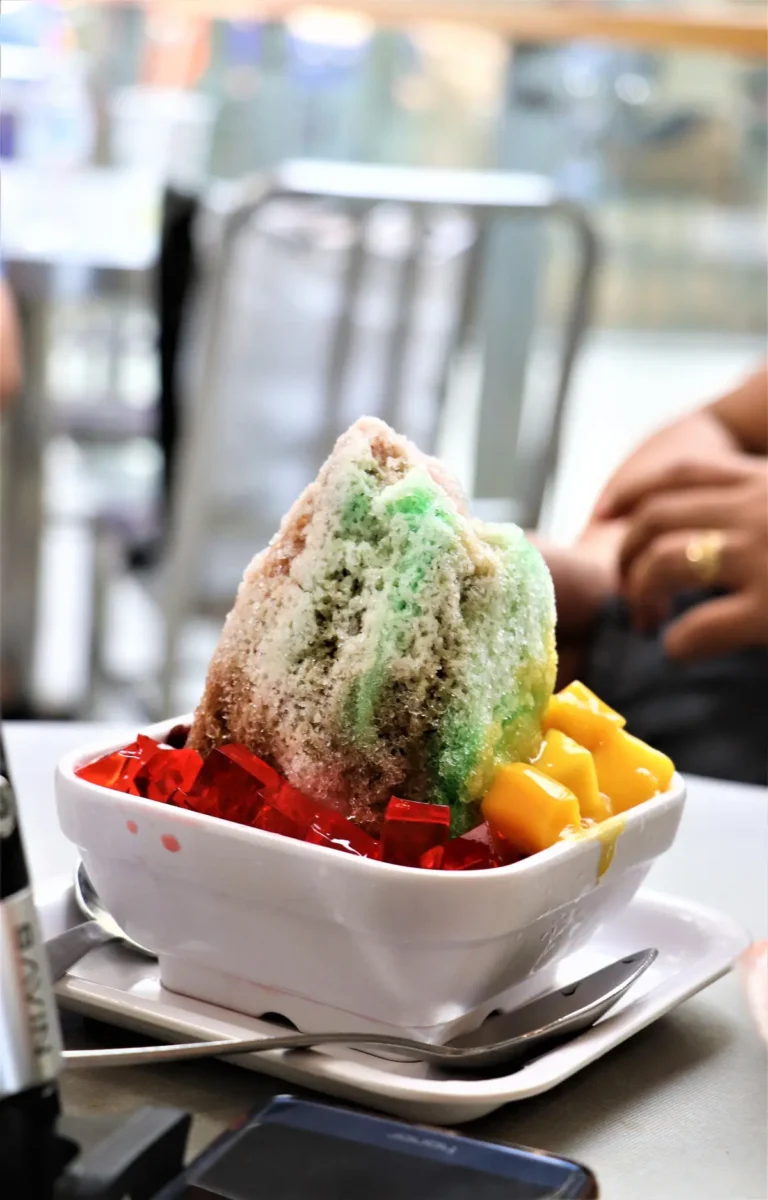
- As a topping for halo-halo, where the purple sits against the shaved ice
- Ube cheesecake and ube crinkle cookies, both common in Filipino bakeries
Cooking with the fresh root
On the rare occasion you find the fresh root, it is boiled or steamed until soft, then mashed much like a sweet potato before being sweetened. It is a long job for a result that jam or powder gets you in minutes, so most UK cooks skip it.
Why the colour is such a strong purple
The deep violet comes from anthocyanins, the same group of natural pigments that colour blackcurrants and red cabbage. Nothing is added. That is worth knowing when you are reading a label, because a dessert whose purple comes from colouring rather than the root will usually say so in the ingredients and will taste of very little.
Heat and acidity both shift the shade. A batch cooked long and hot turns greyer, and a squeeze of lemon pulls it pinker. If you are baking and want the colour to hold, keep the oven moderate and add any citrus at the end.
How much to use
Jam is the most forgiving starting point. For a cheesecake or an ice cream base, around 200g of jam to 500ml of cream or custard gives a clear flavour without turning the mixture sticky. Powder is far more concentrated: two tablespoons is usually enough to colour and flavour a standard sponge, and more than that dries the crumb.
Extract is stronger again, and mostly does colour rather than taste. A teaspoon is plenty in a whole batch, and it is easy to overdo to the point where the result tastes faintly synthetic.
A note on the halaya texture
Shop-bought jars vary a lot in how stiff they are. Some are thick enough to hold a spoon upright, others pour. Neither is wrong, but it changes how much liquid you need around it. If a jar is very firm, warm it gently with a splash of milk or coconut milk before folding it into anything cold, or it will sit in lumps.
Keeping it
Keep an opened jar of the jam in the fridge, where it lasts a few weeks. Unopened, the sugar content keeps it good in the cupboard for far longer. The powder keeps well in a sealed container at room temperature.
Frequently asked questions
What is ube?
A purple yam grown in the Philippines, sweet and faintly vanilla-like, used mainly in desserts. Its colour is natural rather than added.
Is ube the same as taro?
No. Both are purple and both appear in sweet dishes, but taro is a different plant with a milder, less sweet flavour.
Can I substitute purple sweet potato for ube?
It gives a similar colour but a milder, more neutral flavour. Fine if you want the look, disappointing if you want the taste.
Where can I buy ube in the UK?
Filipino grocers and online. Jam, powder, extract and ice cream are all available. Fresh ube is very rare and mainstream supermarkets do not stock any form of it.
What is ube used for?
Ice cream, jam, cakes, cheesecake, crinkle cookies, and as a topping for halo-halo.