Well-fermented kimchi fried hard with rice and gochujang, topped with a fried egg, one of the best ways to use up an older jar of kimchi.
Kimchi fried rice
- 500 g cold cooked rice, day old if possible
- 200 g kimchi, chopped, plus 2 tbsp kimchi juice
- 100 g bacon lardons or Spam, diced
- 1 tbsp gochujang
- 1 tsp sesame oil
- 2 eggs
- spring onion and sesame seeds, to serve
- 1 tbsp oil
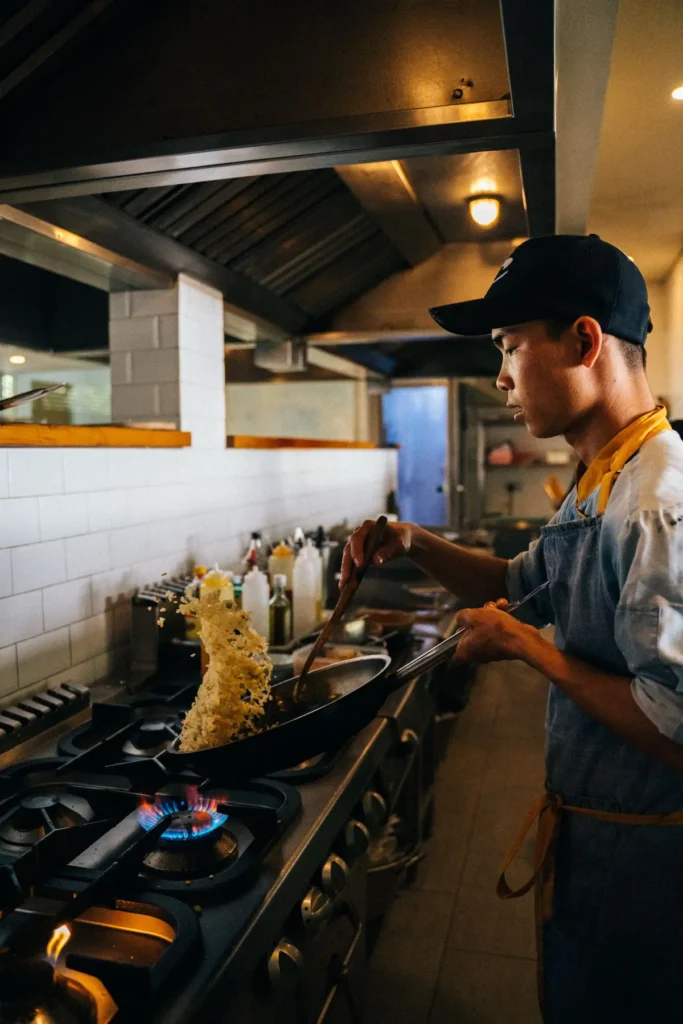
- Fry the bacon or Spam in a wok until starting to crisp.
- Add the kimchi and stir-fry for a couple of minutes to concentrate the flavour.
- Add the rice, breaking up any clumps, and stir-fry until heated through.
- Stir in the gochujang and kimchi juice, tossing until evenly coated.
- Drizzle over the sesame oil off the heat.
- Fry the eggs separately and serve on top, with spring onion and sesame seeds.
About kimchi fried rice
Kimchi fried rice (kimchi bokkeumbap) is a quick Korean home dish made with leftover rice and kimchi that has turned sour. Frying the kimchi in a little butter or oil softens the sourness and brings out a deep, savoury flavour.
It is often cooked with spam, bacon or tuna and topped with a fried egg. It is a simple way to use up kimchi before it gets too strong.
Ingredient notes and UK swaps
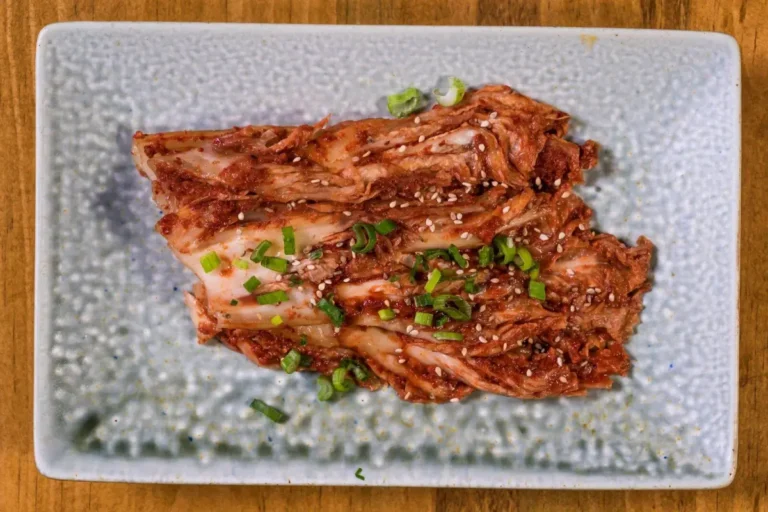
- Kimchi: older, well fermented cabbage kimchi works best. Sold in jars in many UK supermarkets and in Korean grocers.
- Rice: day old short or medium grain rice, chilled overnight.
- Kimchi juice: a few spoons from the jar adds flavour and colour.
- Gochujang: a teaspoon adds heat and a little sweetness.
Serving and storing
Top with a fried egg, sliced spring onion, toasted sesame seeds and strips of roasted seaweed. Leftovers keep for 1 day in the fridge. Cool quickly and reheat until piping hot.
Tips for the best kimchi fried rice
- Older, more fermented kimchi gives a better flavour here than fresh kimchi.
- Day-old rice fries far better than fresh, since the grains are drier and separate more easily.
Using properly fermented kimchi
Older, well-fermented kimchi gives a noticeably better result here than fresh kimchi, its stronger sourness stands up to the rice and gochujang rather than getting lost, this is one of the best uses for a jar that has been sitting in the fridge a while.
Frequently asked questions
Can I use fresh kimchi instead of well-fermented?
Yes, though the flavour will be milder and less tangy. A splash of extra kimchi juice helps make up for it.
What else can I use kimchi in?
See our quick kimchi noodles recipe for another simple way to use up a jar.
Can I make it vegetarian?
Yes. Use a vegan kimchi (made without fish sauce) and add tofu or mushrooms instead of meat.